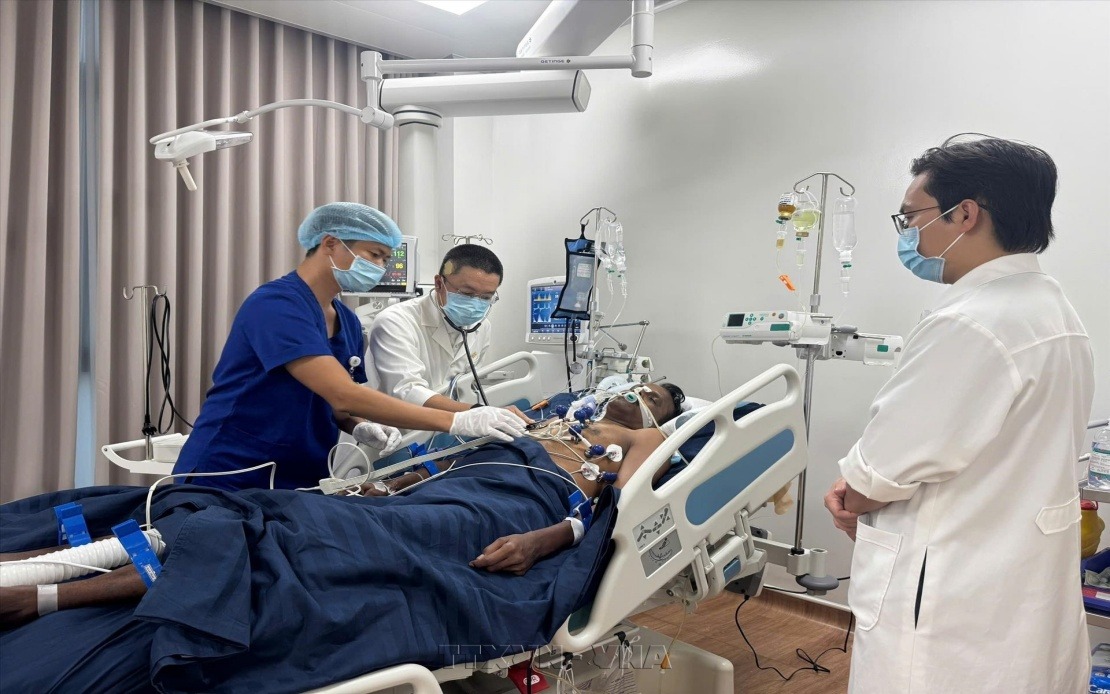
The Phu Quoc Special Zone in Vietnam's An Giang Province has activated an all-encompassing emergency response following a speedboat accident on July 11 that claimed lives and injured numerous Indian passengers. Coordinating across multiple agencies and medical institutions, Vietnamese authorities have deployed personnel and specialised equipment to conduct search-and-rescue operations while ensuring comprehensive medical care for those affected by the maritime incident in the Mekong Delta region.
Sun Group International Hospital responded with immediate action upon learning of the accident, triggering its hospital-wide emergency protocol and dispatching ambulances staffed with specialist medical teams directly to the incident site. The facility simultaneously mobilised its entire medical workforce to support the broader rescue effort, demonstrating the coordinated nature of the response across Vietnam's healthcare system. This rapid activation proved critical given the severity of injuries sustained by those aboard the speedboat.
Two of the most severely injured victims required nearly two hours of continuous resuscitation before their conditions stabilised sufficiently for transfer to the hospital's intensive care unit. Following this intensive intervention, both patients regained consciousness and maintained stable vital signs, representing a significant milestone in their recovery journey. The rapid stabilisation of these critical cases underscores the effectiveness of the medical team's initial emergency response and the importance of immediate specialist intervention in trauma situations.
By 6:15 p.m. on July 11, Sun Group International Hospital had received 15 additional victims, all conscious upon arrival. Medical staff conducted comprehensive physical examinations, trauma screening protocols, and initiated individualised treatment plans tailored to each patient's specific injuries and medical requirements. This organised approach to mass casualty management reflects established protocols for managing accidents of this scale within Vietnam's healthcare infrastructure.
Dr. Nguyen Quang Thang, the hospital director, disclosed that two patients suffered from severe respiratory failure requiring ongoing intensive monitoring. One of these individuals has since achieved recovery and awaits discharge pending further observation, whilst the second remains hospitalised due to pre-existing medical conditions that complicate recovery. The hospital has established coordination with Cho Ray Hospital in Ho Chi Minh City to provide advanced intensive care, with medical teams anticipating continued improvement in the remaining critical patient's condition.
Beyond immediate medical intervention, provincial authorities have mobilised financial support mechanisms for affected families and injured survivors. Tran Minh Khao, Chairman of the Phu Quoc Special Zone People's Committee, confirmed that the vessel operator has committed to providing compensation of 1,000 USD to each bereaved family and 500 USD to each injured passenger. These private sector contributions represent the first layer of financial assistance reaching victims within hours of the incident.
The local administration has pledged to supplement operator compensation by providing 26 million VND, approximately equivalent to 1,000 USD, for each fatality. This combined approach ensures that bereaved families receive meaningful financial support whilst injured passengers access funds for ongoing medical treatment and recovery needs. The dual-layer compensation mechanism reflects Vietnam's recognition of the multiple dimensions of victim support required following major accidents involving foreign nationals.
Investigative and administrative processes have been expedited to address the formal requirements surrounding the incident. Authorities are fast-tracking civil registration procedures and legal formalities in accordance with Vietnamese law whilst coordinating closely with diplomatic channels to address the international dimensions of the accident. This parallel processing of humanitarian and bureaucratic requirements enables simultaneous victim care and formal investigation progression.
The repatriation of victims and deceased remains a priority for provincial authorities working in conjunction with diplomatic representatives. Vietnamese officials are facilitating rapid processing of documentation and logistics required to return Indian nationals to their home country, recognising both the humanitarian imperative and the diplomatic sensitivities involved in accidents affecting foreign tourists. For Malaysian readers and regional observers, the incident highlights the importance of maritime safety protocols across Southeast Asian tourism destinations and the preparedness of national healthcare systems to manage mass casualty situations involving international visitors.
This response demonstrates how modern emergency management systems activate across multiple government agencies, private healthcare providers, and diplomatic channels simultaneously. The speedboat accident in Phu Quoc illustrates both the risks inherent in tourism-dependent coastal regions throughout Southeast Asia and the established infrastructure available to manage such crises. Vietnamese authorities' comprehensive approach—combining immediate medical intervention, financial support, investigative processes, and repatriation logistics—provides a template for regional disaster response whilst underscoring the critical role of inter-agency coordination in saving lives and supporting victims during major incidents.

