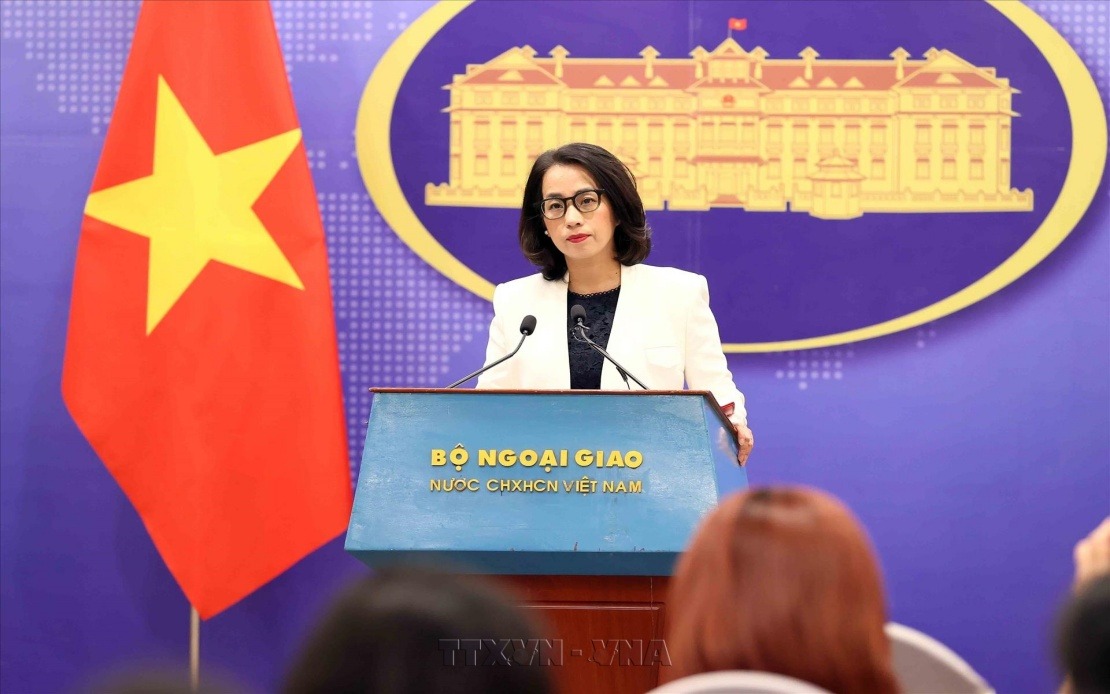
Vietnam's government has formally disputed a recent decision by the United States to impose additional tariffs, contending that the decision overlooks its stringent domestic protections against forced labour and its alignment with international standards. Foreign Ministry spokesperson Pham Thu Hang made the statement in response to the Office of the US Trade Representative's announcement of a 12.5 per cent tariff increase on goods from economies under investigation pursuant to Section 301 of US trade law—a mechanism Washington employs to address unfair trade practices and labour violations.
At the heart of Vietnam's defence is a legislative measure enacted just days before the US tariff announcement. On July 22, 2026, the Vietnamese government introduced Decree 292/2026/ND-CP, which establishes a comprehensive import ban on goods that have been extracted or manufactured wholly or partly through forced labour. This decree represents a direct response to international pressure and demonstrates Hanoi's commitment to eliminating exploitative labour practices from its supply chains. The timing of the decree, coming before the US tariff decision, underscores Vietnam's proactive approach to the issue, though observers note that such measures take time to implement effectively.
The Vietnamese government's position, articulated through Pham Thu Hang, emphasises that Hanoi fully adheres to the regulations established by the International Labour Organisation and honours all international treaties and free trade agreements to which it has committed. This framing is significant for Southeast Asian readers, as Vietnam's labour standards directly influence the region's manufacturing reputation and investment climate. Companies across the region rely on supply chain integrity, and Vietnam's policies shape how multinational enterprises view the broader ASEAN manufacturing base.
Hanoi's core complaint is that the US decision fails to acknowledge the reality of Vietnam's efforts to prevent, reduce, and eliminate forced labour within its economy. Officials argue that American policymakers have not given sufficient weight to the legislative and enforcement mechanisms Vietnam has put in place. This reflects a broader tension in US-Vietnam trade relations, where Washington's unilateral tariff actions sometimes outpace its assessment of partner country improvements. For Malaysian observers, this dynamic illustrates how trade disputes can arise despite genuine efforts at compliance, particularly when different countries measure progress using different metrics.
The dispute also reveals the complexity of enforcement when forced labour allegedly occurs across borders or through subcontracting networks. Vietnam's import ban targets goods manufactured through such practices, but policing global supply chains remains technically challenging. The decree aims to prevent Vietnamese companies from profiting from or complicit in forced labour elsewhere, a principle that carries implications for the broader Southeast Asian region where cross-border labour movements and supply chain entanglements are common.
Vietnam's response indicates the government intends to engage with the United States through constructive dialogue rather than retaliatory measures, at least for now. Officials have explicitly urged the US to take into account the measures Vietnam has adopted when determining final tariff levels. This diplomatic approach reflects Hanoi's broader strategic interest in maintaining stable relations with its largest trading partner while resisting what it perceives as excessive or unjustified trade punishment. The tone suggests Vietnam hopes to demonstrate good faith implementation and negotiation rather than confrontation.
For Malaysian and regional stakeholders, Vietnam's tariff dispute carries indirect significance. The US trade actions affect the competitive position of Vietnamese manufacturers relative to counterparts elsewhere in Southeast Asia, including Malaysia. If Vietnamese goods face higher tariffs while Malaysian or Indonesian goods do not, supply chain decisions and investment flows could shift accordingly. Additionally, the standards Vietnam is required to meet may eventually be applied more broadly across the region as the US pursues similar investigations against other economies.
The forced labour issue itself has become a central focus of US trade policy under Section 301 and related mechanisms. Unlike traditional tariff disputes over exchange rates or subsidies, this dimension targets labour practices and human rights, making it politically sensitive and less amenable to conventional negotiated settlements. Vietnam's legislative response demonstrates awareness that purely diplomatic assurances no longer suffice; concrete law and enforcement mechanisms are increasingly expected by trading partners.
The decree Vietnam introduced does not simply rhetorical posturing but establishes a legal framework with potential enforcement tools. Importers and manufacturers face penalties for bringing in goods made through forced labour, and compliance verification becomes part of customs procedures. However, the practical application of such rules depends on inspection capacity, information gathering, and coordination with other agencies—areas where developing countries often face resource constraints.
Observers note that Vietnam's labour standards, while improving, remain subject to international scrutiny. Worker protections in manufacturing have expanded in recent years, but wage levels and working hour standards still lag behind developed economies. The forced labour issue specifically addresses more extreme conditions, including debt bondage and trafficking, which Vietnam has worked to reduce through various programmes and legal reforms. Yet isolated incidents continue to surface, making the government's claim of strict prohibition vulnerable to contradiction by real-world violations.
The broader context includes Vietnam's efforts to position itself as a reliable manufacturing alternative to China as US-China tensions persist. If Vietnam faces sustained tariff penalties for labour concerns, the competitive advantage of shifting manufacturing to Vietnam diminishes. This dynamic creates urgency for Hanoi to demonstrate that its labour standards are robust and enforced, not merely aspirational.
Moving forward, Vietnam's commitment to working cooperatively with the United States suggests ongoing dialogue rather than escalating trade tensions. However, the outcome will depend on whether American officials view Vietnam's recent legislative measures and enforcement track record as substantive progress. For Malaysia and other Southeast Asian economies watching these developments, Vietnam's experience with US trade enforcement provides a cautionary lesson about the evolving expectations around labour standards in global supply chains.

