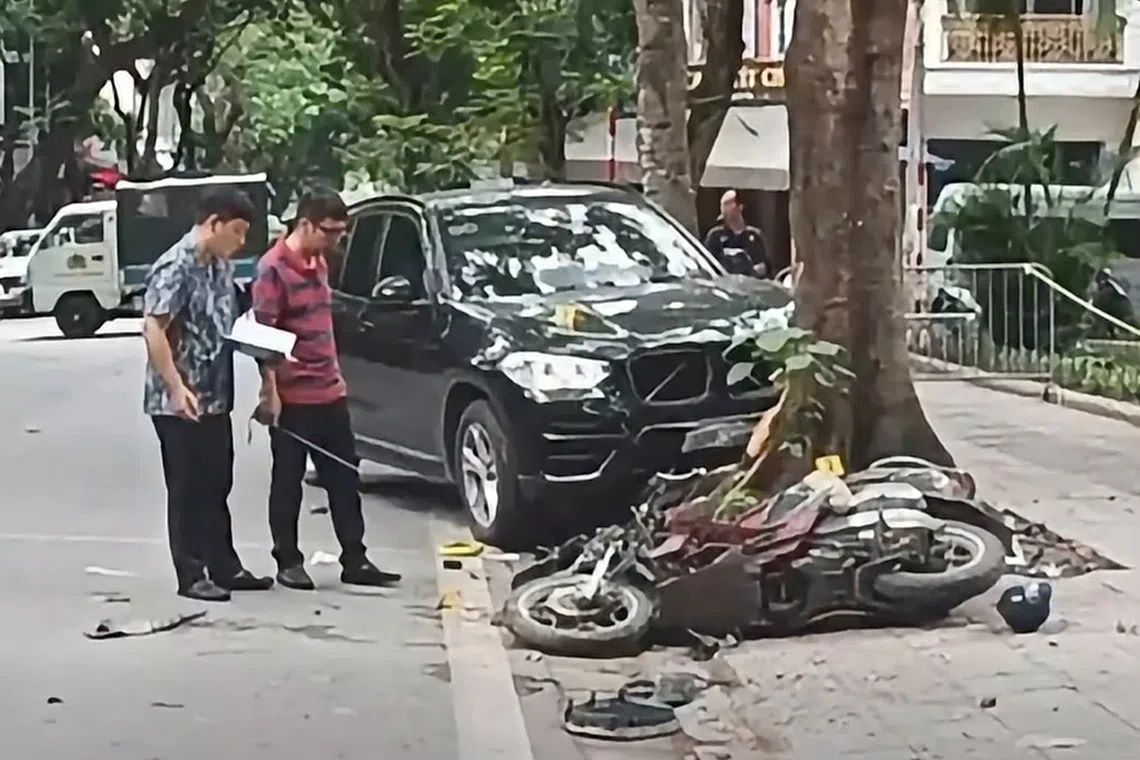
A coordinated social media campaign by Vietnamese youth demanding accountability has forced the state broadcaster Vietnam Television to dedicate prime-time coverage to a fatal traffic accident that claimed the life of an 18-year-old girl more than a year ago—an unusual step in a country where tens of thousands perish on roads annually. The case of Do Ngoc Phuong Thuy, who died following a head-on collision on May 30, 2025, in Hanoi, has reignited discussions about transparency, justice, and generational frustrations with official silence in Vietnam.
On that fateful day, former Vietnamese National Assembly deputy Nguyen Sy Cuong, aged 64, was operating a luxury BMW when the vehicle crossed into opposing traffic at high speed and collided with a motorbike carrying Thuy's father and the teenager herself. The impact was devastating. Thuy sustained injuries so severe that her right leg was severed, resulting in catastrophic blood loss. She was rushed to hospital but succumbed to her injuries ten days later, just as she approached a crucial milestone—her high school graduation examinations. The accident report was handed to Hanoi Police for investigation, but the public received no subsequent updates. The domestic media made only a single passing reference on May 31, before the story vanished entirely from official channels.
The information blackout persisted for over twelve months until early August 2025, when digital activism erupted across Vietnamese social media platforms. Millions of posts bearing hashtags such as #NguyenSyCuong and #BMW proliferated across Threads, Facebook, Instagram, and X, predominantly authored by users identifying themselves as Gen Z. These tech-savvy activists called for a thorough public inquiry and accountability for those responsible. Despite reported attempts by authorities to suppress such content online, determined netizens circumvented restrictions through various technical means, ensuring the message reached wider audiences. The campaign extended beyond digital spaces into the physical realm, with young people, often masked, placing flowers at the accident site—a location that would become symbolically known as the Justice Tree.
Google Maps coordinates transformed the modest tree at the collision location into a focal point for collective grievance. As authorities dispatched cleaners to remove the flowers, activists created a virtual memorial online, attracting hundreds of thousands of tributes and messages. This fusion of physical and digital activism represents a significant shift in how Vietnamese youth engage with social issues that touch their generation directly. Social activist and blogger Nguyen Hoang Vi, who focuses on education and social matters, offered insight into the campaign's emotional resonance. She noted that Thuy's identity as an 18-year-old peer to many Gen Z voices created profound empathy—the activists could directly relate to the victim's circumstances and aspirations. Beyond emotional connection, however, Vi suggested that the extended silence itself became a breaking point. Rather than accepting the traditional adult refrain to "trust in justice," young people demanded visible, transparent accountability and substantive answers.
The prolonged information vacuum had left critical questions unaddressed. The identity of the driver was public knowledge, yet the investigative process and any conclusions remained shrouded in secrecy. This opacity intensified suspicions, particularly given that the individual involved held former high-ranking political status. Tran Dai Lam, an attorney at ANVI law firm in Hanoi, emphasised that incidents cannot simply disappear from public consciousness when substantive questions persist. He cautioned that even minor new disclosures or renewed media attention could resurrect broader public interest in the matter.
Under pressure from the sustained social media movement, Vietnam Television finally aired a dedicated six-minute report on August 17 on its flagship current affairs programme. According to police and prosecution statements cited in the broadcast, Nguyen Sy Cuong had "sincerely confessed and actively and fully remedied the consequences of his actions." Consequently, the victim's family chose not to pursue criminal charges, and Cuong was exempted from criminal liability. Notably, Do Viet Hung, Thuy's father, appeared on the programme thanking internet users for their sympathy while stating that the family was satisfied with the investigation's findings and requesting privacy to grieve and rebuild.
While the official explanation addressed some procedural questions, lawyer Tran Dai Lam expressed scepticism that it would satisfy the demanding Gen Z cohort. The fundamental issue, he argued, transcended the mere conclusion—it centred on the year-long information vacuum itself. Gen Z, Lam observed, does not accept answers merely stating that authorities acted "in accordance with the law." These young people demand specificity: which particular laws applied, what precise decisions were rendered, and the rationale underlying those determinations. Such granular transparency represents a generational expectation that starkly contrasts with traditional Vietnamese approaches to official accountability.
Following the VTV broadcast, flowers continued appearing at both the physical location and virtual memorial, though in diminished quantities. Online commentary revealed substantial dissatisfaction with the official explanation. The state's formal response, however, extended beyond a simple news report. Authorities cited intelligence of alleged "highly dangerous plots and intentions by hostile forces, reactionaries and bad actors" exploiting the accident to foment unrest. This framing—suggesting that foreign interference manipulated genuine youth activism—reflects official anxiety about organic social mobilisation. The Ministry of Public Security issued formal warnings for citizens to remain vigilant against such influences, a characteristically defensive posture toward domestic dissent.
Pro-government influencers amplified these warnings online, drawing parallels to colour revolutions and Bangladesh's recent unrest, cautioning that such movements lead to anarchy and societal destruction. This rhetorical escalation represents an attempt to delegitimise legitimate demands for transparency by repositioning them within a framework of destabilisation and foreign manipulation. Yet the campaign remains unprecedented in Vietnam—this represents the first instance where Gen Z mobilisation around an issue directly affecting their generation has garnered sufficient momentum to compel official state media engagement and formal government response.
For activist Nguyen Hoang Vi, the episode catalysed personal reflection on generational attitudes. She previously harboured stereotypes portraying Gen Z as self-indulgent, impatient, and indifferent to broader societal concerns. The sustained, organised campaign around Do Ngoc Phuong Thuy's death thoroughly shattered this preconception. Rather than indicating apathy, she recognised that Gen Z engages with social issues through distinctly different mechanisms and priorities from older cohorts. This generational distinction—expressed through digital platforms, collective memorial rituals, and demands for transparent institutional accountability—signals an emerging Vietnamese civic consciousness that operates outside traditional political structures.
The case illuminates broader tensions within Vietnamese society regarding information control, generational expectations, and the evolving relationship between state authority and digital activism. While the state ultimately addressed the immediate situation through forced official disclosure, the underlying grievance—regarding transparency, democratic accountability, and equitable justice—remains largely unresolved. The persistence of flowers at the virtual memorial, despite official closure attempts, symbolises that institutional pronouncements alone cannot satisfy popular demand for meaningful, substantive accountability. Whether this represents the beginning of more persistent Gen Z activism or a temporary disruption to status quo governance remains an open question with significant implications for Vietnam's political future and regional stability.

