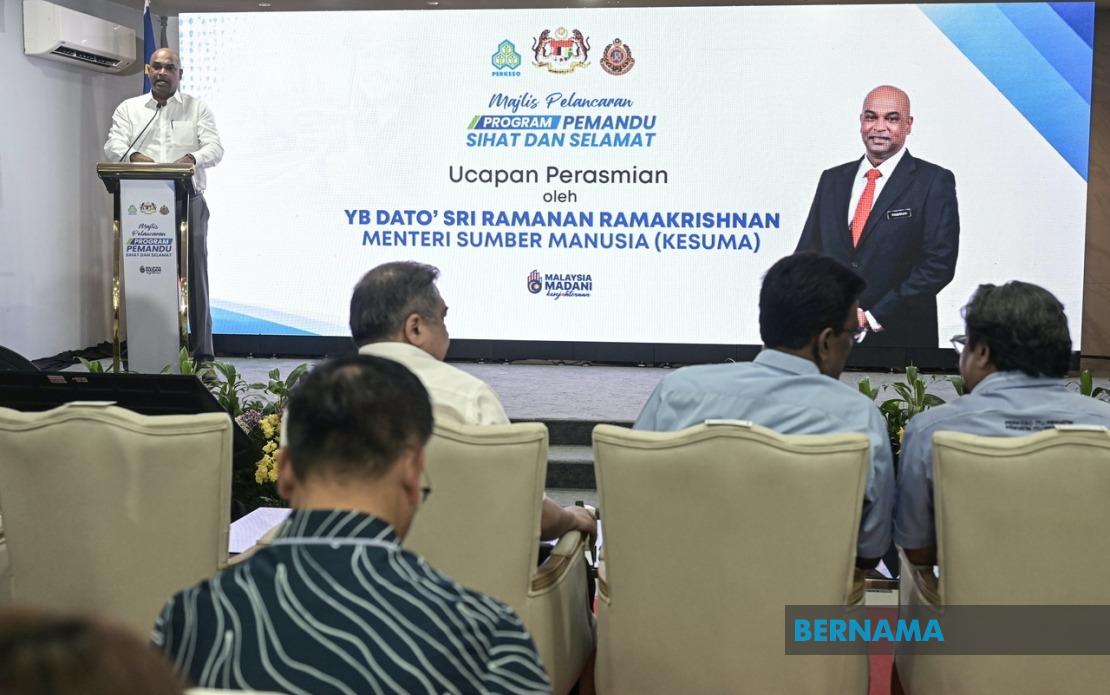
The Malaysian government has introduced a new mandatory health screening requirement for professional drivers seeking to renew their vocational licences. The Healthy and Safe Driver Programme (PSS), officially launched by Human Resources Minister Datuk Seri R. Ramanan, represents a significant shift in how authorities approach occupational safety within the transport sector. The screening rollout across 500 designated panel clinics nationwide marks an initial phase of what officials describe as a comprehensive effort to safeguard road users and reduce workplace fatalities among those whose livelihoods depend on vehicle operation.
The screening protocol encompasses a wide range of health assessments tailored to identify conditions that could compromise driving capability. Participants undergo standard physical examinations alongside specialised vision and hearing evaluations, which remain critical safety factors for occupational drivers navigating Malaysian highways and urban roads. Beyond these baseline tests, the programme addresses emerging health concerns specific to the driving profession, particularly obstructive sleep apnea and other sleep disorders that have been linked to delayed reaction times and fatigue-related accidents. The screening also evaluates fundamental physiological systems, including cardiovascular, respiratory, and neurological function, recognising that the demands of professional driving place sustained stress on these vital systems.
One particularly noteworthy component involves glycated haemoglobin testing for eligible drivers, reflecting growing awareness among Malaysian health authorities regarding the prevalence of diabetes and metabolic disorders within the working population. These blood tests provide insights into medium-term blood sugar control, enabling early identification of diabetes-related complications that might affect a driver's safety on the road. This preventive approach aligns with broader regional health trends, as Southeast Asian nations grapple with rising diabetes incidence rates that intersect with occupational health challenges.
Minister Ramanan emphasised that the initiative should not be perceived as bureaucratic obstruction but rather as a protective measure designed to catch health issues before they escalate into life-threatening situations. The framing reflects government sensitivity to industry concerns about additional regulatory burdens on drivers and transport operators. By positioning the screening as an early intervention tool, authorities signal that identification of problems enables timely medical treatment and workplace adjustments rather than arbitrary licence suspension.
The cost-sharing arrangement reveals governmental commitment to removing financial barriers to participation. Drivers contribute only RM30 toward the RM85 total screening cost, with the Social Security Organisation (Socso) subsidising the remaining RM55. This subsidy mechanism represents an investment in occupational health, recognising that professional drivers constitute a vulnerable workforce despite their essential role in Malaysia's economic functioning. The affordability threshold acknowledges that excessive screening costs could incentivise licence evasion or illegal driving, outcomes far more dangerous than occasional health checks.
Government targets indicate ambitions to substantially expand the programme infrastructure. The aim to grow from 500 to 3,000 panel clinics nationwide suggests recognition that current capacity may struggle to accommodate renewal demand, particularly during peak periods. Expansion across the healthcare system would distribute screening responsibilities more evenly geographically, reducing travel burdens for drivers operating in less urbanised regions and ensuring equitable access regardless of geographic location or economic circumstances.
The initiative emerges against alarming accident statistics that underscore the urgency of intervention. Road fatalities among workers surged to 115 cases in 2025, up from 94 the previous year, representing a concerning 22 per cent increase. These figures encompass multiple occupational groups dependent on road safety, including lorry, bus, van, and car drivers alongside motorcyclists who constitute a particularly vulnerable segment within the transport workforce.
Lorry drivers face disproportionate risk, accounting for 62 of the 115 worker deaths recorded in 2025—representing 21 per cent of all work-related fatalities across Malaysia. This concentration reflects the inherent hazards of heavy vehicle operation, including extended driving hours, fatigue accumulation, mechanically complex vehicles, and exposure to highway traffic conditions at scale. The statistics validate targeting this occupational group for intensive health monitoring, as health-related impairments in lorry drivers can have catastrophic consequences given vehicle mass and road impact severity.
The PSS launch represents coordinated effort between the Ministry of Human Resources and the Ministry of Transport, reflecting acknowledgement that road safety requires integrated policy approaches spanning occupational health, transport regulation, and worker protection. Both ministries have committed to strengthening what officials describe as Malaysia's road safety agenda, positioning driver health as integral rather than peripheral to broader traffic management objectives. This institutional alignment signals that occupational health and public safety concerns converge when professional drivers are involved.
For Malaysia's transport sector—a critical economic component employing hundreds of thousands in direct and indirect roles—the screening programme carries implications beyond individual driver welfare. Bus and lorry companies operating under commercial licences may face operational adjustments as drivers undergo screening, though most regulatory frameworks provide transition periods. The long-term effect could encourage transport operators to implement their own wellness programmes and driver support initiatives, potentially fostering a cultural shift toward occupational health prioritisation.
Regional context matters considerably. Several Southeast Asian nations have experimented with driver health monitoring, though comprehensive screening programmes remain relatively uncommon. Malaysia's approach may establish a template for regional peers grappling with similar occupational safety challenges. The PSS initiative demonstrates governmental willingness to invest public health resources in occupational populations, an approach that could influence policy discussions across ASEAN regarding worker protection standards.
The success of this programme will depend substantially on implementation quality and driver compliance rates. Health screening initiatives succeed only when drivers appreciate the protective rationale rather than viewing requirements as punitive bureaucracy. Educational campaigns emphasising the correlation between health screening and accident prevention, coupled with genuine healthcare improvements following screening, will determine whether the PSS achieves its intended impact on road fatality reduction among professional drivers.

