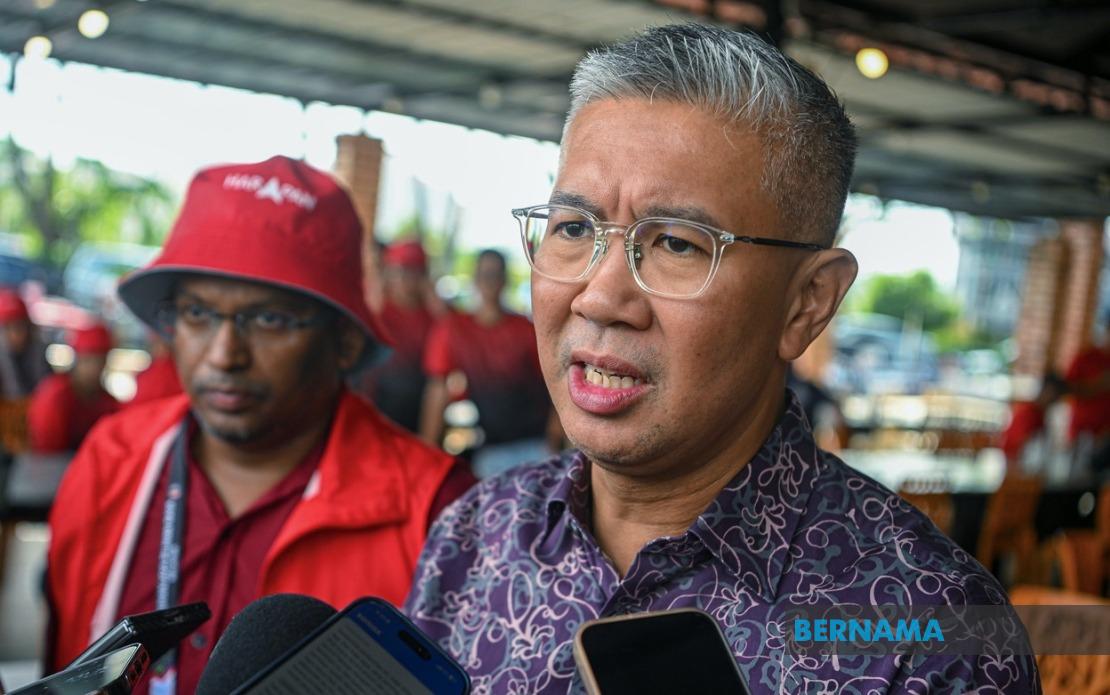
With Negeri Sembilan's state election moving toward the finish line, Prime Minister Tengku Datuk Seri Zafrul Tengku Abdul Aziz has thrown down a critical challenge to voters: stop focusing on what politicians promise and start measuring what they actually deliver. Speaking in Port Dickson on July 26, the senior political advisor emphasized that the capacity to transform pledges into tangible outcomes should be the decisive factor when voters step into polling stations on August 1, not the eloquence with which candidates articulate their vision during campaign rallies.
Tengku Zafrul's intervention reflects growing recognition among political insiders that election cycles have become increasingly driven by rhetorical flourish and carefully crafted messaging, often divorced from the harsh realities of implementation. His call for performance-based assessment represents a shift toward holding administrations accountable for what they achieve in office, rather than rewarding promises that remain unfulfilled after votes are counted. This perspective carries particular weight in a state where three major coalitions—Pakatan Harapan, Barisan Nasional, and Perikatan Nasional—are competing vigorously for voter support, each armed with their own manifesto and competing vision for Negeri Sembilan's future.
The political advisor acknowledged that all three coalitions have presented coherent policy platforms with distinct priorities and commitments. However, he argued that the true test of any political formation lies not in the ambition of its manifesto but in the machinery and resources it can marshal to execute those plans once empowered by the electorate. This distinction matters enormously in Malaysian electoral politics, where promises routinely outpace delivery and voters frequently discover that grand plans announced during campaigns bear little resemblance to what materializes in the years that follow.
Tengku Zafrul pointed to the Pakatan Harapan government's stewardship in Negeri Sembilan over the past two years and eight months as a concrete case study in manifesto implementation. According to his assessment, a substantial portion of the commitments outlined in PH's 2022 manifesto have already been converted into concrete programmes and policies. This track record, he suggested, should weigh heavily in voters' calculations, offering them evidence of administrative competence and follow-through that extends beyond mere electoral rhetoric.
The timing of Tengku Zafrul's remarks—delivered while campaigning alongside Pakatan Harapan candidate Datuk Dr G. Rajasekaran in the Sri Tanjung constituency—inevitably carries partisan undertones. Yet the fundamental argument he articulates resonates across ideological boundaries: governance is ultimately about execution, not intentions. In the Malaysian context, where state-level elections have become increasingly competitive and regional governments wield substantial control over development allocation, education policy, and local economic initiatives, this distinction becomes particularly consequential.
Rajasekaran, contesting the Sri Tanjung seat, reported receiving positive feedback from constituents throughout his campaign week, suggesting confidence that his track record and platform have resonated with voters. The Sri Tanjung contest itself has become a five-way competition, with Rajasekaran facing challenges from A. Achuthan representing Barisan Nasional, M. Leevineshwaraan from Parti Pribumi Bersatu Malaysia, and two independent candidates, Datuk A. Saravanan and Islah Wahyudi. This fragmented field illustrates the broader complexities of contemporary Malaysian electoral politics, where traditional two-coalition contests have given way to multi-polar competitions.
Tengku Zafrul also addressed speculation about internal divisions within Negeri Sembilan's PKR machinery, particularly allegations that party factions might be engaged in subtle sabotage against certain candidates. Based on his interactions with party leadership and ground-level operatives across several constituencies, he dismissed these claims as unfounded. Such reassurances matter because internal party cohesion directly affects the capacity to implement manifesto commitments; fractious parties struggle to maintain discipline and focus when pursuing shared objectives once in office.
The electoral calendar has now entered its final phase. Early voting commenced on July 28, with general polling scheduled for August 1, giving voters just days to make their ultimate choice. This compressed timeframe means that last-minute campaign messaging and ground mobilization efforts assume outsized importance, as parties attempt to consolidate their support base while potentially peeling away undecided voters.
Tengku Zafrul's emphasis on manifesto delivery rather than mere promises represents a broader trend within Malaysian politics toward demanding greater accountability from elected officials. Increasingly, voters and political analysts are asking uncomfortable questions about what happens to campaign pledges once coalitions assume power. In an era of heightened political competition and fractured voter loyalty, the ability to demonstrate concrete results becomes a crucial differentiator. For Negeri Sembilan voters, this means the coming election offers an opportunity to reward tangible performance or punish perceived underperformance.
The Negeri Sembilan election carries implications extending well beyond the state itself. As a proving ground for electoral strategies and policy platforms, outcomes here will influence how national coalitions calibrate their approaches toward subsequent electoral contests. A strong performance by the incumbent Pakatan Harapan administration could validate the argument that competent governance translates into electoral success. Conversely, significant losses would signal that voters are either unsatisfied with implementation rates or are receptive to competing visions offered by Barisan Nasional and Perikatan Nasional.
For Malaysian voters and political observers across the Southeast Asian region, Tengku Zafrul's message carries a broader lesson about the nature of democratic accountability. Electoral systems function most effectively when citizens approach voting as an exercise in assessing administrative competence rather than responding to emotional appeals or tribal political affiliations. By urging Negeri Sembilan voters to scrutinize implementation records and delivery capacity, he articulates a vision of electoral maturity that, while hardly revolutionary, remains uncommon enough in practice to warrant emphasis.
As the state moves toward polling day, the contest will ultimately hinge on how effectively each coalition convinces voters that they possess both the vision to articulate compelling solutions and the capacity to translate those visions into reality. Tengku Zafrul's intervention suggests that at least some within the political establishment recognize that voters increasingly expect performance metrics, not just promises. Whether this consciousness translates into changed behaviour once new governments assume office remains, as always, an open question.

