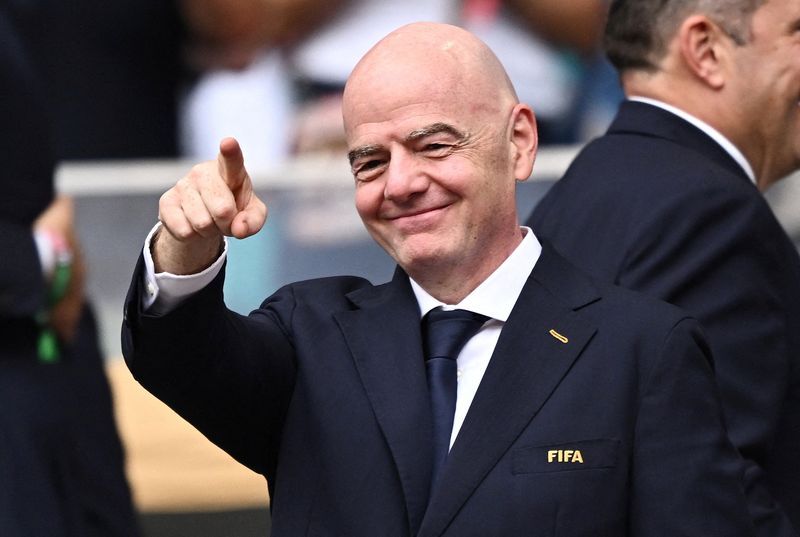
The Football Association of Wales has become the first national federation to formally withdraw its backing for FIFA President Gianni Infantino's bid to secure another term leading world football from 2027 to 2031, marking a significant blow to his previously unchallenged path to re-election. The decision comes in the aftermath of FIFA's shelved proposal to generate up to $4.2 billion by selling approximately 20% of a newly created entity controlling the commercial rights to major competitions, including the World Cup. The Welsh body's move signals deepening fractures within global football's governing structure and raises questions about Infantino's political standing heading toward crucial elections scheduled for 2026.
FIFA's privatisation scheme, which had been presented as a landmark financing initiative, collapsed under intense pressure from powerful stakeholders last Friday. The proposed arrangement would have introduced private capital into football's most lucrative commercial enterprise, fundamentally altering how the sport's biggest tournament generates revenue. The initiative had generated fierce opposition from confederations and national associations who viewed the plan as potentially compromising the sport's governance structures and diluting traditional stakeholder influence over World Cup operations. The speed with which FIFA retreated from the proposal, following nearly six months of promotion by Infantino, underscored the severity of institutional resistance to the overhaul.
The Welsh FA's formal statement articulated broader concerns extending beyond the failed financial scheme itself. Officials cited deteriorating governance practices, flawed institutional processes, inadequate leadership, compromised ethical standards, and poor stakeholder communication as the core reasons for withdrawing confidence in Infantino's continued tenure. The federation's message emphasised that prioritising football's interests above commercial considerations represented a non-negotiable institutional value, implying that the president's advocacy for the privatisation proposal demonstrated misaligned priorities. This framing suggests that opposition to Infantino transcends disagreement over a single policy initiative, instead reflecting accumulated dissatisfaction with his broader leadership approach across multiple governance dimensions.
Infantino's position has deteriorated rapidly during the past week as major international football bodies joined Wales in expressing lost confidence. UEFA, European football's governing confederation, spearheaded organised resistance to the privatisation proposal and subsequently welcomed its abandonment. CONCACAF, representing football associations across North and Central America and the Caribbean, similarly declared diminished trust in Infantino's leadership. These powerful regional confederations carry substantial voting influence within FIFA's decision-making structures, making their public criticism particularly consequential for the Swiss administrator's political fortunes. The coordinated withdrawal of support from multiple continental bodies suggests organised mobilisation against his continued leadership rather than isolated dissatisfaction.
UEFA's actions have extended beyond public statements of lost confidence. The European confederation issued a formal document preservation order, a legal instrument that prevents the destruction of correspondence, electronic files, and related materials when formal investigations are anticipated. This procedural move signals preparation for potential litigation against FIFA regarding the failed privatisation initiative and associated governance conduct. While UEFA has declined to confirm media reports detailing specific legal action plans, the issuance of the preservation order indicates serious intent to pursue institutional accountability through formal legal channels, suggesting the dispute transcends routine political disagreement within football's governance ecosystem.
Infantino's position within FIFA appeared remarkably secure prior to the privatisation proposal's collapse. Since assuming leadership from Sepp Blatter in 2016, the Swiss executive has secured two consecutive re-elections without facing genuine opposition, establishing apparent dominance within the organisation. His April announcement of intentions to pursue a fourth consecutive term as FIFA president carried expectations of routine procedural approval from the broader membership. Industry analysts had assessed his 2027-2031 re-election as a formality requiring minimal campaigning, reflecting his perceived control over the organisation's institutional levers and member support networks.
The failed privatisation plan has exposed hidden fissures within FIFA's membership coalition that suggest Infantino's grip on power may be considerably more fragile than surface-level appearances indicated. Experts consulted by Reuters highlighted how the backlash against the proposal revealed substantial dissatisfaction among national federations and regional confederations regarding his leadership direction. This underlying discontent, previously suppressed or unorganised, has now crystallised around tangible opposition to his governance approach. The March Congress scheduled for Morocco represents the formal arena where FIFA members will gather, and observers anticipate intensified scrutiny of Infantino's leadership record and vision compared to previous electoral exercises where his dominance precluded meaningful challenge.
The timing of this political crisis carries particular significance for Asian football federations and Southeast Asian nations with interests in FIFA's governance trajectory. The Asian Football Confederation, representing the continent's football associations, has not yet publicly commented on Infantino's re-election prospects or the governance controversies, leaving uncertain whether Asian member federations will follow Wales's example or maintain support for the incumbent president. Malaysia and neighbouring countries have historically coordinated positions through the AFC on major FIFA matters, suggesting that AFC member positioning could substantially influence the overall composition of support and opposition toward Infantino's candidacy during the election period.
The commercial rights privatisation proposal would have fundamentally altered revenue distribution mechanisms affecting all football confederations and national associations globally. For regional bodies like the AFC and member associations from developing football nations, the proposed arrangement raised questions about their influence over World Cup commercial decisions and the allocation of resulting revenues. The scheme's failure eliminates immediate implementation risks but leaves unresolved questions about alternative approaches to competitive financing and capital generation that FIFA may pursue. These emerging governance questions will likely shape continental football bodies' positions regarding leadership accountability and Infantino's suitability for continued tenure.
Infantino's capacity to reverse the deteriorating political situation heading toward 2026 appears uncertain given the breadth and seriousness of current opposition. The confluence of governance criticism, failed institutional initiatives, and coordinated withdrawal of support from major confederations suggests this represents a substantive political challenge rather than manageable controversy. However, FIFA's membership extends beyond the vocal confederations currently criticizing Infantino, and numerous smaller national associations may maintain support for the incumbent president. The eventual outcome will depend on whether additional confederations and federations align with Wales, UEFA, and CONCACAF in formally withdrawing support, or whether Infantino manages to stabilise his political coalition through modified governance commitments and adjusted policy directions addressing legitimate institutional concerns.

