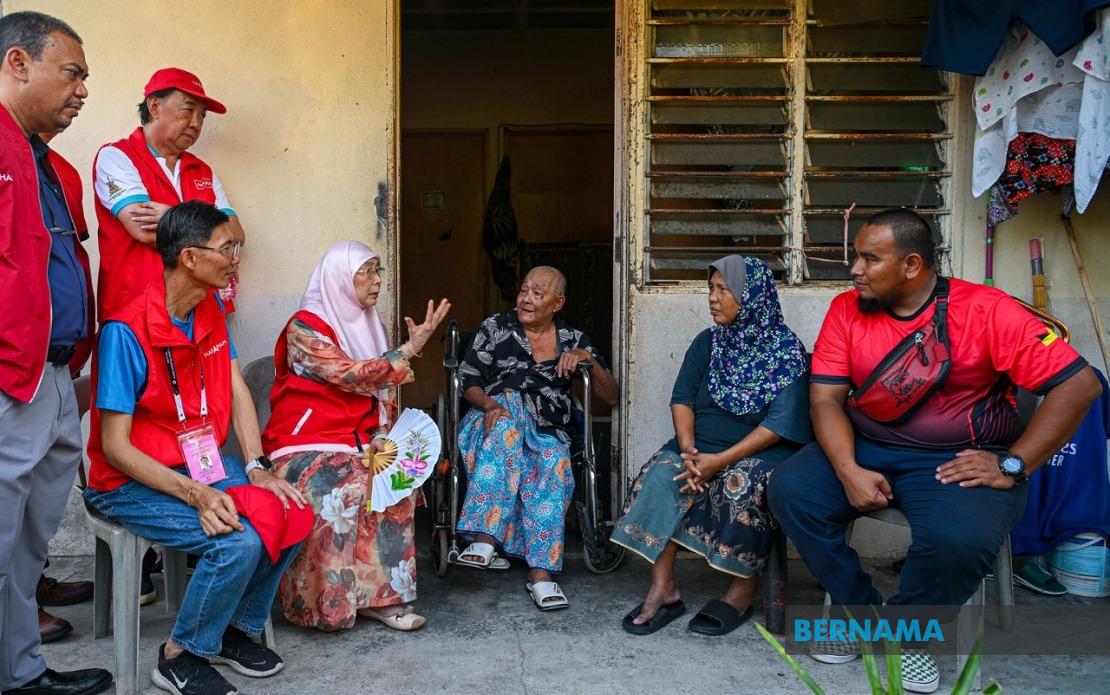
In a grassroots outreach effort ahead of Negeri Sembilan's state elections, Pakatan Harapan president Wan Azizah made an unannounced visit to the home of an elderly couple struggling with mounting medical bills and mobility challenges in the Chuah state constituency. Accompanied by PH's candidate for the seat, Datuk Yew Boon Lye, Wan Azizah spent approximately twenty minutes at the residence of Zaiton Hasan, aged 60, and her husband Paimin Sapari, aged 71, engaging directly with the residents about their circumstances and offering support.
The couple's situation reflects broader challenges facing Malaysia's ageing population and lower-income households. Zaiton manages high blood pressure while Paimin contends with diabetes, conditions that demand ongoing medication and medical supervision yet strain household budgets when incomes are limited. For many elderly Malaysians living in rural or semi-rural constituencies like Chuah, accessing consistent healthcare and affording treatment remains a persistent concern that shapes their daily lives and financial stability. The visit underscores how political campaigns increasingly focus on individual stories rather than abstract policy platforms.
Zaiton's reaction to the visit reveals the emotional resonance such personal attention carries for residents often overlooked by senior political figures. Speaking to Bernama after the encounter, she expressed profound gratitude and described the visit as surreal, noting that this marked the first occasion a high-ranking national leader had visited her home. "This is the first time a major leader has come to my house and I feel like it's a dream," she said, adding that both Wan Azizah and Yew demonstrated genuine warmth and concern. Such remarks suggest that symbolic gestures—a leader's willingness to enter modest homes and listen to ordinary citizens—resonate deeply with voters who may feel disconnected from political institutions.
The visit also served a practical purpose beyond campaigning. During the meeting, Paimin received a wheelchair donation facilitated by the Port Dickson People's Spirit Welfare Association, directly addressing one of his mobility constraints. This combination of human connection and material assistance exemplifies how political engagement increasingly incorporates social welfare dimensions, blurring lines between electoral activity and community service. The wheelchair donation may seem modest, yet for an elderly man managing diabetes, improved mobility directly enhances independence and quality of life.
The timing of this outreach aligns with intensifying campaign activities in Negeri Sembilan's 16th state election cycle. Datuk Yew Boon Lye faces a straight contest against Pau Jeou Ching, representing Perikatan Nasional, in the Chuah constituency. Both candidates are competing for ground support as voters prepare to cast ballots, making personal interactions with constituents valuable campaign moments. PN's presence in the state represents a significant political challenge to PH's ambitions to retain or expand its representation in the Negeri Sembilan State Assembly.
The election timeline shapes the urgency of such visits. The Election Commission has designated July 28 for early voting, while the main polling day falls on August 1. This compressed schedule means candidates and party leaders must maximize their ground presence and voter engagement within a narrow window. For figures like Wan Azizah, high-profile visits to constituencies where party candidates face competitive races signal organizational priority and demonstrate commitment to specific seats. Such interventions by national leaders frequently influence local momentum, particularly in marginal constituencies where election outcomes remain uncertain.
Wan Azizah's presence in Negeri Sembilan carries particular weight given her role as PKR president and her established political standing in Malaysia. Her willingness to participate in local campaign activities—rather than limiting her involvement to major rallies or media events—underscores the competitiveness of this election cycle and PH's determination to consolidate support. For the Chuah electorate, her visit communicates that their constituency merits attention from the coalition's highest echelons, potentially influencing voter perceptions of which political force takes their concerns seriously.
The broader context of Negeri Sembilan politics adds another dimension to this visit. The state has been a traditional stronghold for various coalitions over successive election cycles, and every marginal seat carries strategic importance for determining the overall composition of the state assembly. A swing of a few hundred votes in constituencies like Chuah could alter the overall balance of power and determine which coalition commands sufficient seats to form government. This electoral calculus explains why both major coalitions—PH and PN—are investing substantial resources in competing for every available seat, no matter how small the constituency might appear.
The encounter also highlights how modern political campaigns increasingly emphasize direct voter engagement and personal narratives over institutional messaging. Rather than relying solely on television advertisements or public forums where messaging remains controlled and scripted, politicians now invest in one-on-one interactions that generate organic word-of-mouth promotion. Zaiton's emotional response and her willingness to share her experience with media outlets amplify the visit's reach far beyond the twenty minutes spent in her home, creating positive campaign momentum through authentic human connection rather than paid advertising.
For elderly and low-income Malaysians in constituencies throughout Negeri Sembilan, such visits sometimes represent their primary direct access to senior political figures and decision-makers. In an era of digital communication and social media dominance, the traditional practice of knocking on doors and entering homes retains considerable symbolic and practical value. It demonstrates responsiveness to constituent needs and creates opportunities for residents to articulate grievances, concerns, and requests directly to individuals with potential influence over policy and resource allocation.
Looking forward, the results of the Negeri Sembilan election will partially reflect how effectively parties like PH leveraged such grassroots engagement against PN's competing campaign efforts. Whether visits to individual households and personal welfare assistance translate into electoral support remains an open question in Malaysian politics, yet their frequency suggests party strategists believe these investments yield meaningful returns. The August 1 polling day will provide definitive answers about whether Wan Azizah's presence and Yew Boon Lye's campaign resonated sufficiently with Chuah voters to secure victory in this contested seat.

