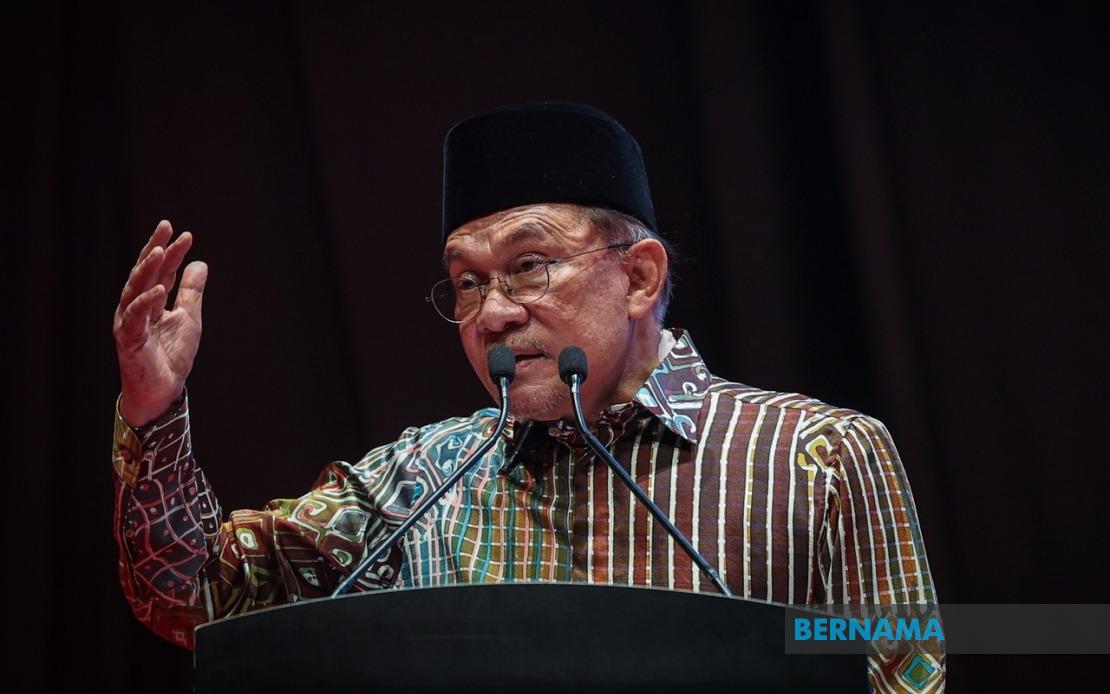
Prime Minister Datuk Seri Anwar Ibrahim has delivered a timely message to Malaysia's waqf institutions and Islamic dakwah organisations, urging them to harness modern technologies including artificial intelligence and digitalisation to sustain their relevance in a rapidly evolving global landscape. Speaking at the closing ceremony of the 2026 International Waqf Dakwah Convention held at the Kuala Lumpur Convention Centre on July 27, Anwar emphasised that technological advancement must not come at the expense of the spiritual and moral foundations that define these institutions and their role in society.
The Prime Minister articulated a nuanced vision for Islamic institutions navigating the digital age, one that acknowledges both the necessity and the perils of technological adoption. He warned that unchecked pursuit of cutting-edge technologies such as quantum computing and advanced information systems, divorced from ethical moorings and spiritual conviction, risks hollowing out human dignity, moral integrity, and the very values that give society its cohesion. This concern reflects broader anxieties across Muslim-majority nations about technology's potential to undermine religious identity and traditional social structures.
Anwar's framing of the challenge employed a philosophical balance between aspiration and rootedness. He articulated the metaphor of "reaching for the skies" whilst remaining "firmly rooted to the ground," suggesting that progress need not require abandoning foundational principles. In this formulation, technological mastery becomes compatible with strengthened faith, moral character, and cultural preservation. The emphasis on grounding institutions in their faith traditions, language, cultural heritage, and historical consciousness serves as a counterweight to the homogenising pressures of global digitalisation that often erode local and regional distinctiveness.
The Prime Minister's remarks carried particular significance for Malaysia's waqf sector, which manages substantial religious endowments and plays a crucial role in Islamic social welfare, education, and community development. Waqf institutions across Southeast Asia have increasingly recognised that outdated administrative systems and limited digital accessibility constrain their capacity to mobilise resources, reach younger donors, and manage complex portfolios efficiently. Yet the challenge lies in implementing technological solutions—blockchain-based waqf registries, AI-driven asset management, digital payment systems for waqf contributions—without transforming these institutions into purely commercial entities bereft of their spiritual purpose.
Anwar's endorsement of efforts by the Malaysian Islamic Welfare Organisation (PERKIM) and the Regional Islamic Da'wah Council of Southeast Asia and the Pacific (RISEAP), under the leadership of Sarawak Premier Tan Sri Abang Johari Tun Openg, underscored his approval of a progressive yet measured approach to Islamic outreach. These organisations have advocated for dakwah strategies that address contemporary challenges such as Islamophobia and social fragmentation whilst reinforcing communal unity among Muslim populations. The recognition of this approach at the highest political level signals that the Malaysian government sees modernised Islamic institutions as essential partners in countering negative perceptions of Islam globally and strengthening social cohesion domestically.
The convention's adoption of three principal resolutions provides a concrete roadmap for implementing Anwar's vision. The establishment of a working consortium to fortify waqf institutions creates institutional mechanisms for coordinating efforts across fragmented waqf systems. Malaysia's waqf landscape comprises numerous state-level institutions, Federal Territories bodies, and private endowments, often operating with limited coordination or resource-sharing. A consortium approach could facilitate economies of scale, knowledge transfer, and standardised best practices in waqf governance whilst respecting the autonomy of constituent organisations.
The second resolution, focusing on technology and digitalisation in waqf management, directly addresses operational modernisation. Digital systems could streamline waqf asset documentation, investment tracking, and beneficiary management, reducing administrative overhead and improving transparency. Technology could also expand access to waqf contributions through online platforms, potentially unlocking resources from diaspora communities and younger Malaysians less inclined toward traditional giving mechanisms. However, implementation requires careful attention to cybersecurity, data privacy, and ensuring that digital systems enhance rather than complicate accountability to religious authorities and the communities served.
The third resolution emphasising ecosystem strengthening through enhanced governance and strategic collaboration reflects recognition that waqf institutions operate within complex networks involving government agencies, Syariah authorities, financial institutions, and civil society organisations. Improved governance frameworks and inter-agency coordination could address persistent challenges in waqf administration, including the recovery of lost or mismanaged waqf assets, clarification of succession and management rights, and standardisation of accounting practices across jurisdictions. Such coordination also enables waqf institutions to pursue collaborative ventures in areas like social housing, education, and healthcare that exceed the capacity of individual organisations.
Anwar's commitment to submit these resolutions to the Cabinet and the Conference of Rulers for consideration elevates waqf reform to the highest levels of political and religious authority in Malaysia. This procedural trajectory suggests that government backing could facilitate necessary legislative amendments, budgetary allocations for digital infrastructure, and alignment of waqf policies across states. The involvement of the Conference of Rulers—comprising the nine hereditary sultans and four appointed governors—ensures that any reforms respect the constitutional role of rulers as custodians of Islam in their respective states, a critical factor in maintaining legitimacy among religious constituencies.
For Malaysia and Southeast Asia more broadly, this initiative carries implications extending beyond waqf administration. The region faces growing demographic and technological pressures that challenge traditional religious institutions. Younger, increasingly urban, and digitally native Muslim populations demand forms of Islamic engagement and service delivery that reflect contemporary lifestyles and expectations. Simultaneously, rapid technological change creates vulnerabilities to misinformation, cultural displacement, and the erosion of traditional knowledge systems. By positioning waqf and dakwah organisations as leaders in responsible technological adoption grounded in enduring values, Malaysia seeks to demonstrate a model of modernisation that resists the false binary between tradition and progress.
The international dimension of the convention itself—bringing together waqf scholars and practitioners from across the Islamic world—amplifies the significance of Malaysia's approach. By hosting and championing this vision, Malaysia positions itself as a thought leader in articulating how Islamic institutions globally might navigate the digital transformation without sacrificing their spiritual mission. This carries soft power implications in the broader Islamic world and among Muslim diaspora communities worldwide.
The success of these initiatives ultimately depends on implementation quality and sustained commitment from both government and Islamic institutions themselves. Converting resolutions into practical changes requires adequate resources, technical expertise, political will, and acceptance among religious scholars and institutional leadership. Yet Anwar's public advocacy and the government's willingness to formally consider these proposals suggest that Malaysia's leadership recognises waqf and dakwah modernisation as central to the nation's social stability, religious vitality, and international standing in an increasingly digital age.

