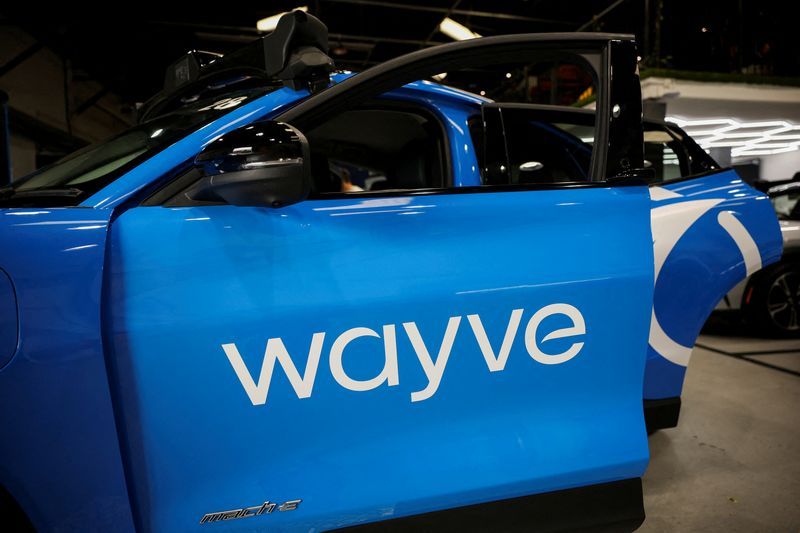
The race to develop practical autonomous vehicles has entered a new competitive phase, with London-based Wayve emerging as a serious contender after securing $2.8 billion in funding from a constellation of automotive and technology partners. The investment lineup reads like a who's who of the global transport industry, encompassing semiconductor giant Nvidia, luxury automaker Mercedes-Benz, and Japanese carmaker Nissan. Most significantly, the startup recently announced it would supply its autonomous driving technology to Stellantis for deployment in Jeep-branded robotaxis operating on Uber's ride-hailing platform, marking a tangible commercial application for its proprietary system.
Wayve's technological approach fundamentally differs from conventional autonomous vehicle frameworks in how it processes the journey from sensor input to driving decisions. Rather than relying on extensive software programming combined with high-definition digital maps to establish predetermined responses for various traffic scenarios, the company employs end-to-end machine learning. This architecture allows artificial intelligence to directly translate raw sensor data into driving actions, mimicking how human drivers instantaneously interpret their environment and respond to changing conditions without consciously processing coded rules.
The philosophical distinction between these two approaches carries profound implications for the autonomous vehicle industry. Conventional systems operate on a logic chain where engineers explicitly programme responses to anticipated situations, creating explicit safety rules encoded in software. Wayve's methodology represents a departure from this prescriptive model, instead allowing the AI system to develop its own decision-making patterns through exposure to vast quantities of driving data. This similarity to human learning has attracted substantial investor confidence, though it simultaneously introduces a critical challenge that regulators and safety-conscious automakers struggle to address: interpretability.
Tesla pioneered the end-to-end learning approach several years ago, building its autonomous capabilities on a foundation of camera-only sensor input. Wayve has charted a deliberately different course by engineering its system to integrate seamlessly with multiple sensor types and various AI computing chips. This vendor-agnostic design philosophy represents a crucial competitive advantage, enabling Wayve to license its technology to virtually any vehicle manufacturer or autonomous vehicle developer, irrespective of their existing hardware infrastructure or preferred suppliers. Chief Executive Officer Alex Kendall, a 33-year-old New Zealand technologist who founded the company in 2017 immediately after completing his doctorate in AI deep learning at Cambridge University, has articulated an ambitious vision of democratising autonomous driving capabilities across the global automotive industry.
The broader context for Wayve's rising prominence includes a significant shift in investor sentiment driven by Alphabet's Waymo division. After more than a decade of development, Waymo now operates paid robotaxi services across approximately a dozen cities worldwide, providing tangible proof that commercial autonomous vehicles represent a genuine rather than hypothetical future. This expansion has rekindled investor appetite for autonomous driving ventures after years of disappointment from missed timelines and overstated claims. A decade ago, end-to-end machine learning represented an obscure academic pursuit confined to university research labs; today, virtually every serious autonomous vehicle developer incorporates at least some elements of this methodology into their systems.
The safety implications of end-to-end learning systems remain hotly contested among engineers, regulators, and academic researchers. The fundamental tension stems from what experts describe as the "black box" problem: systems that employ end-to-end learning make driving decisions through processes that resist easy human interpretation. Traditional rule-based systems, by contrast, allow engineers and safety auditors to trace exactly why a vehicle selected a particular course of action. Wayve addresses this transparency concern through its approach of generating safety maps that visualise traffic situations and identify permissible driving paths, though critics argue this adds only a layer of post-hoc explanation rather than genuine transparency.
Wayve's engineering team contends that the apparent weakness of end-to-end systems—their reliance on learned patterns rather than exhaustively coded rules—actually constitutes their fundamental strength in handling genuinely novel situations. According to Vijay Badrinarayanan, the company's vice president of artificial intelligence, traditional rule-based approaches become "brittle" when confronted with statistically rare or previously unencountered traffic scenarios. Human drivers, by contrast, maintain safety through conservative adaptation when encountering unfamiliar circumstances. This philosophical position suggests that attempts to anticipate every possible edge case through explicit programming inevitably fail, whereas systems trained on diverse real-world data develop more robust generalisation capabilities.
Waymo, despite pioneering end-to-end learning, has continued to rely on supplementary rule-based systems derived from software programming and detailed mapping, an approach the company defends as necessary for ensuring safety at scale. This hedged strategy reflects legitimate caution regarding the novel risks posed by deploying AI-driven vehicles in complex, high-stakes environments. The automotive industry's conservative approach to safety certification means that even companies fully committed to end-to-end learning maintain traditional safeguards, reflecting both technical prudence and regulatory expectations.
Nissan's cautious assessment of Wayve's technology illustrates the broader hesitation among established automakers regarding opaque decision-making systems. Eiichi Akashi, Nissan's technology officer, characterised Wayve's approach as the most advanced available while simultaneously acknowledging the profound difficulty of understanding how the system actually makes its driving decisions. Nissan plans to deploy Wayve's technology in its Elgrand people-mover vehicle in Japan during the fiscal year ending March 2028, but this timeline reflects the considerable validation work required before committing advanced autonomous vehicles to commercial service.
Wayve's competitive positioning emphasizes rapid deployment to new geographical markets without the time-consuming preliminary steps of digitally mapping roads and developing localised software code. The company claims successful testing across hundreds of cities globally without requiring such preparation, a claim rooted in the principle that end-to-end systems learn general driving principles applicable across diverse environments. This scalability advantage could prove decisive if the underlying technology proves both safe and reliable in commercial deployment, potentially allowing Wayve to achieve market penetration that traditional mapping-dependent approaches cannot match.
Academic perspectives on end-to-end versus traditional approaches remain nuanced. Siddartha Khastgir, a safety autonomy specialist at the University of Warwick, suggests that end-to-end models may accelerate development and commercial deployment timelines compared to conventional approaches, yet resists declaring either methodology inherently superior from a safety standpoint. Carnegie Mellon University's Phil Koopman, a prominent autonomous vehicle technology expert, frames Wayve's methodology as one viable approach among several potential solutions, while cautioning that achieving safe, widespread autonomous vehicle deployment across complex environments like the United States will likely require at least another decade and substantial technological innovations beyond what currently exists.
For Southeast Asian readers, Wayve's expansion carries particular significance given the region's rapidly motorising economies and chronic traffic congestion challenges. The availability of autonomous vehicle technology that requires minimal mapping and programming could accelerate adoption in countries where extensive digital infrastructure remains incomplete. However, the philosophical and practical differences between end-to-end and rule-based systems will influence how different governments approach regulation and safety certification, potentially affecting which technologies dominate regional markets. As Wayve expands its operational presence in Tokyo and pursues commercial deployment in Japan, its success or failure will establish important precedents for how other Asian markets approach autonomous vehicle adoption and safety governance.

