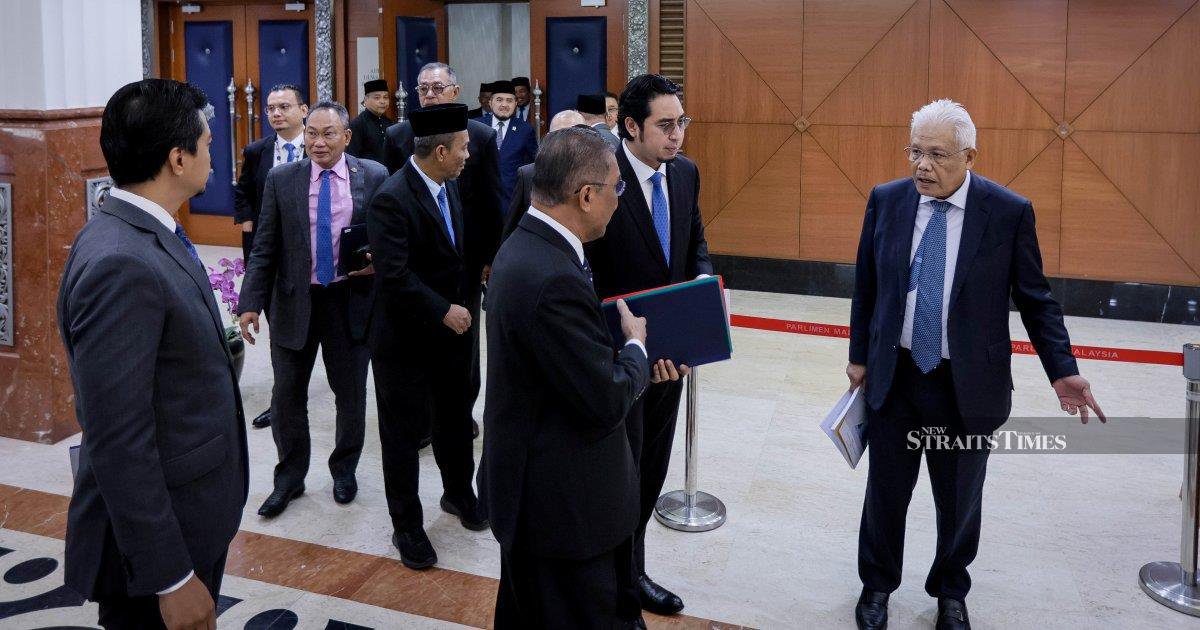
The opposition's recent parliamentary departure in protest against the Royal Commission of Inquiry findings on Tabung Haji has thrown into sharp relief one of the most persistent paradoxes in Malaysian politics: the same tactical manoeuvre simultaneously represents principled protest to one faction and mere grandstanding to another, depending entirely on ideological affiliation and which benches occupy which side of the aisle.
This contradiction runs deeper than mere partisan disagreement. It cuts to fundamental questions about what constitutes legitimate parliamentary dissent, the purpose of opposition in a democratic system, and whether staged withdrawals represent authentic political expression or calculated media management. When legislators absent themselves from proceedings in coordinated protest, they initiate a contest for narrative control that often overshadows the substantive issues prompting the exit in the first place. The Tabung Haji matter exemplifies this dynamic: whether one views the walkout as principled objection to the Royal Commission's conclusions or as calculated political theatre depends largely on one's prior positions regarding both the inquiry itself and the opposition's broader agenda.
The tactical availability of parliamentary walkouts has become increasingly standardised across Malaysian politics. Opposition parties deploy these exits to signal displeasure with government actions, Royal Commission findings, legislative procedures, or perceived injustices. Government backbenchers occasionally employ similar tactics when discontented with leadership decisions. Yet the reception differs markedly. When the opposition withdraws, government supporters routinely characterise the action as attention-seeking, disrespectful to parliamentary processes, or evidence of political weakness. When government-aligned members stage exits, the narrative often frames them as courageous principled stands or expressions of legitimate concern.
This asymmetry reflects deeper structural realities in Malaysian parliamentary culture. The government controls the apparatus of parliamentary management, media access, and narrative framing through state-owned broadcasters and sympathetic outlets. The opposition lacks equivalent resources to shape how their actions are immediately interpreted and disseminated to broader publics. An opposition walkout must overcome this structural disadvantage to register as legitimate protest rather than dismissed theatre. Government-initiated exits face no such burden; they benefit from automatic presumptions of seriousness simply because they originate from those holding executive authority.
The Tabung Haji situation itself warrants examination through this lens. The pilgrimage fund's historical management raised legitimate questions about governance, transparency, and investor protection. A Royal Commission inquiry represented an institutional response to these concerns. Whether the opposition's rejection of the findings constitutes valid criticism of inadequate accountability mechanisms or obstruction of a serious governmental process depends on one's assessment of the inquiry's independence and thoroughness. Yet this substantive evaluation gets buried beneath arguments about whether the walkout itself was appropriate parliamentary conduct.
Singapore and Australia offer instructive contrasts in how parliaments address such questions. Both jurisdictions have developed clearer conventions around what constitutes acceptable dissent, when departures serve legitimate purposes, and how the chamber responds when members absent themselves during crucial votes or substantive debates. These procedural frameworks don't eliminate partisan disagreement, but they reduce the scope for claiming that identical actions mean fundamentally different things depending on who performs them. Malaysian parliamentary culture has been slower to crystallise such norms, leaving contested interpretation space that inevitably becomes politicised.
For Southeast Asian observers, the Malaysian situation demonstrates how institutional forms can hollow out when partisan competition erodes shared understandings of democratic propriety. Thailand, Myanmar, and the Philippines have experienced far more dramatic parliamentary disruptions, including violent occupations, extended dissolutions, and military interventions. Against that regional backdrop, Malaysian walkouts might appear comparatively mild. Yet their recurrence and the disagreement they provoke about their legitimacy suggests underlying fragility in the normalisation of peaceful dissent.
The opposition faces a persistent tactical dilemma. Withdrawing from parliament draws media attention and signals serious objection, but risks being dismissed as theatre. Remaining present to make arguments and formal objections maintains procedural legitimacy, but struggles to break through the comparative noise of routine parliamentary debate. Neither option satisfies both the requirement to register meaningful protest and the demand to be perceived as acting in good faith within democratic norms. Government parties face no equivalent dilemma because they can default to parliamentary procedures and apparatus control.
The recurring nature of these walkout disputes suggests they function as proxy battles over fundamental questions that Malaysian politics has not yet resolved. How should opposition parties register substantive disagreement with government decisions? What mechanisms exist for challenging inquiry processes or findings when opposition parties believe them inadequate? When can parliamentary exit be considered legitimate dissent rather than obstruction? What mutual responsibilities do government and opposition bear toward parliamentary institution maintenance? Until these questions receive explicit attention and some degree of consensual answer, walkouts will continue triggering arguments about legitimacy rather than substantive engagement with the issues motivating departure.
This dynamic ultimately weakens parliamentary democracy's performative function. Parliaments derive legitimacy partly from their role as forums where competing interests engage in visible, comprehensible debate that publics can observe and evaluate. When protests overshadow substance, and walkouts become occasions for meta-arguments about appropriateness rather than examination of underlying policy questions, the institution loses explanatory power in national discourse. Malaysian voters increasingly receive accounts of parliamentary activity mediated through questions of tactical appropriateness rather than substantive policy content.
Moving forward, Malaysian parliamentary culture might benefit from explicit conversation about dissent protocols. What forms of protest does the system legitimise? Under what circumstances can members absent themselves? How should chambers handle such departures? By establishing shared frameworks rather than litigating each instance's legitimacy retroactively, parliament could preserve space for principled opposition while maintaining institutional functionality. Until such conversation occurs, walkouts will remain flash points where tactical disagreement displaces substantive debate.

