The revelation that Israeli nationals may have participated in activities at the Network School in Johor Bahru has sparked heated debate online, with many Malaysians demanding to know how such individuals could have crossed immigration checkpoints. Behind this outrage lies a significant enforcement challenge that authorities face: a substantial proportion of Israelis hold valid second passports from other nations, making it nearly impossible to identify them at the border. This dual citizenship reality undermines the practical application of Malaysia's longstanding policy restricting Israeli entry, creating a gap between intention and enforcement that has few straightforward solutions.
While the Israeli government does not officially publish comprehensive data on how many of its citizens hold dual nationality, credible estimates place the figure at approximately 10 percent of the population—roughly one million people based on current demographics. The Tel Aviv authorities maintain that they neither collate nor release such statistics, but academic research and polling organisations have documented patterns that reveal the scope of the issue. These are not marginal cases; rather, dual citizenship among Israelis represents a structured phenomenon rooted in immigration history, family ties, and international law, particularly as it relates to the Jewish diaspora and return migration to Israel.
The most prevalent second citizenship among Israelis is that of the United States, with estimates suggesting more than 200,000 Israeli-American dual nationals currently residing in Israel. This figure excludes Jews born in America or those whose families emigrated to the US generations ago, meaning the actual overlap between Israeli and American civic status could be considerably higher. Research examining military personnel records indicates that over 50,000 active duty Israeli military personnel hold foreign passports, with the majority carrying American, Russian, French, British or Ukrainian documents. These are not casual memberships in distant nations but deeply integrated identities recognised by multiple governments simultaneously.
European citizenship among Israelis reflects decades of immigration patterns and heritage claims. An academic study by Yossi Harpaz documented approximately 344,000 Israelis holding European Union citizenship as of 2019, though this represented only a portion of total dual nationals worldwide. France, reflecting sustained Jewish immigration spanning generations, accounts for a significant cohort. Russia features prominently due to the wave of emigration from the former Soviet Union that accelerated after the 1990s, bringing hundreds of thousands of citizens who retained or later claimed Russian nationality. Other common second nationalities include those of the United Kingdom, Poland, Romania, Hungary, Portugal, Argentina, South Africa, Australia and Ethiopia, each connected to distinct immigration histories and eligibility rules for citizenship through descent or naturalisation.
The Network School incident has crystallised this enforcement problem into a real-world example. The establishment, located in Forest City in Johor Bahru, operates as an international co-living and co-working technology commune founded and managed by Silicon Valley investor Balaji Srinivasan. It serves as a residential and working space for digital nomads and software developers from around the world. Following allegations of Israeli participation—particularly the presence of Israeli-Palestinian content creator Nusier Yassin, popularly known as Nas Daily—the facility has attracted scrutiny from activist groups and public attention. Srinivasan has indicated that a planned RM500 million expansion in Malaysia is now on hold, and he has publicly criticised activist group Malaysia Protest 4 Palestine over the matter on social media platform X.
The case of Nas Daily himself illustrates the enforcement challenge perfectly. In 2022, the Israeli-Palestinian videographer disclosed that he had successfully entered Malaysia despite the country's Israeli entry restrictions by using a Saint Kitts and Nevis passport while transiting through Singapore into Johor Bahru. His statement suggests that an individual with Israeli nationality can simply present an alternative valid travel document from another nation, and immigration officials processing arrivals face no reliable mechanism to cross-reference multiple identities or citizenships. Without access to centralised international databases linking passport holders to other nationalities they possess, border officials cannot identify secondary citizenship status during routine entry procedures.
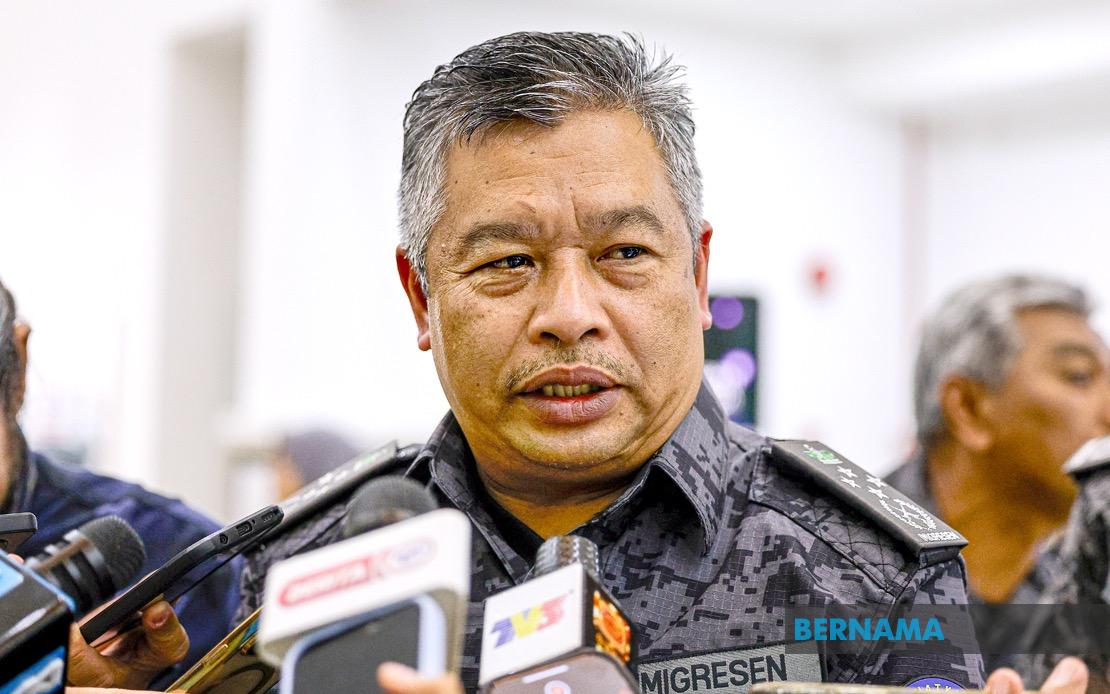
Immigration director-general Datuk Zakaria Shaaban has stated that 256 foreigners from 40 countries associated with the Network School were inspected and found to hold social visit passes, while an additional 10 held professional visit passes under the nomad category. These 10 nomads comprised four US citizens, three Russians, two Australians and one Indian national. Notably, no Israeli nationals have been formally identified in this initial investigation, though authorities have indicated that inquiries are continuing and findings will be shared with other relevant agencies. This absence of confirmed Israeli detections does not necessarily reflect successful enforcement; rather, it underscores the fundamental difficulty in confirming nationality status when individuals present alternative valid documentation.
The practical reality facing Malaysian immigration authorities is stark. No publicly accessible registry exists cataloguing which Israeli citizens also hold US passports, and for public figures in particular, citizenship status often remains private information. Many Israelis deliberately avoid disclosing their citizenship status in certain contexts, making voluntary disclosure unreliable as an enforcement tool. For immigration officers processing hundreds of arrivals daily, there is no standardised procedure to probe whether a person holding an American or Russian passport might simultaneously possess Israeli citizenship. Even among Malaysians who have undertaken pilgrimage to Jerusalem with home ministry and immigration approval, encounters with Israeli-Americans speaking with American accents and carrying American documents are commonplace, illustrating how seamlessly such individuals move across borders.
The enforcement challenge extends beyond individual deception to structural limitations within international law and practice. Nations do not systematically share comprehensive citizenship registries with each other, and privacy considerations protect citizens' right to multiple nationalities from routine disclosure. A Malaysian immigration officer has no legal mechanism to access records indicating that a particular American passport holder is also an Israeli national, nor would such requests be routinely honoured by foreign governments. This creates a fundamental gap: Malaysia's policy against Israeli entry cannot be applied to individuals who present themselves with alternative valid travel documents, because the immigration system has no reliable way to identify their additional citizenship.
The controversy surrounding Network School has highlighted broader tensions in Malaysia's approach to foreign investment and talent acquisition. The country actively seeks international expertise, capital and innovative ventures—Balaji Srinivasan's RM500 million expansion represented significant economic activity—yet simultaneously maintains a principled stance against Israeli state and associated entities. This dual imperative creates practical dilemmas when Israeli nationals, many holding passports from allied or neutral nations, participate in legitimate business activities. The discovery has exposed a mismatch between Malaysia's clearly articulated political position regarding Israel and the technical capacity of immigration authorities to enforce restrictions based on that policy.
Moving forward, Malaysia faces several options, each with limitations. Enhanced intelligence gathering and inter-agency coordination might improve detection of individuals with known Israeli connections, but would require significant resources and would likely catch only those with public profiles. Tightening requirements for visa and pass applications to specifically question dual citizenship would encounter resistance from civil liberties advocates and from the foreign nationals and companies such restrictions might deter. Some countries have explored biometric systems and expanded information-sharing arrangements, but international participation in such schemes remains inconsistent. The reality is that without comprehensive international data-sharing agreements and active cooperation from nations where Israelis hold citizenship, Malaysia's entry restrictions will remain difficult to enforce comprehensively.
The underlying issue extends beyond a single school or incident. As globalisation increases cross-border mobility and dual citizenship becomes more common across numerous nationalities, many countries find their immigration policies increasingly difficult to implement when based on citizenship status rather than specific conduct or security concerns. Malaysia's position against Israel remains clear and unambiguous, and the country makes no apologies for this stance. However, distinguishing between Israeli state actions and Israeli individuals—particularly those holding alternative citizenship and presenting as nationals of other countries—presents a genuinely complex enforcement problem without simple solutions. The Network School controversy serves as a reminder that well-intentioned policies sometimes encounter practical limits in an interconnected world where identity itself has become multifaceted and portable.

