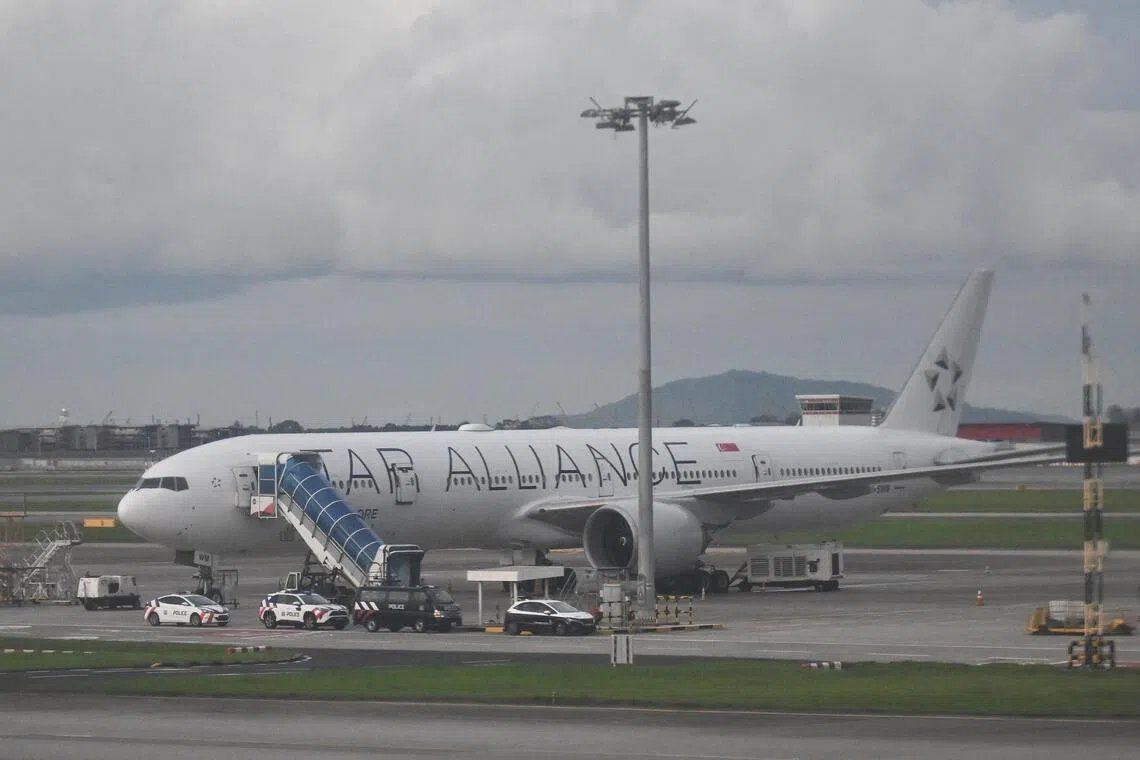
Linda Kitchen, a 74-year-old British widow, has initiated legal proceedings at Britain's High Court against Singapore Airlines, seeking compensation and answers following the death of her husband during a catastrophic turbulence event aboard Flight SQ321 in May 2024. The incident, which unfolded over Myanmar airspace as the aircraft travelled from London to Singapore, has become a watershed moment in aviation safety litigation, touching on broader questions about airline responsibility during extreme weather encounters and the adequacy of onboard detection systems.
The flight's dramatic descent on May 21, 2024, saw the Boeing 777-300ER plummet more than 54 metres in just five seconds during what began as a routine breakfast service. Geoffrey Kitchen, a respected British theatre director and Linda's husband of 52 years, suffered a fatal heart attack during the violent manoeuvre, while his wife was pinned beneath him against an armrest, sustaining catastrophic spinal injuries that would require months of hospitalisation and ongoing specialist care. The impact on the cabin was indiscriminate and severe: 79 passengers and crew members were injured in total, with 211 passengers and 18 crew members aboard the stricken aircraft when it diverted to Suvarnabhumi Airport in Bangkok for emergency landing.
Linda Kitchen's account of the tragedy underscores the human toll beyond statistics. During the initial plunge, her husband fell directly onto her, crushing her against the seat structure with force sufficient to fracture her spine. Fellow passengers eventually assisted in moving Geoffrey, allowing a doctor travelling on board to attempt cardiopulmonary resuscitation. Kitchen was transferred to hospital where she spent ten days before requiring airlift back to Bristol in the United Kingdom. The emotional devastation compounded her physical suffering: she learned of her husband's death only two days after the incident, a delay that deepened the trauma of an already catastrophic experience. "When I got separated from Geoff, I knew he was in a bad way, but nothing prepared me for hearing he had died," she recounted in statements to British media. "I was in so much pain that the journey was a blur. Once back in the UK, I remained in hospital for around a week and, following my discharge, required significant assistance at home."
Kitchen is not alone in seeking redress through the courts. British court records reveal that at least six other passengers—Bradley Richards, Jack Jenkins, Hannah Fullerton, Andrew Dawood, Bryan Matthews, and Pauline and Michael Rainey—have also launched separate legal actions against Singapore Airlines. The family's legal representative, Anthe Korelidou, a specialist aviation lawyer, has characterised the High Court proceedings as a necessary milestone in obtaining accountability. "While it's more than two years since Geoff's death, Linda and the rest of her family continue to have a number of questions and concerns about what happened and if more could have been done to prevent their injuries," Korelidou stated. The legal strategy encompasses two distinct claims filed in Linda Kitchen's name: one for her own injuries and recovery costs, and another on behalf of Geoffrey Kitchen's estate.
Singapore Airlines' initial response to the tragedy included a compensation framework announced in 2024, though questions about adequacy have motivated the litigants to pursue formal court action. The airline offered US$10,000 to passengers suffering minor injuries, while those with serious, long-term medical needs received advance payments of US$25,000. Additionally, SIA committed to full airfare refunds for all passengers on the flight. In a formal statement, the airline acknowledged the gravity of the incident: "We sincerely apologise to all passengers and crew members on board Flight SQ321 for their traumatic experience. The safety and well-being of SIA's passengers and staff are our top priority." However, when queried by The Straits Times on August 29, SIA declined further comment, citing pending court proceedings—a position consistent with standard legal practice but one that has left bereaved families and injured passengers seeking more comprehensive accountability.
The technical circumstances surrounding the turbulence have emerged as a central focus of investigation and litigation. Singapore's Transport Safety Investigation Bureau (TSIB), operating under the Ministry of Transport, conducted the official investigation and identified severe storm clouds as the probable source of the extreme turbulence. Critically, these weather systems evaded detection by the aircraft's onboard weather radar, thereby catching the captain without advance warning and negating the opportunity for tactical manoeuvres to mitigate impact. Yet the TSIB's final determination remained inconclusive on a pivotal question: whether technical deficiencies within the radar system itself contributed to the failure of detection, or whether the storm cells simply represented a meteorological edge case beyond the system's design parameters.
This technical ambiguity forms a crucial battleground in the litigation. From an aviation safety perspective, modern weather radar systems are designed to detect precipitation and convective activity at considerable distances, theoretically providing pilots with adequate lead time to request altitude adjustments or alter course. The fact that SQ321's radar failed to register the storm clouds raises legitimate questions about system functionality, calibration, or maintenance standards—questions that extend beyond SIA to encompass broader industry practices regarding weather detection technology and pilot training protocols. For Malaysian and Southeast Asian aviation stakeholders, the case underscores vulnerabilities in regional airspace safety frameworks, particularly given the seasonal prevalence of severe thunderstorms throughout the monsoon corridors that traverse Myanmar, Thailand, and the broader region.
The legal action initiated by Kitchen and her co-claimants represents a significant escalation beyond preliminary settlement discussions. By pursuing High Court proceedings in Britain, the claimants are asserting jurisdiction based on the nationality of the deceased and injured parties, a strategic choice that signals intent to establish robust precedent around airline liability standards in Commonwealth jurisdictions. The decision to litigate rather than accept preliminary compensation offers suggests dissatisfaction with the proposed financial settlements and, more fundamentally, a determination to compel full disclosure and accountability regarding systemic failures. For SIA, long regarded as one of Asia's premier carriers with an exemplary safety record, the litigation poses reputational and financial risks that extend beyond the immediate claims.
The SQ321 incident and its aftermath carry particular significance for Malaysian aviation authorities and carriers. Malaysia Airlines, which has navigated its own catastrophic incidents and extensive litigation, recognises the importance of transparent investigation, comprehensive compensation frameworks, and sustained engagement with affected families. The TSIB's inconclusive findings regarding the weather radar system warrant independent technical review and industry-wide assessment of detection capabilities across comparable aircraft operating throughout Southeast Asian airspace. Airlines serving the region must examine whether existing weather radar technologies, maintenance protocols, and crew training adequately address the meteorological hazards endemic to tropical and subtropical flight corridors where severe convection can develop with remarkable speed and intensity.
Linda Kitchen's pursuit of justice through formal litigation reflects broader societal expectations regarding corporate accountability in aviation. Beyond financial compensation, she and her fellow claimants seek authoritative answers to fundamental questions: could the incident have been prevented with more advanced detection systems; should SIA have implemented additional safety protocols given known weather patterns; and what systemic improvements can prevent similar tragedies. These questions resonate throughout Southeast Asian aviation, where airlines operate in some of the world's most challenging meteorological environments while serving rapidly expanding passenger volumes. The resolution of Kitchen's case will likely establish important precedents regarding airline liability, adequacy of compensation for fatalities and serious injuries, and industry standards for weather radar functionality and pilot training.
Singapore Airlines' silence before the courts does not diminish the fundamental issues the litigation has raised. The airline's comprehensive investigation, findings review, and safety recommendations will ultimately shape public and regulatory confidence in its operational practices. For the broader aviation community, the SQ321 tragedy and resulting legal action serve as a reminder that even technologically advanced, well-operated carriers face unprecedented challenges from nature's most violent phenomena, and that accountability mechanisms must be sufficiently robust to serve justice for those affected while driving continuous safety improvements. Linda Kitchen's determination to pursue answers through the courts, despite the emotional toll of reliving the incident's trauma, reflects a commitment to ensuring that her husband's death and her own profound suffering generate meaningful change in how airlines throughout the region approach weather detection, crew response, and passenger safety.

