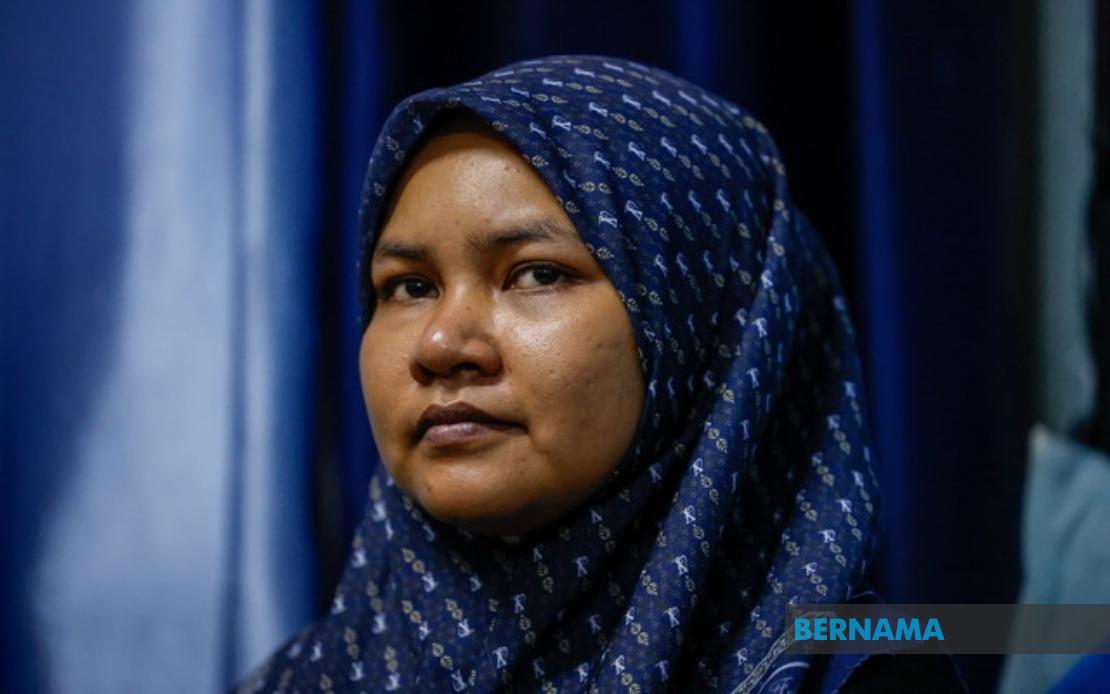
The widow of Amirul Hafiz Omar, a 33-year-old delivery rider killed in a collision in Klang, will pursue a RM1 million civil claim against the driver believed responsible for his death, her legal team confirmed this week. The filing, scheduled for August, marks a significant step in seeking financial compensation beyond the criminal proceedings already underway against the accused driver.
Nor Nadia Abdul Majid, 32, has instructed her lawyer Nur Iffah Hizwani Omar to prepare the writ of summons and statement of claim for submission to the Shah Alam High Court. However, the filing remains contingent on the issuance of a Letter of Administration, a critical legal document that grants her authority to act on behalf of her deceased husband's estate. The application for this document was pending a court decision on July 28 at the Kuala Lumpur High Court.
Understanding the full financial impact of her husband's death requires meticulous documentation of his income sources. Nor Nadia's legal team is gathering supplementary income records from the e-hailing company through which Amirul Hafiz supplemented his delivery work. These records are essential for calculating the precise quantum of damages to claim in the statement of claim, ensuring the RM1 million figure represents a realistic assessment of the family's loss rather than an arbitrary demand.
The collision occurred on March 29 on Jalan Raya Barat in Klang, when Amirul Hafiz was struck by a vehicle driven by R. Saktygaanapathy, 28. The accused driver subsequently faced serious criminal charges. Initially charged under Section 302 of the Penal Code for murder—an offense that carries potential capital punishment—Saktygaanapathy's case was later amended. On June 3, he pleaded not guilty to a charge under Section 15(1)(a) of the Dangerous Drugs Act 1952 for self-administering tetrahydrocannabinol, or THC, suggesting investigators determined that drug impairment played a role in the fatal incident.
The civilian civil suit represents a parallel track to the criminal justice process, allowing Nor Nadia to pursue financial redress regardless of the eventual criminal outcome. This approach is common in Malaysian law, where victims' families may claim damages through civil courts even as prosecutors pursue criminal convictions. The RM1 million claim reflects attempts to quantify the loss of a primary breadwinner and the disruption to family life, though Malaysian courts often consider factors including earning capacity, age, dependants, and future earning potential when assessing damages.
For Nor Nadia, nearly four months have elapsed since her husband's death, and she has struggled to process the full weight of her loss. She described a curious numbness in the weeks immediately following the tragedy, as though Amirul Hafiz had simply departed for another shift rather than never returning. Only after three months did the reality crystallise into overwhelming grief, a delayed emotional response that afflicts many bereaved individuals confronting sudden, violent loss.
The gravity of her situation becomes most acute when she interacts with her children, who represent both her reasons to persevere and constant reminders of her husband's dedication. Amirul Hafiz maintained a disciplined routine centred on his children's welfare, personally driving them to school each morning and collecting them at noon to share meals together. This paternal consistency never wavered regardless of weather or circumstance, embodying the daily sacrifices that characterised his working life and parental commitment.
Nor Nadia has now inherited these responsibilities entirely. She manages school runs, meal preparation, and the emotional labour of explaining their father's absence to children too young to fully comprehend death's permanence. This transition from supportive spouse to sole guardian and breadwinner encapsulates the cascading consequences of a single catastrophic moment, extending far beyond legal proceedings or financial settlements.
The case underscores broader concerns surrounding drug-impaired driving in Malaysia, particularly among individuals operating commercial vehicles in busy urban corridors. Jalan Raya Barat in Klang accommodates substantial traffic, including delivery and commercial vehicles operated by drivers working extended hours under pressure to meet quotas. The circumstances suggesting THC intoxication at the wheel highlight persistent road safety challenges and the human cost when impaired drivers collide with vulnerable road users, whether pedestrians or riders operating motorcycles or bicycles for delivery platforms.
Civil litigation in cases involving fatal road accidents typically addresses several categories of damages: loss of dependency covering the deceased's future contributions to the family, loss of expectation of life, funeral expenses, and in some instances, bereavement damages. Nor Nadia's legal team will construct the RM1 million claim by calculating Amirul Hafiz's projected earnings trajectory, anticipated working years, and the dependency of his children until reaching adulthood. Courts examine such claims rigorously, requiring substantial evidence of income and family circumstances rather than accepting round figures.
The upcoming months will determine whether the Letter of Administration clears procedurally, whether the e-hailing company cooperates with income documentation requests, and whether the statement of claim filed in August withstands any preliminary objections from the defence. Meanwhile, the criminal proceedings against Saktygaanapathy continue on their separate trajectory toward potential conviction or acquittal, a verdict that may indirectly influence how judges evaluate civil liability and quantum in the family's parallel suit.

