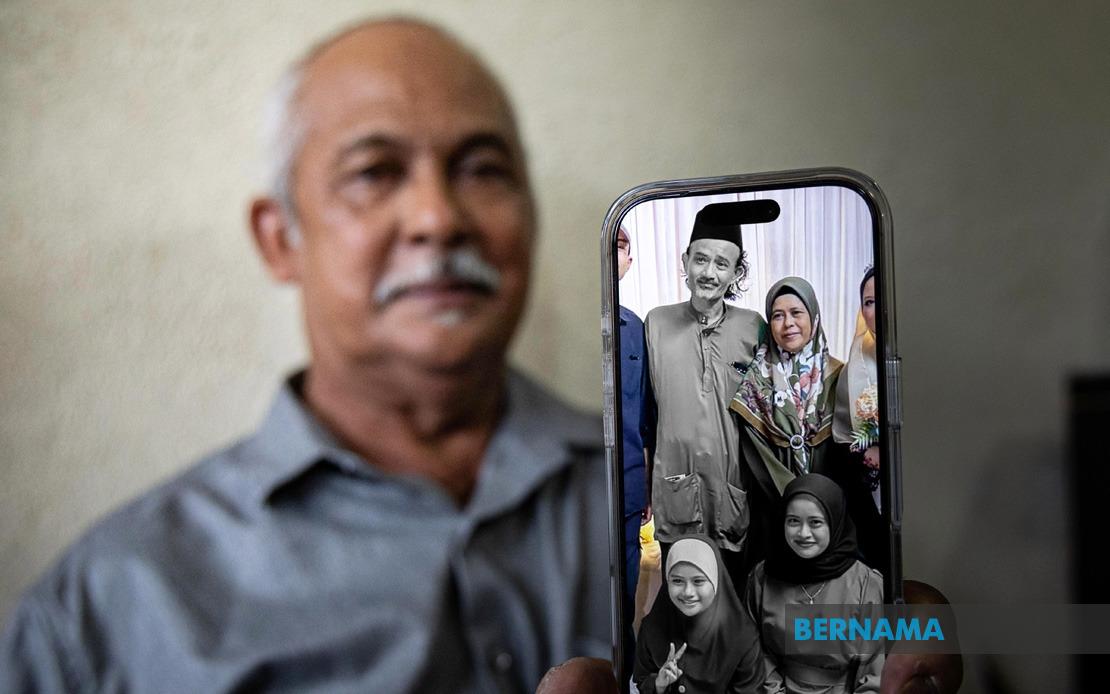
Norhayati Razali, 55, remains trapped in a state of confusion as she attempts to recover from the catastrophic consequences of a road accident in Kuala Lumpur that claimed the lives of her husband and two children. The sole survivor of the collision involving a Malaysian Immigration Department (JIM) truck on Jalan Sultan Ismail on Wednesday, Norhayati is currently being treated at Kuala Lumpur Hospital, where doctors have upgraded her condition from the Intensive Care Unit to a regular ward. Despite showing physical progress—she can now consume food and liquids independently without the assistance of feeding tubes—her psychological recovery remains deeply uncertain as she battles significant memory impairment linked to serious head trauma sustained during the impact.
The magnitude of Norhayati's injuries extends far beyond her neurological complications. Her brother, Mohd Nadzri Razali, disclosed that she has sustained multiple traumatic injuries affecting her hands, waist, knees, legs, and head, all requiring sustained medical intervention and monitoring. The severity of her condition has necessitated continuous hospitalisation in Kuala Lumpur, where specialist care remains essential. Medical personnel have not yet determined whether her injuries have stabilised sufficiently to permit transfer to a facility closer to her family base in Ipoh or Teluk Intan, leaving the family unable to plan for longer-term care arrangements or provide convenient bedside support.
The tragedy has compounded Norhayati's distress through a cruel phenomenon in which the bereaved survivor cannot consistently retain awareness of her losses. Mohd Nadzri recounted a disturbing sequence of events following his sister's emergence from unconsciousness. Family members transported her to view the bodies of her deceased relatives and carefully explained the circumstances of their deaths. She responded by nodding passively, offering no verbal reaction. However, the following day, she inquired about the whereabouts of her husband and children, suggesting that either her fragmented memories failed to consolidate the information or her cognitive capacity to process such overwhelming tragedy remains severely compromised. This pattern of fluctuating awareness appears likely to continue as her brain heals from substantial trauma.
For Mohd Nadzri, visiting his sister has presented logistical challenges that underscore the geographical strains affecting Malaysian families navigating medical crises. The 69-year-old acknowledged that he lacks reliable transportation to Kuala Lumpur and harbours anxiety about navigating the capital's roads. He expressed hope that someone might drive him to the hospital this coming weekend, highlighting how such accidents extend their impact beyond the immediate victims to disrupt the daily realities of extended family networks throughout the country. The situation exemplifies how a single catastrophic moment can fragment family cohesion and create practical obstacles to providing emotional and physical support.
The accident itself resulted from a cascading series of failures in road safety protocols. A JIM Black Maria truck, technically operated as an operational duty vehicle, was en route to Chow Kit for an immigration enforcement operation targeting undocumented residents when the incident occurred on August 19. The vehicle, travelling with its beacon and siren activated, approached a traffic intersection while the signal displayed red for its direction of travel. Rather than yielding to the traffic control mechanism, the truck proceeded through the intersection, colliding violently with a Proton Saga automobile moving perpendicular to it through a green signal. The impact proved catastrophic, causing the JIM vehicle to careen out of control, strike multiple pedestrians, and subsequently collide with an Inokom Matrix vehicle.
Three members of the same family were killed outright, whilst a fourth victim suffered severe injuries requiring emergency hospitalisation. The incident raises profound questions about operational protocols governing police and government vehicles utilising emergency equipment. The activation of beacon and siren systems creates dangerous situations when drivers interpret these signals as granting unconditional right-of-way rather than requiring enhanced caution and careful verification of intersection clearance. In this instance, the truck's emergency equipment appears to have functioned as a liability rather than a safety enhancement, creating a false sense of prioritisation that led the operator to disregard a red traffic signal.
The investigation into the collision has become a focal point of family concern, with Mohd Nadzri articulating demands for transparency and accountability that resonate across Malaysian society. He specifically referenced surveillance camera footage from nearby traffic signal infrastructure, suggesting that visual evidence may definitively establish whether fault lies with the JIM truck operator for running the red light or with other contributing factors. The family's insistence on a fair and thorough investigation reflects broader public anxiety about whether government vehicles receive preferential treatment in accident investigations and whether justice operates equally for victims of mishaps involving state apparatus. The presence of documented evidence through traffic cameras provides an objective foundation for establishing facts that might otherwise remain contestable.
The psychological and social dimensions of this tragedy extend well beyond the individual suffering of Norhayati and her family. Road accidents involving government vehicles operating under emergency protocols touch upon fundamental questions about public safety, institutional accountability, and the proper balance between operational efficiency and traffic law compliance. The fatal collision demonstrates that no category of vehicle operates outside the constraints of fundamental road safety principles. When government employees utilise emergency systems to circumvent traffic controls, they create risks borne not by institutional actors but by ordinary citizens engaged in lawful crossing of intersections.
From a Southeast Asian perspective, this incident reflects patterns observed across the region regarding road traffic fatalities and emergency vehicle operations. Malaysia's road safety record, whilst improved in recent years through targeted interventions, still reflects concerning numbers of fatalities and serious injuries. Accidents involving police, immigration, and other government vehicles appear periodically across regional news media, often generating public debate about standards for operator training, protocols for emergency equipment activation, and institutional consequences when government negligence causes civilian casualties. The Norhayati tragedy will likely prompt renewed discussion within Malaysian policy circles about whether current regulations adequately address the risks created by emergency vehicle operations.
Looking forward, the hospital care available to Norhayati will determine significantly whether she achieves functional recovery enabling independent living or requires extended institutional care. The costs—both financial and emotional—of her extended hospitalisation and rehabilitation will fall upon family members whose own economic situations may be strained by the loss of the household earner and the demands of medical fees. Government programmes and private charitable organisations occasionally provide support in such circumstances, though formal mechanisms for assistance to accident victims vary considerably in scope and accessibility. Norhayati's case may prompt examination of whether adequate victim support systems exist to assist surviving family members confronting simultaneous bereavement and recovery from severe injuries.
The call for transparent investigation carries particular weight given that Norhayati cannot currently testify regarding her perspective on the accident sequence, her memories of the moments immediately preceding impact remaining beyond recovery. Mohd Nadzri's emphasis on camera evidence as determinative reflects reasonable desire for facts established through objective documentation rather than competing witness accounts or institutional explanations that might privilege government vehicles. The investigation's conduct and findings will serve as a measure of whether Malaysian authorities genuinely commit to equal accountability when their own operational vehicles cause civilian casualties or whether procedural fairness extends only to private citizens involved in traffic incidents.

