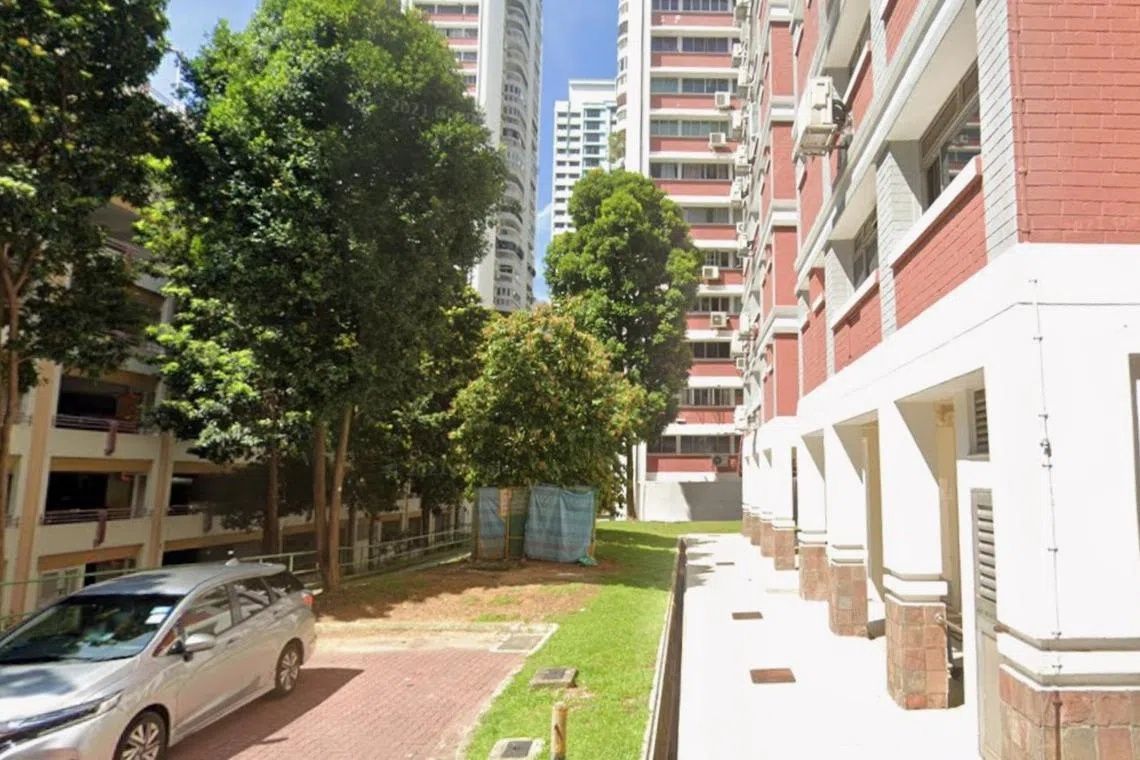
A 46-year-old woman has been detained by Singapore police following an alleged knife assault on an acquaintance at a Housing Board block in the Bukit Merah district on Saturday evening. The incident, which unfolded at 7 Kim Tian Place at approximately 7.40pm, has triggered a police investigation into the circumstances surrounding what authorities are treating as a serious violent crime involving a weapon.
Officers responded to an emergency call for assistance at the location and discovered evidence of the confrontation. The alleged victim, a 43-year-old woman known to her assailant, sustained injuries from the blade but remained conscious throughout the ordeal. Emergency responders subsequently transported her to Singapore General Hospital for medical evaluation and treatment. The specific nature and severity of her wounds have not been disclosed by authorities, though the conscious state of the patient suggests the injuries, while serious enough to warrant hospitalisation, did not result in life-threatening conditions at the time of transport.
The arrested woman faces charges relating to causing grievous hurt with a weapon, a serious criminal offence under Singapore law that can carry substantial penalties upon conviction. Police officers recovered the knife used in the incident and have retained it as evidence. The weapon is likely to play a central role in the prosecution's case, serving to corroborate accounts of the assault and establish the nature of the attack.
Investigators examining the scene at the void deck of the HDB block documented bloodstains consistent with a violent physical altercation. These forensic details provide tangible evidence of the incident's severity and will contribute to the broader investigative picture as officers piece together the sequence of events that led to the attack. The void deck location—a common gathering area in public housing blocks—suggests the confrontation may have occurred in a semi-public space, potentially witnessed by nearby residents or passers-by.
The relationship between the two women as acquaintances introduces a dimension of personal conflict to the incident. Unlike random stranger violence, crimes involving prior relationships often stem from accumulated grievances, disputes, or escalating tensions. Understanding the nature and history of their connection remains crucial to determining motive, though police have not yet released such details. This aspect will likely feature prominently in subsequent court proceedings and psychological evaluations.
Singapore's approach to violent crime, particularly incidents involving weapons, reflects the nation's strict law-and-order stance. The swift police response and comprehensive evidence collection demonstrate the efficiency of local enforcement mechanisms. The charging of the suspect for causing grievous hurt with a weapon rather than a lesser assault charge indicates prosecutors' assessment of the incident's severity and their confidence in the available evidence.
For residents of Bukit Merah and other Housing Board communities across Singapore, such incidents raise awareness about personal safety in shared residential spaces. HDB void decks, while designed as community gathering areas, occasionally become sites of conflict. The incident underscores the presence of interpersonal violence even in one of Asia's most developed and secure urban environments, challenging perceptions of absolute safety in well-regulated public housing estates.
The investigation's ongoing status means authorities are likely conducting witness interviews, reviewing any available security footage, and examining the circumstances that precipitated the violence. Officers may be investigating whether the attack was premeditated or arose spontaneously from an unexpected confrontation. The recovery of the knife suggests the weapon may have been carried intentionally, a factor that could influence how courts view the severity of the alleged perpetrator's actions.
For Malaysian observers, the case illustrates how violent crime manifests across the region despite differences in social circumstances and governance structures. While Singapore maintains notably lower crime rates than many Southeast Asian nations, such incidents remind readers that personal safety concerns transcend borders and economic development levels. The incident also reflects broader patterns of domestic and interpersonal violence that public health and law enforcement agencies across the region continuously work to address.
The outcome of this case will depend on evidence presented during court proceedings and the judicial assessment of the attack's circumstances. Singapore's legal system typically applies stringent standards of proof and comprehensive sentencing guidelines for weapon-related violence. The arrested woman's background, the victim's condition, and any identified provocation or mitigating factors will collectively influence the final judgment and penalty determination.

