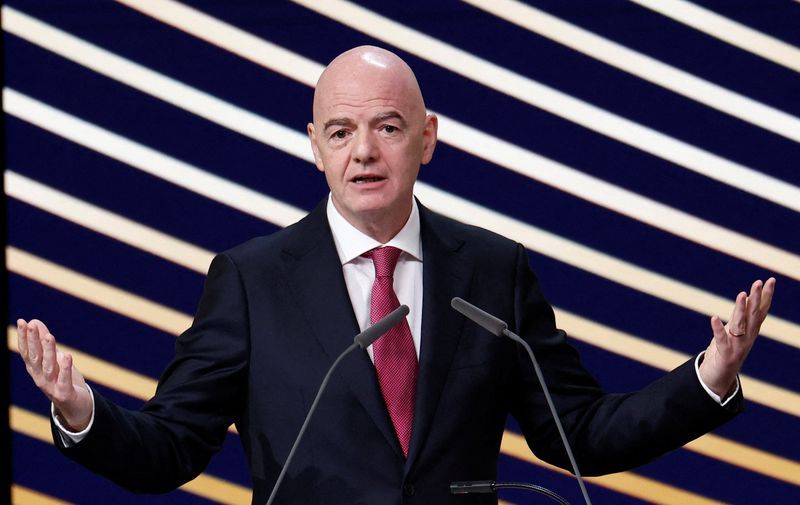
Two women have emerged as the most visible challengers to FIFA President Gianni Infantino's authority as the world football body confronts its most serious governance crisis in a decade. Laura McAllister of Wales and Lise Klaveness of Norway, both serving on UEFA's executive committee, have become leading figures in a rebellion that has fundamentally undermined Infantino's position, triggered by his unsuccessful push to establish a private equity-backed scheme called FIFA Football Enterprises (FFE). Their prominence in this standoff has sparked wider consideration of whether global football administration—historically a male-dominated sphere—might finally be approaching a moment when it could accept female leadership at the highest level.
McAllister, who holds the title of UEFA vice-president, has expressed cautious optimism about the possibility of a woman eventually leading FIFA, though she has tempered such aspirations with realistic assessments of the obstacles involved. In conversations with international media, she acknowledged that while a female FIFA president would be welcome, the sport's governing structures remain encumbered by entrenched attitudes and political complexities that cannot be overcome through simple appeals to meritocracy. Her analysis suggests that football's power structures have not yet evolved to the point where competence alone would guarantee advancement, and that meaningful cultural change must precede any meaningful shift toward female leadership at the global level.
The immediate trigger for the governance crisis has been Infantino's FFE proposal, which faced coordinated opposition from UEFA and other regional confederations. Wales became the first national association to withdraw backing for Infantino's re-election bid, setting off a chain reaction of dissent that spread rapidly through FIFA's own institutional structures. The momentum behind this rebellion forced Infantino to convene an emergency meeting in Morocco to address the mounting pressure and attempt damage control. McAllister's proposal for a potential boycott of FIFA events received unanimous support during UEFA's emergency session, indicating the depth of institutional frustration with Infantino's direction.
Beyond the immediate FFE controversy, McAllister has identified a pattern of decisions and associations that have fundamentally damaged confidence in Infantino's stewardship of the sport. She pointed specifically to FIFA's involvement with the European Super League venture, various governance issues surrounding World Cup hosting decisions, and a particularly controversial episode in which FIFA rescinded a red card following pressure from a political leader. These accumulated examples, in her assessment, point toward systemic governance failures that extend well beyond any single policy dispute and suggest that FIFA faces an existential crisis regarding institutional legitimacy.
Both McAllister and Klaveness have drawn on their background experiences within women's football to inform their principled stance during this conflict. McAllister holds credentials as a political scientist, while Klaveness trained as a lawyer, and both were international players for their respective countries before moving into football administration roles. They have articulated a philosophy centered on protecting what they consider football's fundamental values—its role as an inclusive sport accessible to communities across all economic levels and geographical regions. From their perspective, the attempted privatization of football revenues through schemes like FFE represents a betrayal of the sport's essential character and its obligation to serve grassroots players and emerging footballing nations alongside the wealthy elite competitions.
The statistics on female representation in football governance underscore the scale of change required. Among FIFA's 211 member associations, only 10 are led by women presidents, a proportion that starkly illustrates how thoroughly male administrators continue to dominate decision-making positions throughout world football. Even Klaveness, as Norway's federation president, represents a rare exception rather than an emerging norm. For Southeast Asian nations with growing football ambitions and significant female populations, this gender imbalance within governance structures raises questions about whether the decision-making processes of football bodies adequately reflect or represent the interests of female players and fans.
McAllister has cautioned against forcing the issue of female leadership prematurely, arguing instead that patience and gradual institution-building offer a more reliable path to meaningful change. She suggested that attempting to engineer a revolution in attitudes toward female leadership might backfire by generating defensive reactions from entrenched power centers. Instead, she advocates for steady accumulation of evidence that women can perform effectively in governance roles, allowing attitudes to shift organically as women demonstrate competence and vision within existing structures. This gradualist approach reflects pragmatic understanding of how institutional change actually occurs within conservative organizations.
Comparative analysis with other international sports organizations reveals how far football lags behind in gender equity at leadership levels. The International Olympic Committee, now led by woman Kirsty Coventry, has been advancing gender equality initiatives for more than a decade, and the Olympic Games now feature equal numerical representation between male and female competitors. FIFA's World Cup competitions, by contrast, remain deeply unequal in scale, investment, and visibility between men's and women's tournaments, suggesting that football's institutional commitment to gender equity remains fundamentally incomplete. For Malaysian sports administrators and fans, these comparisons highlight how football governance structures have resisted reforms that other major sports have successfully implemented.
The broader implications of this governance crisis extend well beyond the immediate question of Infantino's future or the FFE proposal's fate. The crisis has exposed fundamental tensions within FIFA regarding the organization's proper role in the global game, the appropriate relationship between commercial interests and sporting integrity, and the distribution of power among regional confederations. The fact that female voices have become central to articulating these institutional concerns suggests that women in football governance bring distinctive perspectives shaped by their experiences in a sport sector that has historically received less investment and attention than men's football. Their emphasis on values, inclusivity, and protection of grassroots football reflects priorities that might be underrepresented in deliberations dominated exclusively by administrators focused on maximizing commercial returns.
For football stakeholders throughout Southeast Asia, the outcome of this governance conflict will carry significance beyond Europe's boundaries. A FIFA leadership transition could potentially reshape how the organization allocates development resources, structures World Cup competitions, and manages the relationship between private capital and public football interests. Malaysia's own position within FIFA's governance architecture and the region's developing football infrastructure depend partly on which voices gain influence within the global body. The emerging prominence of McAllister, Klaveness, and other female administrators thus has implications for how football's future development unfolds not only in Europe but across Asia-Pacific regions seeking greater integration into global football structures.
The timing of former FIFA President Sepp Blatter's public endorsement of female leadership at the organization has added unexpected support to the broader discussion about governance reform and institutional renewal. His statement that it is time for a woman to lead football's governing body carries weight given his historical prominence within FIFA, though McAllister and others have focused more on substantive governance improvements than on symbolic gestures toward gender representation. The real test of FIFA's readiness for meaningful change will lie in whether the organization addresses the governance deficiencies that have become apparent during the current crisis, rather than in simply elevating a woman to leadership while leaving underlying structural problems unresolved.

