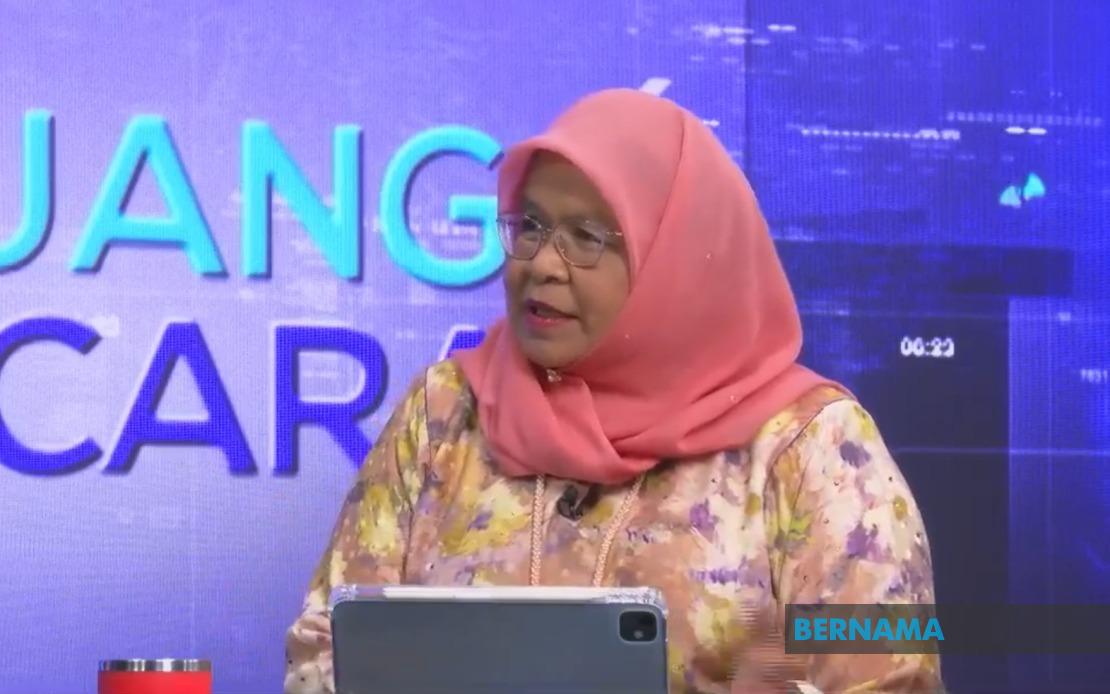
Empowering women to serve as decision-makers across government, business, and public institutions cannot succeed without comprehensive support frameworks, according to Datuk Seri Dr Maimunah Mohd Sharif, the Government's Sustainable Urban Development advisor and former mayor of Kuala Lumpur. Speaking on the importance of women's participation in leadership, she highlighted that securing opportunities alone is insufficient—women must be equipped with training, mentorship, and organizational commitment to succeed in roles that shape policy and strategy.
Maimunah's perspective reflects a critical recognition that women's presence in decision-making hierarchies directly influences whether policies and initiatives address the needs and viewpoints of female populations. When women are absent from positions where priorities are set and budgets allocated, entire communities risk having their concerns sidelined. She urged women to actively pursue advancement when opportunities emerge, whilst simultaneously calling on institutions and society to create pathways that make such advancement realistic rather than exceptional.
The statistical picture painted by Maimunah underscores persistent disparities in Malaysian leadership. Women constitute 56.4 per cent of higher education participants as of 2025, yet occupy only 27 per cent of management positions—a gap that reveals how educational attainment does not automatically translate into authority or seniority. This disparity becomes even sharper at the political level: women Members of Parliament account for merely 13.5 per cent of the legislature, whilst female Cabinet ministers represent 16.1 per cent of the ministerial bench. These figures suggest that despite decades of rhetoric about gender equality, structural barriers continue to funnel women away from positions where they can shape national agendas.
Maimunah's call for parity—suggesting that even a 50 per cent representation target would constitute meaningful progress—carries an implicit challenge to Malaysia's leadership structures. Her argument rests on capability and merit: if women possess the skills and qualifications, institutional gatekeepers should have no legitimate reason to exclude them. This framing shifts responsibility away from women themselves and towards the systems and decision-makers who control access to senior roles. It suggests the problem is not women's readiness, but institutional hesitation to trust them with power.
Datuk Mona Suraya Kamarudin, a non-executive independent director at Nomura Asset Management, offered complementary insights from the financial services sector, traditionally viewed as meritocratic and performance-driven. She observed that whilst women demonstrate strong technical competencies and professional experience, they remain disproportionately concentrated at mid-management levels rather than reaching executive or board-level positions. This pattern mirrors findings across many industries in Malaysia and Southeast Asia, suggesting that expertise alone cannot overcome structural impediments to advancement.
Kamarudin noted that the financial sector's ostensible indifference to gender when assessing technical capability—the notion that competent money managers will be chosen regardless of identity—does not translate into equal representation at leadership levels. This paradox illuminates a crucial distinction between hiring decisions at entry and mid-career stages versus promotion to senior positions, where informal networks, mentorship access, and boardroom composition become determining factors. Women may be selected for technical roles but excluded from the inner circles where advancement is negotiated.
Family dynamics emerged as another critical variable in women's career trajectories. Kamarudin emphasized that professional progression becomes materially easier when family structures support workforce participation, particularly for women who face asymmetrical expectations regarding domestic and childcare responsibilities. In Malaysian society, where traditional gender roles retain significant cultural influence, women often shoulder heavier dual burdens when pursuing senior careers. Without spousal support, extended family assistance, or institutional flexibility—childcare facilities, leave provisions, flexible working arrangements—ambitious women must choose between family commitments and professional ambitions in ways men rarely face.
The broader implication of these testimonies is that women's advancement cannot be treated as an individual problem requiring individual solutions. Rather, it demands systemic intervention: organizations must establish transparent promotion criteria, mentorship programs pairing senior leaders with emerging talent, parental leave policies that do not penalize women, and active recruitment from the top leadership level. Government agencies, corporate boards, and political parties must collectively commit to identifying and developing female talent deliberately rather than waiting for exceptional individuals to overcome institutional inertia.
For Malaysia specifically, the statistics suggest room for accelerated progress without radical restructuring. Moving from 13.5 per cent to even 30 per cent female parliamentary representation would require only modest numerical shifts that several other democracies have achieved. Similarly, reaching 40 per cent female management representation across sectors would bring Malaysia closer to global benchmarks whilst remaining achievable within a decade if prioritized. The challenge is not impossibility but political will and institutional commitment.
Maimunah's exhortation to women to seize opportunities when they appear carries truth but risks obscuring systemic responsibility. Genuine empowerment requires not just individual ambition but deliberate dismantling of barriers—whether unconscious bias in promotion meetings, limited childcare availability, or cultural skepticism about female leaders. When she frames the goal as ensuring women's perspectives influence policy, she articulates the ultimate stakes: effective governance that serves all citizens requires decision-making tables that include diverse viewpoints and lived experiences.
The conversation between Maimunah and Kamarudin points towards a path forward for Malaysian institutions serious about leveraging female talent. This path combines three elements: removing structural impediments through policy and workplace reform, investing in targeted development and mentorship, and fostering organizational cultures where women's leadership is normalized rather than exceptional. Without all three working in concert, statistics on women's participation will continue to stall at plateaus far below their potential contribution.

