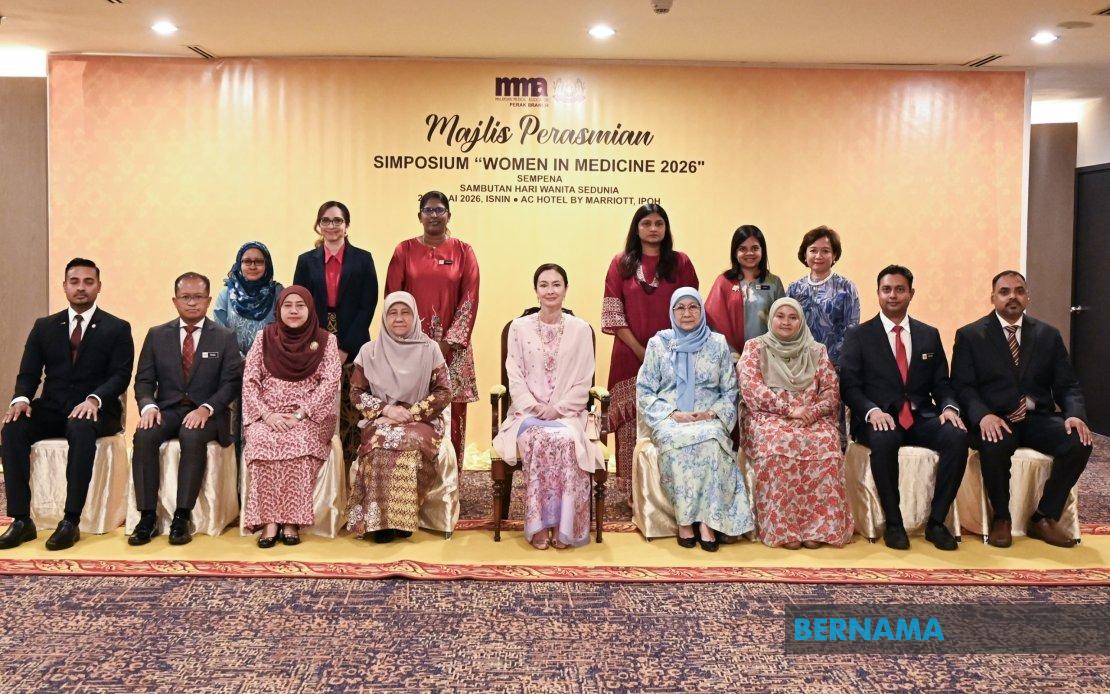
The Perak branch of the Malaysian Medical Association has made a compelling case for greater female representation in healthcare leadership, arguing that women bring distinctive qualities needed to navigate the profession's mounting complexity. Speaking at the Women in Medicine 2026 Symposium in Ipoh, Dr Monesh Pillai, the association's chairman, stressed that female leaders contribute broader perspectives, deeper empathy and human-centred decision-making—capabilities increasingly vital as the medical landscape transforms. The event was officiated by Tuanku Zara Salim, Raja Permaisuri of Perak, underscoring the issue's significance beyond professional circles.
The medical sector across Malaysia faces a convergence of pressures that demand fresh thinking and adaptable strategies. Mental health conditions are climbing the burden-of-disease ladder, while non-communicable diseases such as diabetes, hypertension and cancer continue their upward trajectory. Simultaneously, the population is ageing, creating new clinical demands and healthcare system pressures. These structural shifts occur as the sector undergoes rapid digital overhaul and grapples with the implications of artificial intelligence for clinical practice, administration and research. Dr Pillai framed these developments not as isolated problems but as interconnected challenges requiring integrated, forward-thinking responses.
Within this context, the case for women's participation at decision-making levels becomes less about equity alone and more about institutional effectiveness. Dr Pillai argued that societies benefit materially when women occupy leadership positions within healthcare, not merely in token capacities but in roles where they genuinely shape policy and strategy. The healthcare system's future orientation—how Malaysia's medical institutions prepare for demographic shifts, adopt emerging technologies responsibly, and address inequality in access to care—will substantially depend on the quality and composition of its leadership cohort.
Dr John Emmanuel, organising committee chairman for the 2026 symposium, expanded on this reasoning by connecting women's empowerment directly to patient outcomes. He suggested that strengthening women's roles across the healthcare workforce improves not only professional satisfaction but tangible care quality. Importantly, he broadened the conversation beyond doctors to encompass nurses, pharmacists, allied health professionals, researchers, administrators and educators—recognising that medicine functions as an ecosystem where multiple professions and perspectives interact. This inclusive framing acknowledges that contemporary healthcare cannot succeed through any single discipline or viewpoint.
The symposium's timing around International Women's Day, with this year's global theme of 'For All Women and Girls: Rights. Equality. Empowerment.', provided symbolic weight to discussions about embedding fairness and inclusion within healthcare systems themselves. Emmanuel emphasised that genuine empowerment transcends simply opening doors; it requires institutional commitment to ensuring women can lead meaningfully, contribute without constraints and develop their capabilities fully. For healthcare professionals, this responsibility extends beyond clinical work into the systems that deliver care—building institutions that serve all populations equitably and reflect the communities they serve.
Malaysia's healthcare landscape has evolved significantly in recent decades, yet women remain underrepresented in senior medical and administrative leadership despite strong female presence in medical education and clinical practice. The Perak MMA's positioning of this issue reflects broader Southeast Asian discussions about talent utilisation and institutional capacity. When a healthcare system systematically underutilises or marginalises half its potential leadership pool, it constrains innovation and forfeits valuable perspectives on patient care, health equity and system design.
The symposium featured high-profile speakers addressing concrete healthcare challenges through gendered perspectives. Datuk Dr Adeeba Kamarulzaman, president and pro vice-chancellor of Monash University Malaysia, discussed how women navigate the pathway from clinical work to global health policy influence—a trajectory illustrating how individual female leaders have shaped international responses to health crises and systemic issues. Dr Sangeetha Siniah, a consultant paediatric immunologist and infectious disease specialist at Sunway Velocity Medical Centre, presented on allergic and immune health challenges specifically affecting women and children, exemplifying how gender-informed approaches can enhance clinical understanding.
These presentations underscore a critical insight: women's perspectives within healthcare often illuminate clinical patterns, social determinants and health needs that might otherwise remain obscured by more traditional analytical frameworks. In paediatrics and immunology, for instance, understanding gender-specific disease patterns and how women function as primary healthcare decision-makers for families requires expertise informed by lived experience and attention to social context. Similarly, translating clinical evidence into policy requires leadership that comprehends both technical evidence and community realities.
For Malaysia specifically, advancing women's healthcare leadership carries implications beyond the profession itself. Healthcare systems influence public health outcomes, which affect economic productivity, educational achievement and social stability. A healthcare system led by diverse perspectives, including robust female representation, tends to address a broader range of population health needs and allocate resources more comprehensively. This becomes particularly relevant as Malaysia manages its epidemiological transition and confronts rising costs associated with chronic diseases, mental health conditions and age-related conditions.
The event's attendance by senior figures including Datin Seri Aezer Zubin, wife of the Perak Menteri Besar, and state health director Datuk Dr Feisul Idzwan Mustapha signalled government acknowledgment of these concerns. Such high-level participation suggests receptiveness to addressing gender imbalances within state-level health administration and professional bodies. However, converting this symbolic support into structural change—through mentorship programmes, career pathway transparency, leadership development initiatives and deliberate recruitment policies—remains the practical challenge.
The symposium itself represents an institutional investment in visibility and networking for female medical professionals across Perak and beyond. By creating platforms where women practitioners share experiences, discuss barriers, celebrate achievements and build professional connections, the Malaysian Medical Association's Women in Medicine initiative contributes to an ecosystem supporting women's advancement. Such initiatives matter because they signal to emerging female practitioners that healthcare leadership constitutes a realistic aspiration rather than an exceptional novelty.
Moving forward, the conversation around women in medicine in Malaysia must progress from acknowledging the need for representation toward implementing concrete changes in recruitment, promotion, mentorship and governance. The Perak MMA's positioning of this issue as fundamental to healthcare system quality rather than merely a diversity matter provides a strategic foundation. When women's leadership becomes understood as essential to addressing actual healthcare challenges—mental health crises, chronic disease epidemics, digital transformation, artificial intelligence integration—the case becomes compelling to administrators, policymakers and institutional leaders regardless of their personal views on gender equity.

