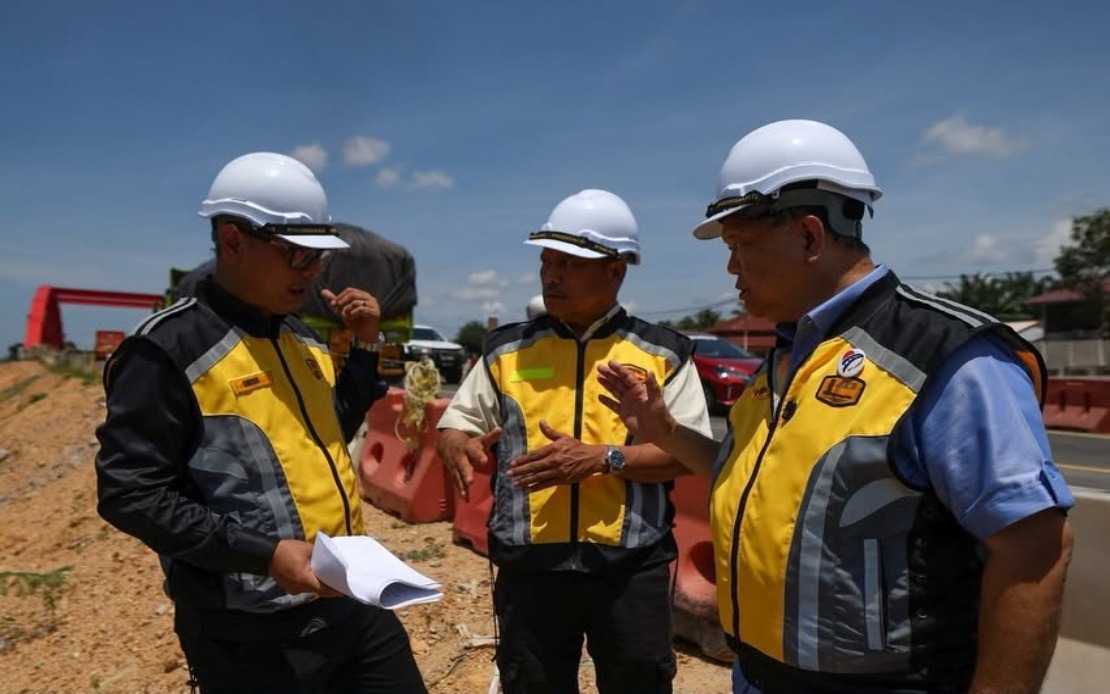
Works Minister Datuk Seri Alexander Nanta Linggi has issued a formal directive to the contractor overseeing the Sungai Durian Bridge Replacement Project in Kuala Krai to significantly increase the pace of construction, following a surprise site inspection that revealed persistent delays despite multiple deadline extensions. The minister's intervention signals growing frustration within the Ministry of Works over the infrastructure project's inability to meet its committed timelines, a common challenge that affects Malaysia's development plans and public confidence in major construction undertakings.
During his unannounced visit to assess conditions on the ground, Nanta identified several technical obstacles that have contributed to the project's extended timeline. Borepile installation work—a critical foundation component—has been hampered by conflicts with existing utility pipelines running beneath the surface, a situation that requires careful coordination to avoid damaging essential services that residents depend upon. Additionally, complications involving the temporary support structure for the steel bridge component have created further complications that the project team must now resolve with greater urgency.
The project has already consumed six formal Extensions of Time, a mechanism typically granted when unforeseen circumstances arise that prevent timely completion. However, the accumulation of these extensions has worn thin on ministerial patience and raises questions about the contractor's initial project planning and risk assessment. In infrastructure development across Southeast Asia, such repeated delays often translate into mounting costs, disrupted public services, and diminished government credibility in delivering promised improvements to communities.
Nanta's public statement, delivered through his official Facebook page, emphasized that further delays would not be tolerated and that accountability falls squarely on the contractor's management and implementation strategies. He made explicit that the Ministry of Works expects the contractor to deploy additional personnel and equipment to the site immediately, moving beyond mere problem-identification to concrete acceleration measures. This approach reflects a shift toward enforcement of contractual obligations rather than accepting incremental progress.
The bridge replacement in Kuala Krai serves broader connectivity and economic objectives for the Terengganu region, where improved road infrastructure facilitates commerce, reduces travel times, and enhances emergency response capabilities. Residents of the district have endured the disruptions associated with major construction for an extended period, creating legitimate public grievances. The minister's emphasis on the community's patience—or lack thereof—acknowledges this social dimension of infrastructure delays that extends beyond mere project mechanics.
Coordination between the contractor, the Public Works Department, and relevant utility authorities emerges as a critical success factor going forward. The borepile installation challenges demonstrate how surface-level approvals and planning documents may inadequately account for subsurface complexities. Moving past these obstacles requires enhanced technical collaboration and possibly revised construction methodologies that balance speed with safety and infrastructure integrity.
The minister's commitment to continued close monitoring by the Ministry of Works and the Public Works Department signals that responsibility does not end with issuing directives. Regular site inspections, performance tracking, and escalation mechanisms will likely feature in the revised project oversight framework. This supervisory posture is increasingly common in Malaysian government infrastructure initiatives, reflecting lessons learned from previous projects that fell victim to mounting delays and cost overruns.
For Malaysians involved in or affected by infrastructure development, this episode illustrates both the challenges inherent in complex construction projects and the government's capacity to intervene when timelines deteriorate significantly. The Sungai Durian Bridge project now operates under heightened scrutiny, with clear ministerial expectations and financial or contractual consequences looming for further failures to perform.
The broader implication for Malaysia's infrastructure pipeline is that delays accumulate political costs alongside financial ones. Government agencies increasingly face public and political pressure to deliver on promised timelines, particularly for projects affecting daily life in communities. The intervention by Nanta underscores that ministries are becoming less passive when contractors encounter difficulties, demanding proactive solutions rather than passive acceptance of revised schedules. Success in delivering the Sungai Durian Bridge project on its current timeline would restore confidence in the contractor's capability and in the ministry's oversight capacity.

