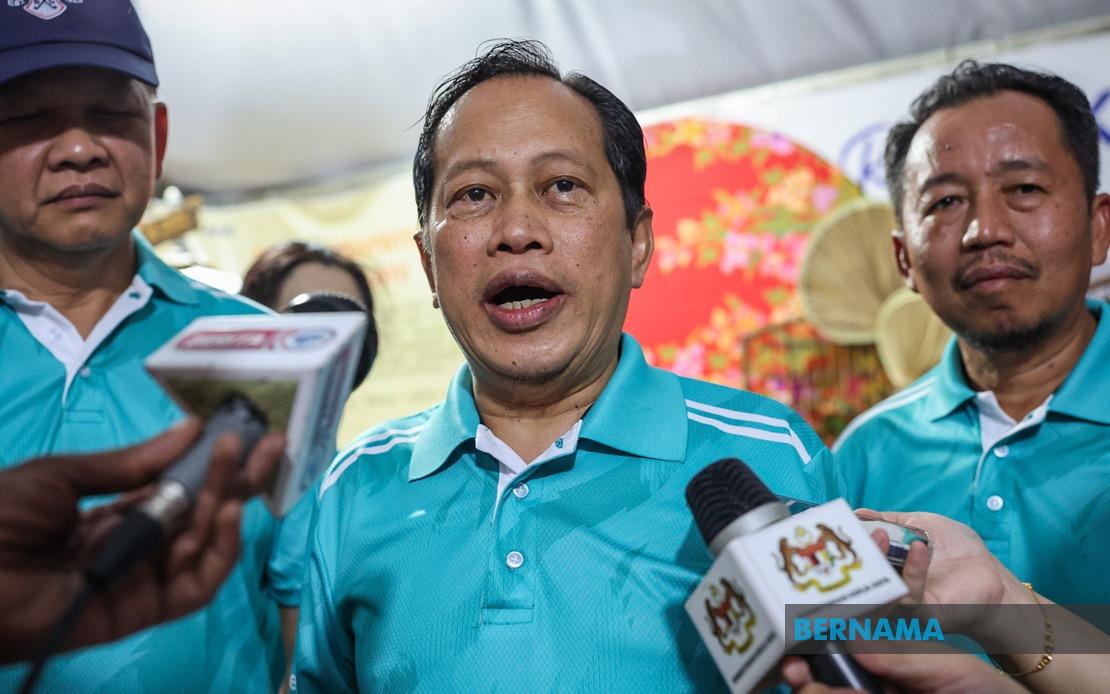
The Works Ministry (KKR) is making a strategic push for the country's most substantial development budget allocation in 2027, positioning infrastructure expansion as a priority for the incoming fiscal year. Deputy Works Minister Datuk Seri Dr Ahmad Maslan disclosed this ambition whilst addressing gathered media at the Cultural Night Run event at the Sultan Abdul Halim Mu'adzam Shah Bridge in Batu Kawan, signalling the ministry's determination to secure increased resources for nationwide development initiatives.
Currently, KKR is in the midst of an intensive consultation process, drawing together recommendations from the various agencies and departments operating under its purview. This includes the Malaysian Highway Authority (LLM), the Construction Industry Development Board Malaysia (CIDB), and the Public Works Department (JKR). The ministry has tasked all subordinate divisions and agencies with submitting their budgetary proposals, with a critical submission deadline having been set for the week prior to a scheduled meeting with Finance Minister II on 28 August. This structured preparation process underscores the ministry's serious approach to making a compelling case for expanded funding.
Ahmad revealed that in the previous budget cycle, KKR received approximately RM10 billion in total allocation, of which RM9 billion was earmarked for development activities. The ministry's stated objective is to exceed this figure in the coming budget, reflecting an acknowledgement that existing resources have become constrained relative to the backlog of infrastructure maintenance and new projects requiring attention across Malaysia. The specificity of these figures demonstrates that the ministry has conducted a thorough assessment of its current allocation and identified clear gaps in its capacity to address infrastructure needs comprehensively.
Beyond the budget appeal itself, Ahmad highlighted one of the ministry's flagship technological initiatives: the advancement of intelligent highway systems through integrated digital solutions. The LLM has been driving this agenda by deploying artificial intelligence, closed-circuit television surveillance networks, intelligent lane management systems, and supporting applications designed to modernise the country's toll road ecosystem. This technological orientation reflects a broader global trend of using data and automation to improve transportation efficiency and safety.
Among these innovations is TuJu, a locally developed navigation application that has carved out Malaysia's third position in the competitive navigation app market, joining established competitors Waze and Google Maps. Rather than attempting to duplicate the generalist capabilities of international platforms, TuJu has differentiated itself by focusing specifically on highway-relevant information. The application integrates real-time closed-circuit television feeds, toll rate information, locations of rest and recreation areas, emergency assistance contact details, and traffic updates transmitted directly from the LLM Traffic Control Centre. This specialisation strategy demonstrates how Malaysia can compete effectively in the digital services space by identifying and serving specific user needs.
The LLM Traffic Control Centre itself represents substantial infrastructure investment, monitoring hundreds of camera feeds distributed across all 34 highways in the country, including both of Penang's major bridge crossings. TuJu's integration with other government applications, including the KKR and MYJalan platforms, creates a unified ecosystem permitting highway users to report road condition issues and lodge complaints through multiple channels. Ahmad actively encouraged Malaysian motorists to adopt TuJu for journey planning, framing improved transportation decisions as a direct benefit of using real-time information systems.
Malaysia's highway infrastructure comprises an extensive network spanning more than 2,000 kilometres across 34 separate highway corridors managed by 28 different concessionaires. Among these operators, PLUS Malaysia Berhad is the dominant player, controlling more than half of the total highway length at over 1,000 kilometres. This fragmented operational structure, whilst creating complexity in coordination, also distributes responsibility across multiple commercial entities with varying technological capabilities and investment priorities.
An emerging initiative within this ecosystem is the Multi Lane Free Flow (MLFF) system, which enables toll collection without requiring vehicles to decelerate or stop at traditional toll plazas. Ahmad clarified that this innovation remains at the proof-of-concept phase and will be implemented through business-to-business arrangements negotiated between individual concessionaires, rather than through direct government funding or mandates. The implementation approach places responsibility on the 28 concessionaires to adopt the technology either through their own subsidiaries or by engaging external service providers. Ahmad indicated that this market-driven rollout has already commenced, with PLUS utilising the JustGo service as part of its MLFF deployment, suggesting that commercial viability and competitive advantage may be driving faster adoption than government intervention could achieve.
The Cultural Night Run event itself, which attracted 5,000 participants including 114 international visitors from 18 countries, exemplifies the multi-stakeholder coordination that characterises contemporary Malaysian public initiatives. The event was jointly organised by KKR alongside the Entrepreneur Development and Cooperatives Ministry (KUSKOP), the Youth and Sports Ministry (KBS), the Penang state government, the Malaysia Co-operative Societies Commission (SKM), ANGKASA, the Penang Amateur Athletics Association (PAAA), the Seberang Perai City Council (MBSP), Jambatan Kedua Sdn Bhd (JKSB), and numerous additional government agencies, corporate partners and other collaborators. This coalition-building approach, utilising infrastructure assets like the Sultan Abdul Halim Mu'adzam Shah Bridge as gathering points for public engagement, serves both promotional and community-building functions.
The ministry's budgetary strategy must be understood within Malaysia's broader fiscal context, where infrastructure maintenance costs escalate annually whilst competing demands from healthcare, education, and social services constrain available government resources. By advancing a technology-centric narrative emphasising innovation and efficiency gains—through applications like TuJu and systems like MLFF—KKR is attempting to construct a persuasive case that additional investment in highway infrastructure generates broader economic benefits beyond simple asset maintenance. The emphasis on locally developed technological solutions also resonates with nationalist and economic development narratives that remain influential in Malaysian policy debates.
The outcome of the 28 August meeting with the Finance Minister II will be closely watched by infrastructure stakeholders, construction industry representatives, and state governments dependent on national funding for local transportation projects. Whether KKR successfully secures its requested allocation increase will reflect broader government priorities regarding infrastructure investment relative to other expenditure categories, and will set the tone for development spending across the remainder of the 2027 fiscal year.

