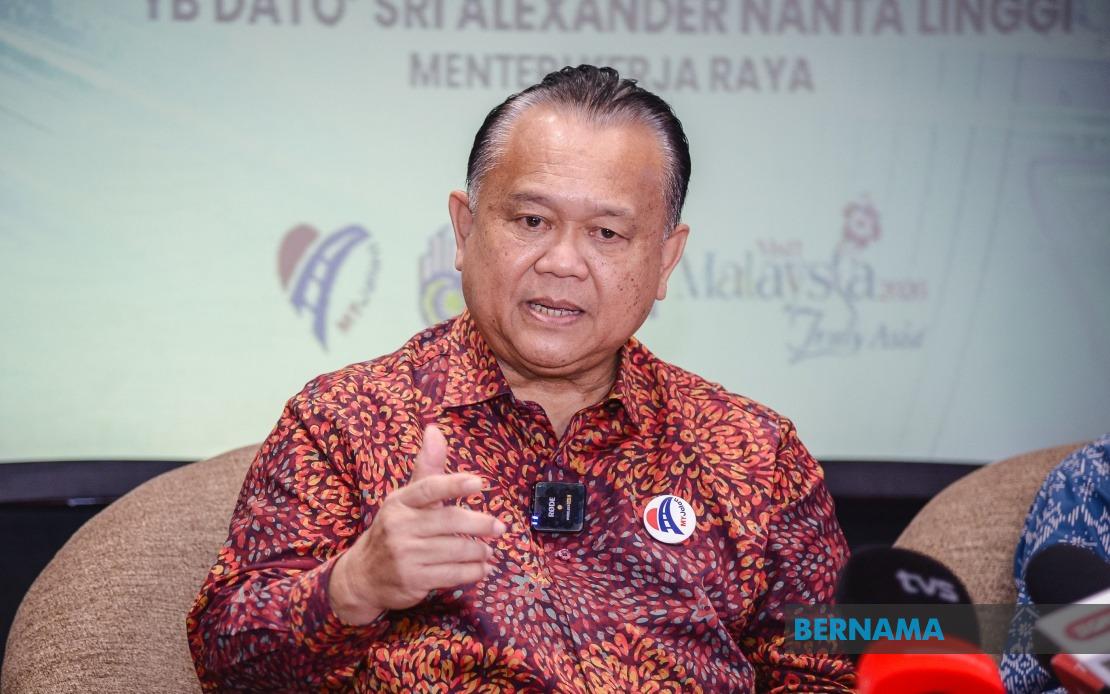
The Works Ministry (KKR) is preparing to incorporate feedback from Malaysia's construction sector into the upcoming Budget 2027, having collated 30 strategic wishlists that emphasise productivity gains, technological integration and industry resilience. Minister Datuk Seri Alexander Nanta Linggi indicated that these submissions would undergo careful evaluation to ensure alignment with the government's MADANI Economy framework, which seeks to deliver substantial economic growth whilst preserving the viability of existing industry participants across the sector.
The ministry has mapped out five core transformation priorities that will guide infrastructure investment and policy direction through 2027. These priorities encompass strengthening Malaysia's road networks and completing landmark development projects that carry significant economic multiplier effects. The roadmap also reflects growing recognition that infrastructure spending must deliver measurable outcomes rather than simply deploying capital, shifting the conversation toward impact-per-ringgit measurement rather than expenditure volumes alone.
Sustainable infrastructure development aligned with Malaysia's energy transition represents a second pillar, reflecting both global environmental commitments and the long-term cost advantages of green technologies. The third priority centres on accelerating the construction sector's digital transformation through Building Information Modelling (BIM), Internet of Things (IoT) capabilities and artificial intelligence applications. These technologies address perennial challenges including project cost overruns, scheduling delays and quality inconsistencies that have historically constrained Malaysian contractors' international competitiveness.
Empowering Grade 1 to Grade 4 local contractors constitutes a deliberate effort to broaden industry participation beyond large established firms, while the fifth priority focuses on enhancing road safety through the MYJalan initiative. Minister Nanta characterised these five streams not as disconnected policy silos but as interdependent elements of a coherent transformation affecting how the nation plans, designs, manages and sustains its built environment. This systems-thinking approach suggests the ministry recognises that construction sector competitiveness requires simultaneous advancement across multiple dimensions rather than isolated improvements in individual areas.
The ministry's philosophical shift towards value creation over cost minimisation carries significant implications for how future tenders and contracts are structured. Nanta emphasised that Malaysian companies must compete on productivity, technological sophistication, quality metrics and value generation rather than price alone. This reorientation would require local construction firms to invest in workforce upskilling, process innovation and capability development, moving Malaysian players progressively up international value chains. Such repositioning would enable domestic contractors to access higher-margin projects and reduce vulnerability to price-based competition from lower-cost regional competitors.
The wider feedback gathered from 117 industry submissions, encompassing 87 responses directly from construction sector representatives, revealed several recurring concerns requiring policy attention. Industry players highlighted governance and contract management weaknesses, workforce skills gaps and deficiencies in inclusivity, alongside persistent challenges involving operating costs, material expenses and logistics inefficiencies. These submissions indicate that many Malaysian construction firms view the upcoming budget as an opportunity for the government to address structural impediments beyond what traditional infrastructure spending can resolve.
The sector also advocated for accelerated adoption of sustainability and environmental, social and governance (ESG) standards, requesting greater encouragement for local material sourcing and supply chain development. This feedback suggests Malaysian construction stakeholders recognise that ESG compliance increasingly influences access to international contracts and project financing, making early adoption strategically valuable. The emphasis on local materials aligns with domestic value chain development and import substitution goals whilst potentially reducing logistics costs for construction companies.
Minister Nanta acknowledged particular attention to small and medium-sized contractors, consulting firms, workers and peripheral industry participants who face disproportionate challenges accessing credit, acquiring technology, navigating approval processes and managing utility coordination. This recognition addresses a structural weakness in Malaysia's construction ecosystem where smaller players often lack the financial cushion and administrative resources of large corporations, creating bottlenecks in innovation diffusion and limiting the sector's overall productivity. The minister's observation that not all industry participants begin from equal competitive positions suggests policy consideration may extend toward targeted support mechanisms.
The ministry received RM10.692 billion in Budget 2026, representing a 3.3 per cent increase from the previous allocation, with RM9.607 billion directed toward development expenditure funding new initiatives and continuation of ongoing infrastructure projects. This funding trajectory provides context for understanding how budget constraints might shape the prioritisation process. Minister Nanta's assertion that financial limitations should not diminish development ambitions but instead encourage creativity in resource allocation suggests the government intends to pursue maximum impact through more selective project identification and enhanced execution efficiency.
The emphasis on impact maximisation rather than constraint accommodation reflects awareness that Malaysia faces intensifying regional competition for infrastructure quality and construction sector sophistication. As Southeast Asian neighbours invest substantially in connectivity, urbanisation and digital infrastructure, Malaysia cannot afford complacency in its construction capabilities. The forthcoming Budget 2027, scheduled for parliamentary tabling on October 9, will reveal whether the ministry's transformation priorities attract sufficient funding to drive meaningful sectoral change or whether budgetary realities necessitate phased implementation over multiple fiscal years. The outcome will significantly influence whether Malaysian construction firms can successfully transition toward technology-driven, high-value services or whether cost competition continues to dominate industry dynamics.

