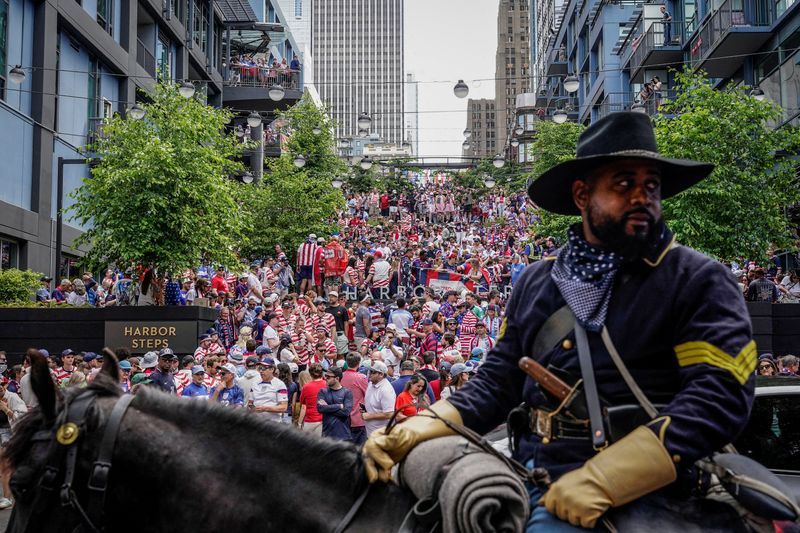
The 2026 FIFA World Cup has scattered across 16 North American cities, each developing its own unique narrative as the tournament unfolds. Reuters photographers embedded at training facilities and matches are documenting not just the football itself, but the profound ways in which the world's most popular sport is transforming communities, public spaces and social dynamics across the continent. Their observations reveal that this World Cup transcends typical sporting event coverage — it captures how football serves as a vehicle for cultural connection and civic celebration in distinct regional contexts.
In Mexico City, the iconic Estadio Azteca remains the tournament's centrepiece, having hosted some of football's most historic matches including two World Cup finals. Yet photographer Raquel Cunha discovered that the tournament's cultural footprint extends far beyond the stadium's walls. The passion for football, or "la pasion," permeates neighbourhoods throughout the capital, where communities have reconfigured their urban geography to create spaces for the game. This grassroots enthusiasm demonstrates that Mexico's football culture runs deeper than the professional arena — it is woven into the daily life of ordinary residents across all social strata.
Western Mexico's Guadalajara carries particular historical resonance for World Cup football. Local memory remains vivid regarding Pelé's appearance in the city during the 1970 World Cup, and authorities recently unveiled a statue honouring the Brazilian legend. Photographer Ivan Arias witnessed unexpected moments of solidarity during matches, particularly when Mexican and Colombian supporters developed genuine friendships that transcended typical rivalries. These interactions — where fans attended each other's celebrations and supported opposing teams — underscore football's capacity to forge meaningful human connections across national boundaries, a phenomenon rarely observed in other sporting competitions.
Across Mexico's northern industrial centre of Monterrey, football operates as a fundamental social institution. Daniel Becerril documented how locals integrate the game into their leisure culture, gathering in backyards for matches accompanied by traditional barbecues and casual beer consumption. These informal viewing rituals reflect how deeply embedded football has become in Mexican social life, operating as both entertainment and community bonding mechanism across different demographic groups and economic classes.
Miami's experience has been markedly different, shaped by the city's pre-existing Latin American demographic composition. Photographer Amanda Perobelli noted that the World Cup felt less like a novel disruption and more like a natural extension of Miami's existing cultural fabric. The severe heat and humidity presented logistical challenges for photographers spending extended periods outdoors, yet spectators demonstrated remarkable resilience and enthusiasm despite environmental discomfort. This observation suggests that for communities with strong existing connections to football culture, the World Cup functions as affirmation and celebration rather than introduction.
Texas cities have embraced the tournament with characteristic grandeur. Photographer Phil Noble observed that the state's reputation for scale manifested across every dimension — from generous barbecue portions and massive highway infrastructure to the substantial welcome extended toward international supporters. Mexican-shirted fans became ubiquitous throughout Texas venues, while local supporters demonstrated considerable enthusiasm for visiting nations when their own teams were not competing. Hannah McKay particularly noted the intensity of Argentina matches played before packed crowds, including the memorable moment when Lionel Messi broke the men's World Cup goalscoring record — an occasion that generated extraordinary stadium atmosphere.
Atlanta's venue presented unconventional soccer infrastructure with its retractable roof and recessed seating configuration, yet Claudia Greco documented that the Southern city generated palpable energy throughout the tournament. Fan zones experienced consistent crowding, restaurants broadcast matches to engaged audiences, and commercial activity surged noticeably. These indicators suggest that World Cup participation creates economic multiplier effects that extend well beyond match days into the broader hospitality and entertainment sectors.
Los Angeles, typically characterised by automobile-dependent isolation and geographically fragmented neighbourhoods, experienced notable transformation through World Cup participation. Photographer Daniel Cole observed that the tournament drew residents and visitors into streets in unprecedented numbers, disrupting the city's habitual pattern of vehicular cocoons isolating residents from public life. The tournament created visible space for various diaspora communities — including Iranian, South Korean and Mexican populations — to publicly celebrate their cultural identities through team support. This public expression of ancestral connection carried particular significance given recent shifts in American immigration policy discourse.
San Francisco's experience paralleled Los Angeles' pattern of diaspora mobilisation, according to photographer Carlos Barria. International communities reclaimed and displayed their cultural heritage through flags, traditional foods, language and team allegiances. Barria drew particular attention to the contrast between this celebratory public expression and the anxiety characterising immigrant communities amid shifting migration policy environments. Simultaneously, many Americans encountered cultural practices and traditions they might otherwise never experience, suggesting that the World Cup facilitates organic cultural exchange that transcends typical multicultural programming.
Kansas City, straddling the Missouri-Kansas border, has historically valued diverse sporting traditions — baseball, American football and soccer all maintain strong community support bases. Photographer Kai Pfaffenbach found overwhelmingly positive atmosphere as residents gathered specifically to enjoy collective celebration and shared experience. The city's approach to sports fandom demonstrates regional variation in how communities integrate football into existing sporting cultures, neither marginalizing nor dominating the recreational landscape.
Philadelphia's World Cup experience contrasted sharply with patterns documented in other cities, according to photographer Siphiwe Sibeko, whose perspective derives from South Africa where football tournaments generate pervasive atmospheric transformation. In Philadelphia, World Cup presence remained noticeably contained to match days and stadium-proximate areas, with far less penetration into citywide consciousness or daily conversation. This observation highlights how tournament impact varies dramatically based on existing football cultural integration and broader sporting preferences within different urban centres.
New York's World Cup participation coincided with the Knicks' first NBA championship in over 50 years, creating unprecedented competitive dynamics for public attention and celebratory space. Photographer Dylan Martinez documented Norwegian supporters performing traditional "Viking row" chants alongside Latin American fans conducting pre-match "banderazos" ceremonies in Times Square. This convergence of major sporting moments reinforced New York's identity as a perpetually activated urban stage where multiple global narratives unfold simultaneously.
Boston presented unique documentation challenges for photographer Brian Snyder, who worked covering the 1994 World Cup when the United States last hosted the tournament. Snyder's longitudinal perspective revealed substantially increased fan enthusiasm and public participation compared to three decades earlier, suggesting either genuine growth in American football interest or improved tournament organisation and marketing. Beyond mainstream coverage, Snyder documented emerging diaspora participation from Haitian, Moroccan and Cape Verdean communities, reflecting Boston's evolving demographic composition and their active engagement with ancestral football traditions.
Toronto's experience introduced unexpected dimensions when photographer Bernadett Szabo encountered a falcon family residing near the stadium, resulting in a dramatic close encounter with one of the resident chicks. This unusual intersection of wildlife and football symbolises how major sporting events intersect unpredictably with urban ecosystems and create memorable moments transcending sport itself. Vancouver, by contrast, demonstrated more subdued tournament engagement than other host cities, according to photographer Agustin Marcarian. For Marcarian, accustomed to Buenos Aires' football-saturated atmosphere, Vancouver's restrained public response required active searching for visible tournament manifestations, suggesting variable enthusiasm levels across North American cities. Seattle, conversely, generated festive stadium-area energy, with spectators embracing coordinated dress codes in national colours and robust concession infrastructure, reflecting what photographer Albert Gea characterised as the American approach to sports as comprehensive entertainment experiences rather than narrowly athletic competitions.

