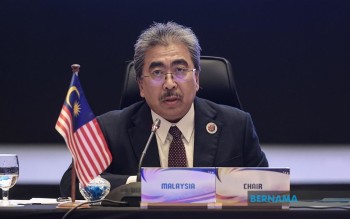
The World Trade Organization faces an existential challenge that demands immediate and comprehensive reform, according to Malaysia's Investment, Trade and Industry Minister Datuk Seri Johari Abdul Ghani. Speaking at the prestigious 39th Asia-Pacific Roundtable in Kuala Lumpur, Johari articulated a vision of a WTO remade for the twenty-first century, one capable of navigating geopolitical tensions while maintaining the rules-based trading framework that underpins regional prosperity.
Johari's intervention arrives at a critical juncture for multilateral trade governance. The WTO, established in the post-Cold War era when trade liberalization appeared universally beneficial, now operates in a radically transformed landscape. The organization was designed when policymakers broadly championed the removal of tariff barriers and expansion of market access as panaceas for growth and stability. Today's governments operate under entirely different imperatives, prioritizing economic resilience, technological advantage, strategic independence and the security of supply chains that global commerce now critically depends upon.
This conceptual shift represents far more than rhetorical repositioning. Across major economies, the intellectual consensus that once elevated trade opening above all other considerations has fractured. Nations now explicitly weigh the benefits of market access against the risks of technological leakage, dependence on rival powers for essential materials, and vulnerability to supply disruptions during crises. The geopolitical dimension of economic policy has reasserted itself with force, particularly in semiconductors, rare earth elements, and advanced manufacturing sectors where commercial advantage directly translates into strategic power.
For Southeast Asia and Malaysia specifically, this transformation creates both opportunity and peril. Regional economies depend heavily on open markets and predictable trading rules, yet are simultaneously caught between competing strategic blocs increasingly protective of core industries. Malaysia's position as a critical node in global semiconductor and palm supply chains means it has substantial interest in maintaining an orderly, rule-governed trading system. Simultaneously, the country must protect legitimate strategic interests in resources and technology that global competition increasingly threatens to monopolize.
Johari emphasized that the WTO's relevance now hinges on its capacity to address the fundamental tension between market access and security. The organization must evolve mechanisms for identifying and combating discriminatory trade practices that cloak protectionism in the language of national security or environmental protection. Without such evolution, the minister warned, the institution risks gradual obsolescence as nations bypass it entirely, relying instead on regional arrangements, bilateral negotiations, and unilateral measures.
The minister's comments also implicitly acknowledge that the WTO's dispute settlement system, once regarded as a triumph of international law, has become inadequate to contemporary challenges. The appointment of appellate judges has been blocked for years, leaving the mechanism functionally impaired precisely when countries need credible forums for resolving trade disputes. Countries increasingly resort to retaliatory measures without recourse to international arbitration, creating cycles of escalation that ultimately harm global commerce and prosperity.
Johari articulated the case for reformed multilateralism by stressing that credible international rules have become more essential, not less, during periods of strategic competition. When nations view each other with suspicion, uncertainty about trade conduct multiplies, encouraging defensive measures that spiral into tit-for-tat conflict. A properly functioning WTO, by contrast, provides transparency about commercial intentions and mechanisms for peaceful dispute resolution. Without such institutions, economic tensions between major powers risk metastasizing into broader geopolitical confrontation with incalculable consequences.
The broader context for Johari's remarks extends beyond trade mechanics to encompass ASEAN's institutional interests. Southeast Asian nations, operating in a region where major power competition intensifies, have long championed multilateral institutions and rule-based frameworks as protective mechanisms for smaller states. The WTO, despite its imperfections, remains one such institution. Should it collapse into irrelevance, replaced by a patchwork of bilateral deals and power-based arrangements, regional countries would lose crucial leverage in negotiations with larger trading partners.
Malaysia's reaffirmation of support for the multilateral trading system, as Johari stated, carries implicit conditionality. That support depends on the system itself demonstrating fitness for contemporary purposes. The nation cannot indefinitely champion a framework that fails to address challenges its economy faces. This positions Malaysia and other developing nations as potential architects of WTO reform rather than passive recipients of decisions made in Geneva by wealthy industrialized countries.
The timing of Johari's intervention at the Asia-Pacific Roundtable, a premier forum bringing together policymakers, diplomats, military officials and strategic thinkers, suggests that WTO modernization has become a central concern of the region's strategic establishment. The conference theme of "Accelerating Agency and Action" reflects frustration among Asian leaders that international institutions sometimes lag behind rapidly evolving realities. ASEAN nations increasingly assert independent voices in shaping the rules governing international commerce rather than accepting arrangements designed without their meaningful participation.
Moving forward, the challenge for WTO reform involves balancing seemingly contradictory imperatives: maintaining genuinely open markets while accommodating legitimate security concerns; reducing uncertainty while acknowledging strategic competition; preserving rules-based systems while incorporating diverse national approaches to questions of industrial policy and technological development. These tensions cannot be resolved through nostalgic invocations of past consensus around trade liberalization. Instead, they require imaginative institutional reform, potentially including new dispute mechanisms specifically designed for cases involving security claims, clearer protocols for managing dependencies in critical technologies, and perhaps differentiated obligations reflecting distinct development levels and strategic vulnerabilities.
Johari's call for WTO adaptation ultimately reflects recognition that international institutions survive only insofar as they command genuine voluntary compliance. Nations will not indefinitely submit disputes to an organization they perceive as unresponsive to their legitimate concerns. Malaysia and fellow ASEAN members have stakes sufficient to demand that the WTO evolve, and sufficient voice within regional forums to influence how that evolution proceeds. Whether the organization rises to the challenge will substantially shape the trading environment in which Southeast Asia conducts commerce for decades ahead.

