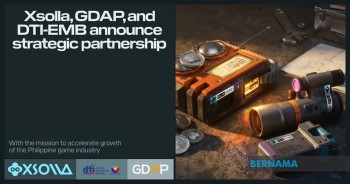
Video game commerce company Xsolla has formalised a strategic partnership with the Game Developers Association of the Philippines and the Department of Trade and Industry's Export Marketing Bureau to accelerate development capabilities across the Philippine gaming sector. The memorandum of understanding unites three crucial actors: a worldwide game commerce platform, the industry's leading professional association, and the government body charged with driving export competitiveness. Together, they aim to position Philippine game studios as serious competitors on the international stage while strengthening the domestic ecosystem's infrastructure and talent base.
The Philippines has undergone a notable transformation as a gaming hub in recent years, attracting attention from major industry players seeking fresh talent and innovative perspectives. Xsolla President Chris Hewish highlighted the nation's emergence as one of Southeast Asia's most vibrant development markets, pointing to a combination of creative professionals, a culturally engaged gaming population, and meaningful government backing for industry advancement. These conditions have created a favourable environment for both indie developers and established studios looking to build on regional strength.
The collaboration addresses a persistent challenge facing Philippine developers: the gap between local creative capability and access to the tools, markets, and financial infrastructure required for global distribution. Many talented Filipino studios struggle not with game design or artistic vision, but with navigating international business models, securing publishing deals, and implementing effective monetisation strategies across different regional markets. By bridging these operational gaps, the partnership aims to convert raw talent into sustained commercial success.
Through the agreement, the three partners will jointly develop structured mentorship and capability-building programmes tailored to different developer profiles. These initiatives will encompass practical workshops on game publishing mechanics, seminars addressing industry trends, formal training in monetisation approaches, and personalised one-on-one mentoring relationships. The scope extends from fundamental skills for emerging independent studios to advanced guidance for established publishers pursuing international expansion—recognising that a healthy ecosystem requires support across all maturity levels.
The partnership structure deliberately combines commercial expertise, industry representation, and government authority. Xsolla brings proven global commerce infrastructure and publishing know-how accumulated across thousands of game titles worldwide. GDAP represents the collective voice and interests of Philippine developers, ensuring programmes remain grounded in actual industry needs rather than external assumptions. The DTI-EMB contribution includes government resources, diplomatic channels, and alignment with national export strategies that can facilitate international market access at scale.
International visibility emerges as a critical focus area, since many high-quality Philippine games remain unknown to global audiences despite their merit. Coordinated marketing activities and industry events will be designed to position the Philippines as a recognisable gaming destination comparable to established hubs in South Korea, Japan, and Vietnam. This repositioning requires consistent messaging, participation in major international game conferences, and strategic partnerships with publishers and platform holders who control distribution channels.
The mentorship dimension addresses a fundamental knowledge transfer challenge. Many Philippine developers, particularly in smaller studios, lack exposure to best practices in user acquisition, retention mechanics, live service operations, and regional pricing strategies. Formal one-on-one mentoring creates pathways for experienced professionals to share insights that would otherwise require years of trial-and-error learning. This acceleration of learning curves can meaningfully reduce time-to-market and increase success rates for commercially viable titles.
Monetisation strategy represents another central pillar of the partnership. The mechanics of earning revenue from games—whether through premium sales, free-to-play models, battle passes, cosmetics, or subscription services—vary dramatically across regions and gaming preferences. Xsolla's global platform experience positions it uniquely to guide developers through these decisions, helping them select approaches suited to target audiences while maximising sustainable revenue. This expertise becomes particularly valuable as Philippine developers expand beyond Asian markets into Europe and North America.
The collaboration also signals formal government recognition of gaming as a strategic industry sector worthy of export promotion resources. Unlike older creative industries, gaming remains relatively new to many Southeast Asian governments' export agendas. The DTI-EMB's involvement legitimises the sector within broader trade policy frameworks and opens possibilities for targeted support mechanisms, visa facilitation for international talent, and inclusion in trade missions and diplomatic initiatives.
Regional implications extend beyond the Philippines alone. A strengthened Philippine gaming sector creates competitive pressure and knowledge spillovers beneficial to the broader Southeast Asian region. Neighbouring countries like Malaysia, Indonesia, and Thailand maintain significant game development talent pools but often lack comparable institutional support structures. The Xsolla partnership model may inspire similar government-industry collaborations elsewhere in the region, gradually building Southeast Asia's collective standing in global gaming markets currently dominated by Asia-Pacific leaders like South Korea and Japan.
The partnership's success will ultimately depend on sustained commitment and measurable outcomes. Key indicators would include the number of developers completing mentorship programmes, international publishing deals secured, games launched globally, and export revenues generated. These metrics will determine whether the initiative catalyses meaningful ecosystem transformation or remains a symbolic gesture without substantive impact on developer livelihoods and industry growth.
For Malaysian readers observing this development, the partnership offers instructive lessons about government-industry collaboration structures and the strategic importance of gaming as an export sector. Malaysia's own gaming ecosystem, while established, could benefit from comparable formal partnerships between government export agencies, local industry associations, and global commerce platforms. The Philippine model demonstrates how coordinated institutional action can accelerate sector maturity and international competitiveness in ways that individual market forces alone may not achieve.

