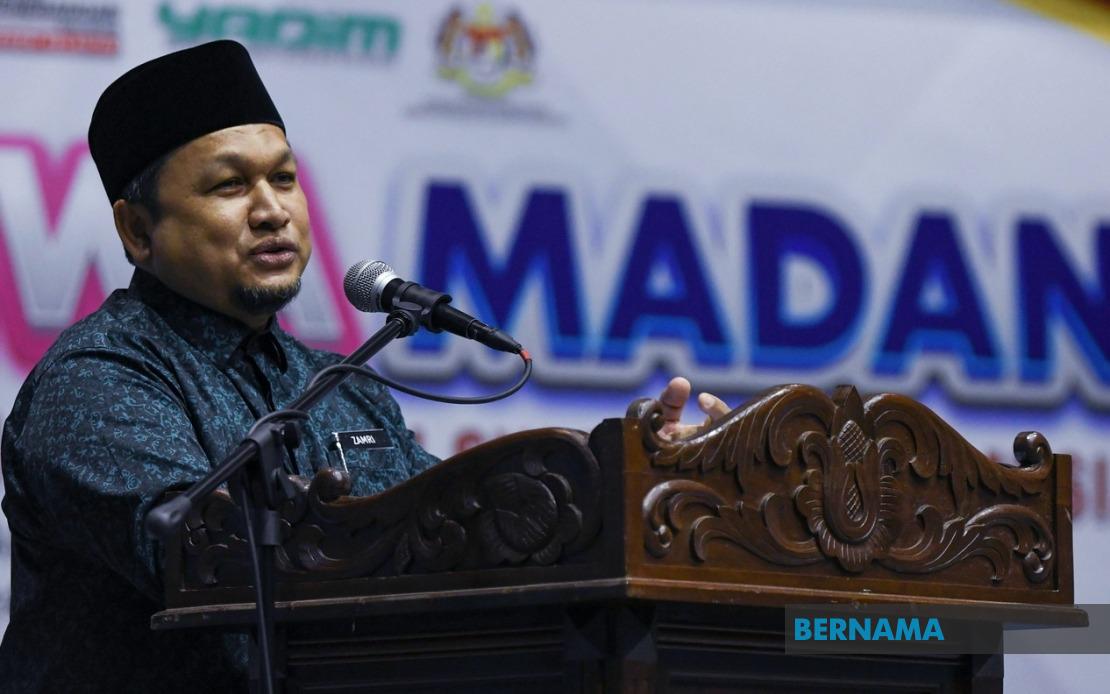
The Islamic foundation Yayasan Dakwah Islamiah Malaysia (YADIM) has thrown its weight behind a government initiative to establish formal accreditation requirements for religious speakers and preachers active on digital platforms and social media networks, viewing the measure as essential to safeguarding the authenticity of Islamic teachings in Malaysia's increasingly digital religious landscape.
Zamri Zainal Abidin, chief executive of YADIM, described the proposal as a forward-thinking initiative designed to verify the credentials and knowledge of individuals presenting themselves as religious authorities online. In an increasingly crowded digital space where anyone can claim religious expertise with minimal accountability, such oversight measures address a genuine gap in how Islamic instruction is validated and quality-assured. The accreditation framework would help ensure that those offering religious guidance possess genuine Islamic scholarship and operate within established doctrinal bounds.
The proposal, announced by Minister in the Prime Minister's Department (Religious Affairs) Dr Zulkifli Hasan, targets a specific problem: the proliferation of unqualified individuals claiming religious authority on social media without demonstrable knowledge of Islamic principles or proper training. Digital platforms have democratised access to religious instruction, allowing legitimate scholars to reach wider audiences but simultaneously enabling charlatans and those with marginal understanding to gain followings among vulnerable populations. Young Malaysians, increasingly dependent on social media for information including religious guidance, face particular exposure to doctrinally questionable or deliberately misleading content.
Zamri emphasised that implementing such a framework would not function as a restriction on legitimate dakwah activities or present barriers for sincere individuals genuinely committed to sharing authentic Islamic knowledge. This clarification addresses concerns that accreditation requirements might inadvertently suppress grassroots religious education or suppress minority interpretations of Islam. Rather, the initiative seeks to distinguish between qualified, knowledgeable teachers and those trading on religious authority without proper foundation. The distinction becomes critical when misinformation can spread instantaneously across platforms with millions of users, potentially distorting Islamic teachings and exploiting public trust.
Without formal oversight mechanisms, social media enables virtually anyone to adopt the title of "ustaz" or preacher and accumulate followers based on charisma, entertainment value, or algorithmic amplification rather than scholarly credentials. This environment creates conditions for deliberate distortion of religious principles, whether driven by ideological agendas, financial gain, or simple incompetence. The consequences extend beyond individual deception: when publics encounter conflicting religious guidance from multiple self-proclaimed authorities, institutional confidence in established religious bodies erodes. Malaysians may increasingly regard religious institutions as just one voice among many rather than authentic sources of doctrinal authority.
Young people represent a particular vulnerability in this environment. Those seeking to understand Islamic teachings often turn to social media as their primary information source, influenced by production quality, personality, and algorithmic recommendation rather than scholarly credentials. Exposure to inaccurate religious messaging during formative years can shape theological understanding for decades. Moreover, certain online preachers deliberately exploit youth audiences by blending entertainment, contemporary cultural commentary, and selective religious interpretation in ways that appear modern and relatable but deviate from established Islamic scholarship. An accreditation framework could help young Malaysians distinguish between qualified instruction and pseudo-religious content.
YADIM's endorsement carries weight because the foundation itself operates as Malaysia's primary dakwah agency functioning under the Prime Minister's Department. The organisation has already implemented accreditation practices internally, with trained preachers receiving formal credentials from the Federal Territories Mufti Department. YADIM's Daie Muda programme, which trains young Islamic teachers, already subjects participants to accreditation requirements. This existing practice positions YADIM as a credible partner in expanding such frameworks across Malaysia's broader online religious instruction landscape.
The proposal reflects broader regional and global challenges as religious instruction shifts toward digital delivery. Southeast Asian countries have grappled with similar issues as social media enables rapid dissemination of theological content, sometimes with minimal quality control. Islamic-majority Malaysia faces particular complexity because its constitutional framework recognises Islam as the federation's religion while guaranteeing freedom of religion, requiring any accreditation system to balance oversight with religious freedom principles. Accreditation frameworks must avoid becoming tools for suppressing legitimate theological debate or minority perspectives while still maintaining standards against demonstrable misinformation.
Implementing such accreditation systematically presents practical challenges. Determining which platforms should be covered, how to verify credentials across digital spaces where anonymity is possible, and ensuring the process remains transparent and appeals-friendly will require careful design. The framework must avoid becoming unwieldy bureaucracy that discourages legitimate preachers while successfully filtering out genuinely dangerous misinformation. Coordination among federal authorities, state religious departments, and established Islamic institutions will prove essential.
The initiative also reflects evolving understanding of how religious authority functions in digital environments. Traditional Islamic instruction operated through physical institutions—mosques, pesantren, formal schools—where qualifications were visible and institutional accountability existed. Social media disaggregates this relationship, allowing individuals to reach audiences directly without institutional intermediation. Formal accreditation essentially attempts to restore some institutional verification while acknowledging that digital platforms have become the dominant space for religious instruction among significant population segments. Policymakers recognise that ignoring digital religious instruction risks abandoning oversight entirely.

