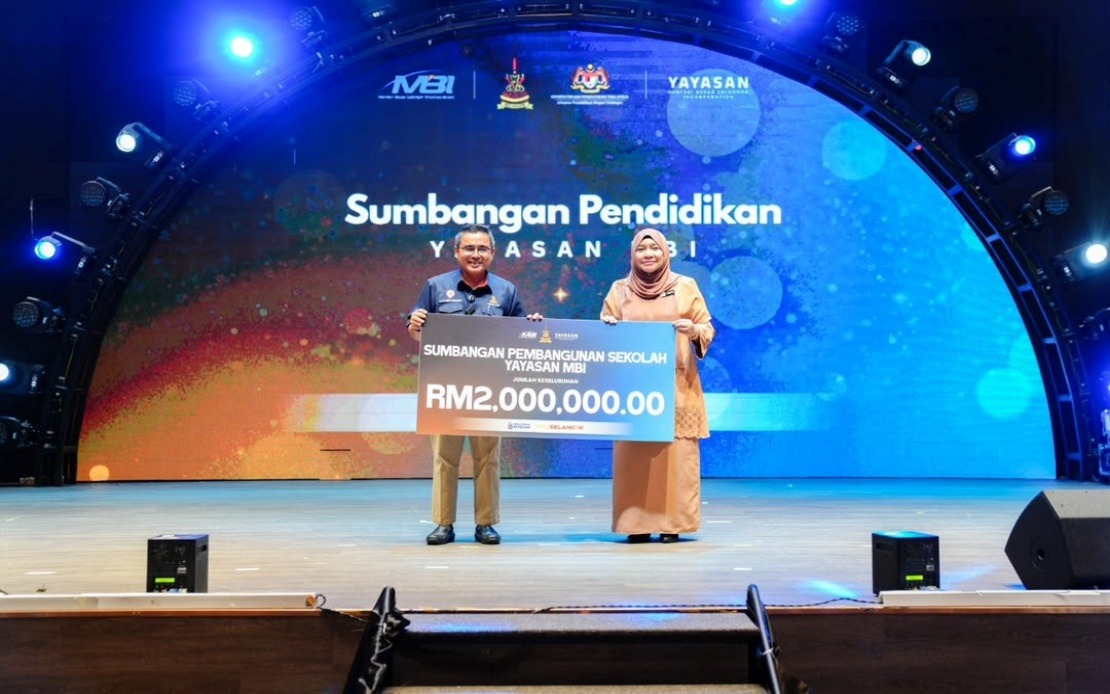
The Yayasan Menteri Besar Selangor (Incorporated) has released RM2 million in funding intended to upgrade the state's educational landscape, marking a significant investment in classroom infrastructure and school environments. The disbursement, announced at the Yayasan MBI Education Aspiration 2026 event, forms part of the foundation's School Development Contribution scheme, which seeks to enhance facilities and create improved working and learning conditions for both educators and students across Selangor's institutions.
According to Ahmad Azri Zainal Nor, head of Yayasan MBI, the foundation views education spending as a cornerstone of its organisational mission rather than merely a charitable exercise. The statement underscores a philosophical approach that positions educational investment as essential groundwork for developing human capital and securing Selangor's long-term prospects. With approximately two-thirds of the foundation's initiatives directed toward educational programmes, this latest allocation exemplifies the institution's strategic alignment with state development priorities.
The funding allocation represents a deliberate pivot toward addressing structural gaps in school environments. By concentrating resources on learning facilities and infrastructure improvement, Yayasan MBI aims to create spaces where teaching and learning can flourish more effectively. This targeted approach recognises that student achievement and teacher morale are closely linked to environmental factors, from classroom comfort to availability of teaching materials and equipment. For Malaysian policymakers monitoring education inequality across urban and rural settings, such direct investment in infrastructure carries particular significance.
The foundation operates through several interconnected programmes that collectively provide free learning support to students in need. The Back to School Tour Programme reaches families preparing children for the academic year, whilst the Selangor People's Tuition Programme offers supplementary academic support. The Didik Kasih Programme serves students requiring additional assistance, whilst partnerships with Parent-Teacher Associations embed community involvement in educational outcomes. These initiatives collectively address multiple pressure points within the education ecosystem, from resource constraints to parental engagement gaps.
Yayasan MBI's collaborative framework with the Selangor State Education Department ensures that funding decisions reflect actual institutional needs rather than assumptions. This partnership model, increasingly adopted across Southeast Asian education systems, reduces waste and enhances targeting of resources toward schools and student populations experiencing genuine hardship. By working closely with JPNS, the foundation gains visibility into classroom realities and can adjust support mechanisms accordingly, creating a feedback loop that improves programme effectiveness over time.
For Selangor specifically, this investment carries implications beyond the immediate schools receiving support. As Malaysia's most developed state and economic engine, Selangor faces mounting pressure to maintain educational quality whilst accommodating rapid urban expansion and demographic shifts. Infrastructure investment in schools helps prevent the emergence of two-tier systems where newly developed areas attract resources whilst older communities face neglect. This spatial dimension of educational equity remains underexplored in Malaysian policy discourse, yet significantly influences social cohesion and intergenerational opportunity.
The emphasis on creating a more inclusive and sustainable education ecosystem aligns with broader Southeast Asian development trends. Regional governments increasingly recognise that education serves as both immediate social support and long-term economic strategy. Thailand, Vietnam, and Indonesia have similarly expanded foundation-led initiatives to supplement government education budgets, particularly in infrastructure and supplementary support. Yayasan MBI's approach positions Selangor within this regional conversation about balancing equity and quality in expanding education systems.
Teacher welfare and retention represent another implicit benefit of this funding strategy. When schools receive infrastructure improvements and additional resources, educators experience improved working conditions and reduced stress from inadequate facilities. This matters considerably in Malaysia, where teacher shortages in certain regions and subjects create bottlenecks in educational delivery. By investing in the school environment, Yayasan MBI indirectly supports teacher recruitment and retention strategies that state education departments struggle to implement independently.
The timing of the RM2 million announcement at a dedicated education aspiration event reflects intentional communication strategy. By situating this funding within a broader narrative about education's future in Selangor, Yayasan MBI signals sustained commitment rather than one-off charity. This narrative framing matters for stakeholders like school principals and community leaders who must advocate for support. It also provides performance benchmarks against which the foundation can be measured in future reporting periods.
Looking forward, the foundation's structural partnership with state authorities suggests potential for scaling these initiatives. If the current RM2 million allocation demonstrates measurable improvements in school environments and student outcomes, the model could expand to other Selangor schools or potentially inspire similar arrangements in other states. This scalability question becomes particularly important as Malaysia faces competing demands on public education budgets, where private philanthropic contributions increasingly fill gaps that government alone cannot address.
The initiative also reflects evolving expectations around corporate and institutional social responsibility in Malaysia. Yayasan MBI's framing of education spending as investment rather than charity resonates with global best practices in development financing. This philosophical shift—from viewing education support as benevolence to recognising it as strategic capacity-building—influences how other institutions approach community engagement and may gradually reshape Malaysian expectations around institutional accountability for educational outcomes.
Ultimately, the RM2 million investment represents incremental but meaningful progress in addressing Selangor's educational infrastructure gaps. Whilst the sum cannot resolve systemic challenges in school funding, it demonstrates that strategic partnerships between state institutions and philanthropic foundations can mobilise additional resources for education. For Malaysian readers following education policy, this development illustrates how creative financing mechanisms and collaborative governance models offer pathways to improved educational access and quality in the absence of unlimited public budgets.

