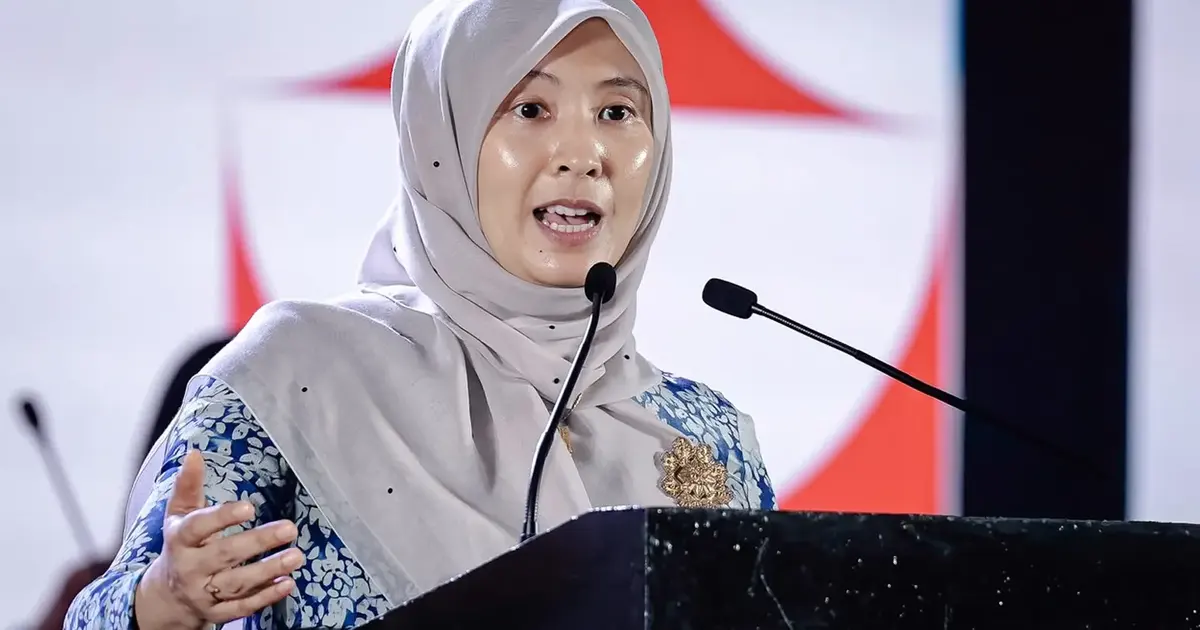
Nurul Izzah Anwar, the PKR deputy president and daughter of PKR leader Anwar Ibrahim, has chosen to sidestep mounting criticism over several recent political developments, instead adopting a philosophical stance that accepting universal approval remains impossible in public life. Her response comes as observers scrutinise a series of events that have drawn mixed reactions from party members and political commentators across Malaysia, raising questions about her political trajectory and the party's internal dynamics.
The Permatang Pauh MP faced considerable setbacks during the 15th general election, a contest that saw significant shifts in Malaysia's political landscape as voters delivered mixed results to competing coalitions. Her performance in that electoral contest became a focal point for those questioning her political effectiveness, particularly given her prominence within PKR's hierarchy and the expectations that accompany such a senior position within a major opposition-aligned party. Electoral defeats at any level invite scrutiny from both supporters and rivals, and Nurul Izzah's loss intensified conversations about the viability of particular candidates and strategies employed during the campaign period.
Additionally, her successful bid for the deputy presidency position within PKR prompted its own set of reactions from the party grassroots and observers tracking intra-party dynamics. The elevation represented a significant consolidation of influence for the Anwar family within PKR's upper echelons, particularly given Anwar Ibrahim's position as party president and his concurrent role as Prime Minister. Some viewed this development as a natural progression reflecting her standing, while others questioned whether merit-based considerations or familial connections drove such decisions. These concerns touch upon broader Malaysian political anxieties regarding dynastic influence and the concentration of power within political families.
Further complicating the narrative, Nurul Izzah subsequently took leave from her newly acquired deputy presidential responsibilities. This decision generated additional speculation about her commitment to the role and prompted questions regarding the circumstances surrounding the sabbatical. Her absence from active duty in this position raised eyebrows among political observers who struggled to locate a clear explanation for the timing and duration of her withdrawal from day-to-day party operations. The juxtaposition of securing a prestigious party post followed by stepping back from it created an apparent contradiction that demanded clarification.
Nurul Izzah's approach to these criticisms represents a calculated deflection rather than substantive engagement with the underlying concerns. By emphasizing the universal impossibility of satisfying all observers, she sidesteps direct examination of specific decisions and their rationale. This rhetorical strategy, while common among politicians facing multiple fronts of criticism, somewhat dodges the legitimate questions that emerged from each development. Malaysian political observers have grown accustomed to such responses, which often leave underlying tensions unresolved within party structures and public discourse.
The broader context involves PKR's complicated position within Malaysia's political framework. As a major party within the Pakatan Harapan coalition and a participant in the current government, PKR carries substantial responsibility for delivering on reform promises and managing internal cohesion. Family-related decision-making within such a prominent party necessarily attracts heightened scrutiny, particularly given historical concerns about nepotism in Malaysian politics. The Anwar family's multiple roles across governance, party leadership, and parliamentary representation create a concentration that observers believe warrants examination.
Nurul Izzah's political profile has evolved considerably since her early emergence as a reform-minded MP. Her father's imprisonment under previous administrations and subsequent political rehabilitation created a compelling personal narrative that initially distinguished her within the opposition landscape. However, the transition from symbolic figurehead to wielding concrete party power involves navigating different expectations and facing accountability for institutional performance. The gap between these roles often produces tension, particularly when electoral outcomes disappoint.
The GE15 result itself represented a complex outcome for PKR and Pakatan Harapan more broadly. While the coalition participated in subsequent government formation under Anwar Ibrahim's premiership, the election was hardly a ringing endorsement of any single bloc. Coalition partners negotiated extensively to forge the current governing arrangement, reflecting voter ambivalence about available choices. In this context, individual losses take on additional weight, as they potentially signal broader electoral weaknesses that cannot be easily dismissed.
Looking forward, how Nurul Izzah manages her political portfolio and addresses persistent questions about her efficacy will likely determine her long-term influence within PKR and Malaysian politics more generally. Her current approach of deflecting criticism rather than engaging substantively with concerns may prove insufficient as a sustainable strategy, particularly if electoral performance issues persist or if questions about the deputy presidency role remain unresolved. Political sustainability in Malaysian politics increasingly demands demonstrable contributions to party objectives beyond familial associations.
The situation also reflects evolving standards within Malaysian political discourse, where citizen engagement and media scrutiny have expanded considerably. Younger voters and digital-native observers expect greater transparency and clearer justification for political decisions than previous generations demanded. This generational shift places additional pressure on political figures to explain their actions and choices rather than relying solely on positional authority or party affiliation. Nurul Izzah's response to criticism, while perhaps satisfying to some party loyalists, may ultimately prove insufficient in addressing the broader questions about competence, merit, and dynastic influence that her political moves have raised.

