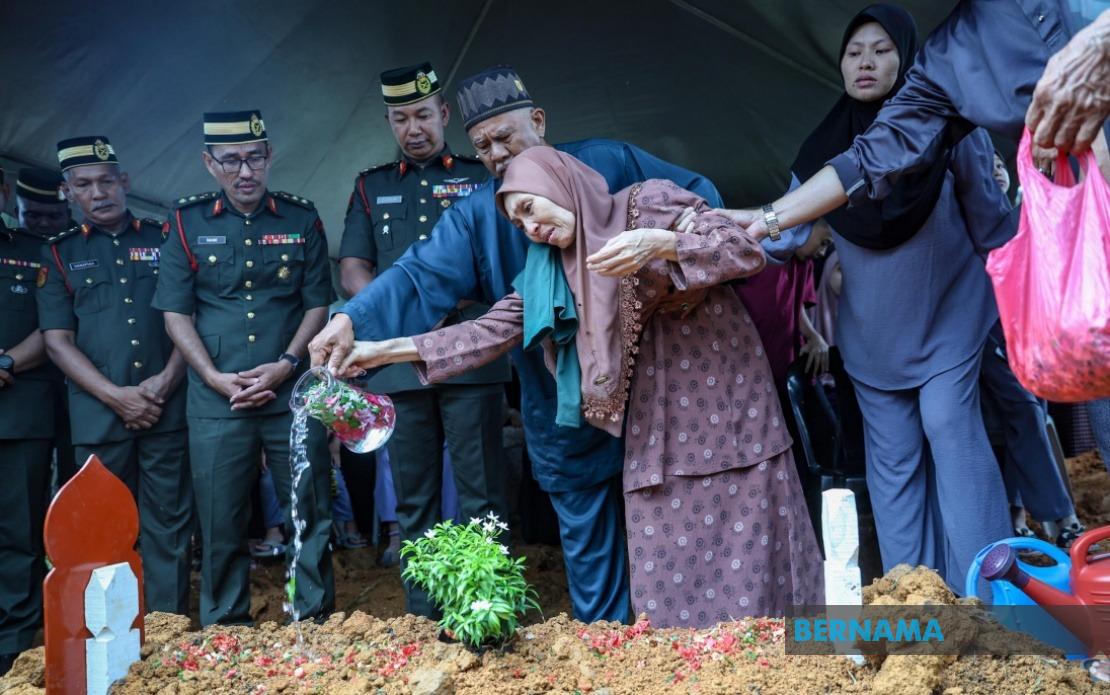
A 24-year-old Malaysian Army engineer was laid to rest in Kluang on Monday afternoon, ending the immediate mourning period for one of two soldiers killed during a grenade throwing exercise at Hobart Camp in Gurun, Kedah. Private Siti Khadijah Sungip, who served with the First Squadron of the Royal Engineer Regiment, died on Sunday morning when an explosive device detonated unexpectedly during the routine training session. Her funeral at Taman Sri Lambak Muslim Cemetery drew a large gathering of military colleagues, family members, and friends who came to honour her service and sacrifice.
The training accident occurred at 10.57 am on Sunday at the target range facility, claiming two lives in rapid succession. Both Private Siti Khadijah and Corporal Norazmi Abu Bakar, stationed with the Sixth Battalion of the Royal Malay Regiment, sustained critical injuries from the blast while participating in what should have been standard military instruction. Emergency responders rushed them to Sultan Abdul Halim Hospital in Sungai Petani, but both soldiers succumbed to their injuries during transport, highlighting the severity of the explosion and the limited window for medical intervention in such incidents.
The body of Private Siti Khadijah underwent post-mortem examination at Sultanah Bahiyah Hospital in Alor Setar, a standard procedure following unexpected deaths in military training contexts. The examination was completed by early Monday morning, allowing the family to begin funeral preparations. Her remains arrived at the family home in Taman Sri Lambak at 12.10 pm, escorted by Lieutenant Muhammad Lutfil Hadi Osman, the First Field Troop Leader, alongside four soldiers from the Royal Engineer Regiment who ensured dignified transport throughout the process.
Following Islamic custom, the body was taken directly to Darul Iman Mosque for the funeral prayer, which was conducted by Major Mohd Azlan Shah Abdul Razak from the Malaysian Army Field Engineering Institute. The ceremony reflected the religious and military traditions observed for fallen personnel, combining spiritual observance with institutional respect. By 1.15 pm, Private Siti Khadijah was committed to her final resting place as mourners paid their respects, marking the end of a brief but meaningful military career.
At the graveside, Brigadier General Datuk Zulhelmy Masdar, Commander of the 7th Brigade headquartered at Mahkota Camp, presided over a symbolic ceremony in which the Jalur Gemilang was presented to her father, Sungip Jais, aged 65. This handover of the national flag represents official recognition of her service to the nation and acknowledgement of the family's loss. The gesture carries profound meaning within military culture, signifying that her death in training is treated as a service-related sacrifice rather than a mere accident.
The incident raises critical questions about safety protocols during grenade training, one of the most hazardous components of military instruction. Explosive ordnance handling requires meticulous adherence to procedures, and any deviation or equipment malfunction can result in catastrophic consequences. The Malaysian Army will likely undertake a comprehensive investigation to determine whether the explosion resulted from human error, equipment failure, or procedural breakdown, with findings potentially leading to revised safety standards across training facilities.
Grenade throwing remains a fundamental skill taught to combat engineers and infantry personnel across virtually all modern militaries, yet it consistently ranks among the highest-risk training activities. The balance between ensuring soldiers develop practical competence with explosive devices and maintaining stringent safety measures represents an ongoing operational challenge. Hobart Camp in Gurun is a designated training facility, and such incidents, while tragic, underscore the inherent dangers of military preparation and the need for continuous vigilance.
For the wider Malaysian military community, the deaths of Private Siti Khadijah and Corporal Norazmi represent sobering reminders of the costs of military service even during peacetime operations. Both soldiers were relatively young professionals engaged in routine, essential training when their lives were abruptly cut short. The incident will likely prompt reflection throughout the armed forces on risk management, equipment maintenance, and instructor protocols, particularly given Malaysia's continued commitment to professional military standards.
The loss is particularly poignant given the increasing visibility and integration of women in Malaysia's armed forces. Private Siti Khadijah served as a professional soldier in the Royal Engineer Regiment, reflecting the broader trend of female military personnel taking on technical and combat-support roles. Her death underscores that the dangers inherent in military service apply equally to all personnel regardless of gender, and that the commitment to service carries identical risks and consequences across the force structure.