The inaugural Minister's Cup debate competition, staged as part of the 7th International Sustainable Energy Summit (ISES) 2026 in Kuala Lumpur, delivered a significant opportunity for university students to grapple with one of Southeast Asia's most pressing energy dilemmas. The event brought together twenty undergraduates from Malaysian institutions to deliberate a central question shaping the region's energy future: whether Malaysia should pursue exporting renewable electricity to its neighbours whilst simultaneously meeting its own growing domestic requirements. The debate format proved instrumental in translating complex policy discussions into an accessible platform where young voices could contribute meaningfully to national energy conversations.
The central motion placed before debaters—presented in Malay to engage local audiences—captured the essence of Malaysia's energy crossroads. As the nation accelerates its renewable energy transition, policymakers face genuine tension between capitalising on clean energy production through regional exports and ensuring sufficient supply for its own expanding economy and population. This dilemma reflects broader Southeast Asian dynamics, where countries with strong renewable potential increasingly view energy exports as economic opportunity, yet cannot afford energy security vulnerabilities. By situating this debate within a formal competition framework, organisers acknowledged that the question warrants rigorous examination from multiple perspectives rather than policy pronouncement from above.
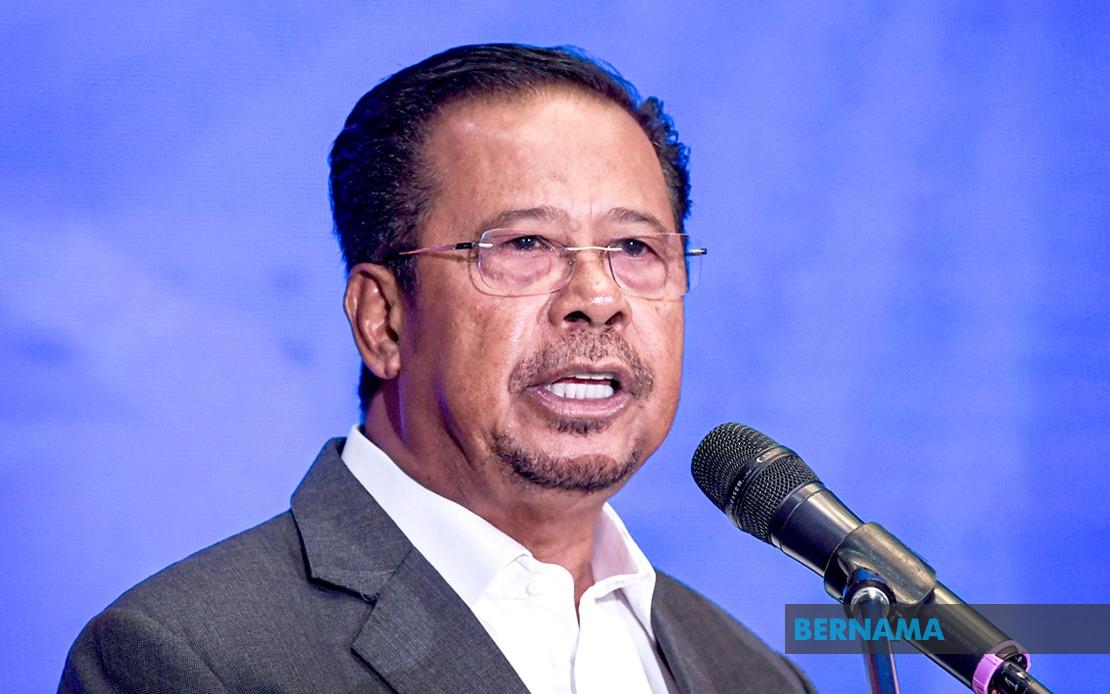
Deputy Minister of Energy Transition and Water Transformation Datuk Seri Abdul Rahman Mohamad attended the awards ceremony and presented accolades to the winning Government team alongside the Best Debater honour. His presence underscored official recognition that student engagement with energy policy constitutes a legitimate and valuable component of democratic deliberation. Chief Secretary to the Government and Sustainable Energy Development Authority Malaysia (SEDA) chairman Tan Sri Dr Wan Ahmad Dahlan Abdul Aziz similarly participated, signalling government commitment to youth involvement in energy literacy initiatives at the highest administrative levels.
The competition represents the flagship programme within the Malaysia Energy Literacy Programme (MELP) 2026, a national initiative designed to deepen public understanding of how energy is produced, distributed, utilised and managed. MELP explicitly aims to equip Malaysians with verified, trustworthy information that enables informed decision-making about energy consumption and policy. This focus on literacy proves particularly significant in the Malaysian context, where public understanding of renewable energy economics, grid stability implications, and regional energy dynamics remains uneven across socioeconomic and demographic groups. By engaging university students as debate participants and judges, MELP leverages young people as potential multipliers who can subsequently communicate energy concepts within their peer networks and communities.
SEDA Strategic Communications director Izzad Zalman Abdul Kader articulated a sophisticated rationale for channelling student energies into policy debates rather than passive information seminars. He contended that debate platforms strengthen energy literacy by enabling younger Malaysians to develop critical, evidence-based perspectives on government initiatives. Crucially, he recognised that debate also creates space for constructive challenge to official positions—young people gain not merely the ability to understand policy, but to question and propose alternatives. This pedagogical philosophy reflects broader recognition that energy transition requires societal buy-in that cannot be manufactured through top-down communication alone.
Muhammad Uwais Mohd Hazril Munir @ Umar, the twenty-year-old Best Debater award recipient and Universiti Malaya Faculty of Law student, offered insight into how debate demystifies technical energy topics. He observed that renewable energy and export economics become comprehensible when audiences encounter competing arguments presented by equally informed advocates. The debate format allows spectators to weigh evidence, recognise areas of genuine disagreement, and understand how reasonable people can reach different conclusions about energy strategy. For Malaysian citizens navigating media coverage of energy transitions, such exposure to structured argumentation around evidence proves invaluable in developing immunity to oversimplified narratives.
Parallel observations emerged from Afiq Athmar Mohamed, the twenty-one-year-old Universiti Malaya Faculty of Business and Economics student, who emphasised the importance of ministerial collaboration with government agencies and media in sustaining debate culture around energy issues. He noted that such institutional partnerships impart momentum and legitimacy to public discourse on energy supply challenges and the renewable transition. His comments highlight how energy literacy initiatives risk remaining peripheral to public consciousness unless coordinated across government entities, educational institutions, and information channels. The Malaysian context, where historical reliance on fossil fuels and hydropower has dominated energy thinking, particularly requires sustained institutional commitment to reorient public discourse toward renewable possibilities and constraints.
The broader Southeast Asian significance of Malaysia's energy debate initiative becomes apparent when considering regional energy interdependencies. Several ASEAN nations possess complementary renewable resources—solar and wind capacity distributed unevenly across borders—yet lack established frameworks for regional electricity trading. Malaysia's discussion of renewable export potential implicitly acknowledges emerging possibilities for regional energy cooperation. However, such cooperation requires national publics that understand comparative advantages, grid stability requirements, and equitable benefit-sharing arrangements. Student-led debate competitions create constituencies of younger citizens prepared to support evidence-based regional energy policies.
The 7th International Sustainable Energy Summit context amplified the debate's significance by situating Malaysian student voices within global conversations about clean energy transition. International participants observed how a developing Asian economy approaches the tension between export opportunity and domestic security. Malaysia's willingness to publicly debate rather than simply announce energy policy positions reflects growing confidence in its renewable capacity and recognition that legitimate policy choices require broader societal understanding. For Malaysian policymakers, the debate also provided real-time feedback on how proposed renewable export scenarios resonate with educated youth who will inherit the consequences of current energy decisions.
The Government team's victory in the competition suggests that official energy policy positions, when articulated through prepared debate arguments, withstand scrutiny from informed student challengers. This outcome carries significance beyond sporting competition—it indicates that Malaysia's energy transition strategy possesses sufficient internal coherence and factual foundation to persuade educated audiences. However, the prominent recognition of Best Debater awards alongside team victory signals that MELP values argumentative quality and evidence deployment over outcome prediction, maintaining the educational rather than propagandistic character of the initiative.
Looking forward, the Minister's Cup debate model offers templates for other Southeast Asian governments seeking to deepen energy literacy among youth populations. Malaysia's approach—situating student debate within formal national energy initiatives, securing high-level political participation, and integrating outcomes with ongoing policy conversations—demonstrates how governments can authentically engage younger generations in energy transition deliberation. As ASEAN nations collectively advance renewable energy targets and contemplate regional energy cooperation, similar platforms in other capitals could build the informed publics necessary to support ambitious yet realistic energy strategies. The Kuala Lumpur event suggests that energy literacy, when approached through debate and argumentation rather than technocratic briefing, transforms abstract policy questions into live intellectual challenges that capture student imagination.

