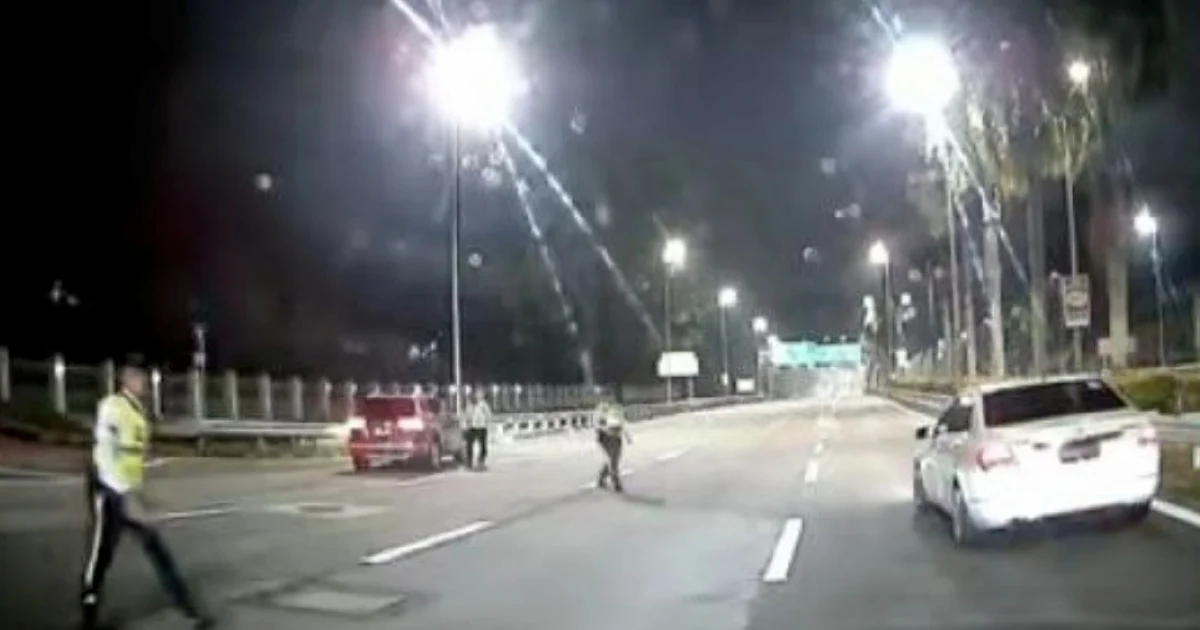
A twenty-year-old motorist operating a white Mercedes has been taken into custody following a dramatic collision with a police checkpoint on the Sprint Expressway in the vicinity of Kuala Lumpur's National Institute of Public Administration (Intan). The detainee is now assisting officers with their investigation into the circumstances surrounding the incident, which gained widespread attention after video footage began circulating across social media platforms.
The incident unfolded when the driver's vehicle made contact with the police roadblock rather than complying with officers' standard protocol to halt. Instead of stopping as required, the motorist continued accelerating along the Sprint Expressway, prompting a pursuit by law enforcement authorities. The sequence of events was captured on various recording devices, leading to its rapid dissemination online and generating significant public interest in the matter.
Roadblocks serve as critical enforcement tools for Malaysian police operations, typically deployed to detect traffic violations, check vehicle documentation, and apprehend suspects wanted for various offences. The incident highlights the risks that such operations face when drivers choose to evade compliance rather than cooperate with instructions. This particular case presents questions about what motivated the young driver to attempt to bypass the checkpoint, whether through panic, intoxication, or deliberate defiance.
The Sprint Expressway itself is a heavily trafficked toll route connecting Kuala Lumpur with surrounding areas, serving commuters and commercial vehicles daily. The area near Intan, a prominent public administration training institution, experiences regular traffic flow, making the roadblock incident particularly noteworthy given the potential for harm to other road users. The expressway's relatively high speeds make any loss of vehicle control exceptionally dangerous.
The arrest of the motorist represents the conclusion of the immediate incident, though several investigative threads remain to be pursued. Police will be examining the events that led to the roadblock being established, the circumstances prompting the driver's decision to breach it, and what occurred during the subsequent chase. Toxicology results, mechanical inspections of the vehicle, and witness statements will likely form components of the comprehensive investigation.
For Malaysian drivers and road safety advocates, the incident serves as a sobering reminder of the consequences of failing to cooperate with traffic authorities. Attempting to bypass police checkpoints carries severe legal ramifications beyond the traffic violations that the roadblock was intended to detect. Such actions place the driver, occupants of the vehicle, law enforcement officers, and innocent road users at considerable risk of injury or death.
The viral nature of the footage reflects changing patterns in how Malaysian society engages with news and information. Mobile phone cameras and instant social media sharing have made dramatic traffic incidents immediately available for public consumption, often before official law enforcement statements can be released. This democratisation of documentation has proven valuable in promoting accountability and transparency, though it can also spread incomplete or misleading narratives before authorities confirm facts.
The detention of the motorist pending investigation indicates that police are treating the matter with appropriate seriousness. Depending on the details that emerge during the investigation, charges could encompass traffic violations, reckless endangerment, failing to obey lawful orders from police, or potentially more serious offences if evidence suggests deliberate evasion or if the incident resulted in property damage or injury. The driver's age may also become relevant to sentencing considerations should convictions result.
Highway safety concerns have become increasingly prominent in Malaysian public discourse, with regulators and enforcement agencies working to reduce accident rates and improve compliance with traffic laws. Incidents such as this demonstrate that enforcement efforts remain essential despite their inherent risks to police personnel. The roadblock system, despite occasional resistance from motorists, has proven effective at detecting and deterring unsafe driving practices across the country's highway network.
The case also underscores the importance of driver education and understanding the legal framework surrounding police authority on Malaysian roads. Drivers who encounter roadblocks are required by law to comply with officers' instructions. Attempting to drive through checkpoints creates criminal liability and endangers lives needlessly. Public awareness campaigns emphasizing these obligations could potentially prevent similar incidents in the future.

