As Johor voters prepare to cast their ballots on July 11, the contest for the Johor Jaya state seat has crystallised into a battle between competing visions of how best to serve a constituency at the crossroads of urban growth and employment challenges. The race, which draws four candidates vying for representation, reveals starkly different approaches to addressing the concerns of younger voters and building economic momentum in this eastern Johor Bahru area.
Pakatan Harapan's candidate Lee Wern Yiing, at 30 years old, embodies a particular political archetype increasingly visible across Malaysian campaigning: the diaspora returnee with conviction. Having studied and worked in Singapore, she made the deliberate choice to abandon what she describes as a lucrative career path abroad to contribute to Malaysia's reform agenda. Her decision to return in 2018 reflected genuine optimism about the country's direction following the 14th general election. Rather than view this as an aberration or a temporary detour, Lee has anchored her political identity in the notion that dedicated professionals can leverage international experience while committing themselves to domestic nation-building.
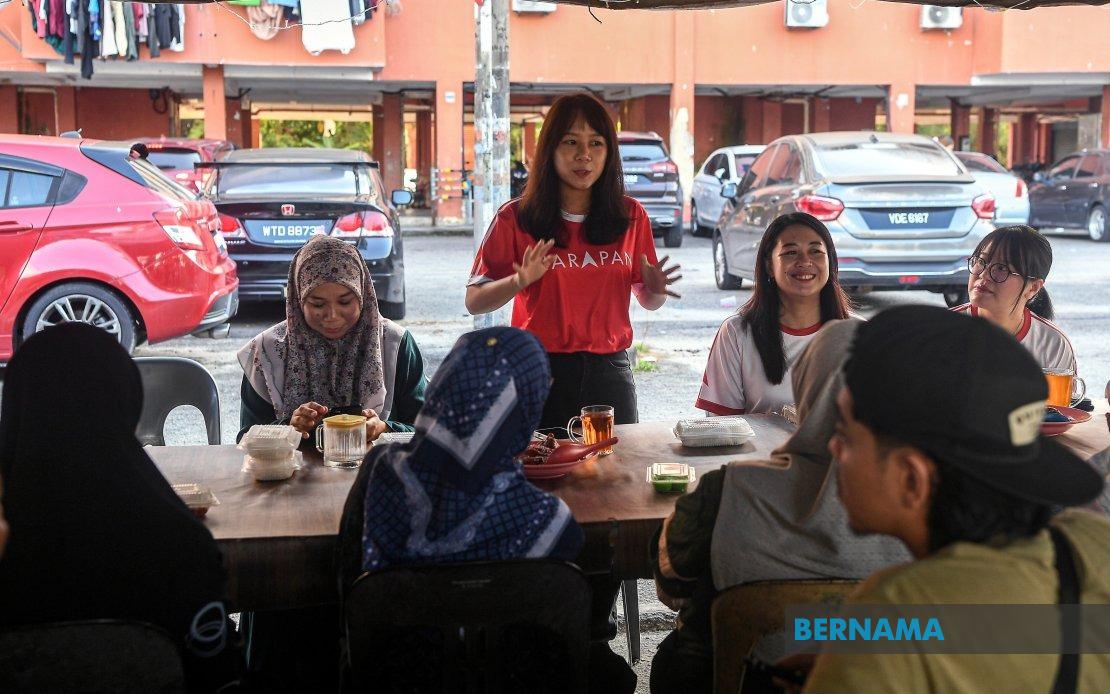
This biographical framing matters because it directly shapes her campaign messaging. As Johor DAP Socialist Youth chief, Lee has constructed a platform centred on attracting and retaining young talent within Johor Jaya itself. Her observation that younger voters are often dismissed as apathetic represents a subtle but important counternarrative in Malaysian political discourse. Instead of lecturing youth about civic duty, she argues that they will naturally engage when presented with credible information and tangible opportunities. This perspective influences her campaign mechanics, which blend digital media engagement with ground-level community activities such as the Johor Jaya Run.
At the core of Lee's economic pitch lies the Johor-Singapore Special Economic Zone, a regional project that has generated considerable discussion about Johor's future positioning. She frames the JS-SEZ not merely as an investment corridor but as a potential engine for employment creation that could reverse brain drain dynamics. The implicit argument is that if young Johoreans see pathways to meaningful careers without leaving the state, retention becomes possible. Her three-pronged focus on job opportunities, housing affordability, and cost-of-living pressures reflects genuine daily concerns shared across Malaysia's younger demographic, making her manifesto appeal less ideological than pragmatic.
Barisan Nasional's Chan San San enters the contest from a fundamentally different position, one rooted in sustained local embeddedness rather than recent return. Describing herself as an "anak Plentong"—a son or daughter of the area—Chan emphasizes more than a decade of community work. Her credentials span multiple institutional contexts: service on the Johor Bahru City Council, roles within the MCA party structure, and volunteer participation in the MCA Crisis Relief Squad. Unlike Lee's narrative of inspired homecoming, Chan's story is one of persistent presence and incremental contribution to neighbourhood welfare.
Chan's framing of community problems as "realities that must be addressed, not just numbers on paper" carries implicit criticism of what she may perceive as overly theoretical or disconnected governance approaches. This rhetorical move reflects BN messaging that emphasizes direct service delivery and institutional credibility. Her four-pillar agenda—strengthening the local economy, establishing Johor Jaya as a transportation hub, connecting residents with the Rapid Transit System project, and tackling congestion—presents development through infrastructure and connectivity rather than through attraction and retention mechanisms.
The transportation focus represents a distinct policy emphasis. While Lee's approach gravitates toward making Johor Jaya an appealing destination for ambitious young professionals, Chan's strategy concentrates on functional integration with broader regional mobility networks. The RTS connection she mentions links to Singapore transit infrastructure, suggesting that facilitating commuting patterns may be as important as creating local employment anchors. This reflects different assumptions about economic geography: PH positions Johor Jaya as needing to become self-sufficient in opportunity creation, while BN views it more as part of a larger economic network that requires better internal connectivity.
The broader electoral context amplifies the significance of these candidate contrasts. The 16th Johor state election, unfolding across 56 constituencies with 172 total candidates, represents the first major electoral test for voters since the return of BN-dominated governance in the state. PH's national standing has shifted considerably since the previous Johor polls, making individual candidate quality and local resonance particularly influential. For both major coalitions, Johor Jaya functions as a microcosm: youth engagement, economic anxiety, and infrastructure development form core challenges replicated across multiple constituencies.
The four-way contest adds complexity beyond the usual two-coalition binary. Parti Bersama Malaysia's Lau Yi Leong and Independent candidate Lim Hun Peaw represent alternative options for voters dissatisfied with establishment choices. While neither is projected as a serious contender for the seat, their presence may influence turnout patterns and vote splitting dynamics, particularly if either candidate successfully mobilizes specific demographic segments or neighbourhood concerns.
For Malaysian observers tracking broader political trends, the Johor Jaya race encapsulates several contemporary tensions. The appeal to younger voters reflects recognition that demographic composition has shifted, yet the actual mechanisms for engaging this group remain contested. Lee's digital-native, opportunity-focused approach contrasts with Chan's institutionalist, infrastructure-centered vision. Both strategies acknowledge that economic concerns matter more than abstract political principles, yet they diverge in their prescriptions for addressing those concerns.
The outcome will indicate whether voters in this constituency prioritize the appeal of a returnee committed to specific demographic engagement or prefer continuity with an established local figure. Beyond Johor Jaya itself, the result contributes to the larger picture of how Malaysian electorates are evaluating governance approaches in this post-14th election era. Early voting commences on July 7, with the main poll on July 11, providing ample opportunity for both campaigns to test their respective messages with the electorate.

