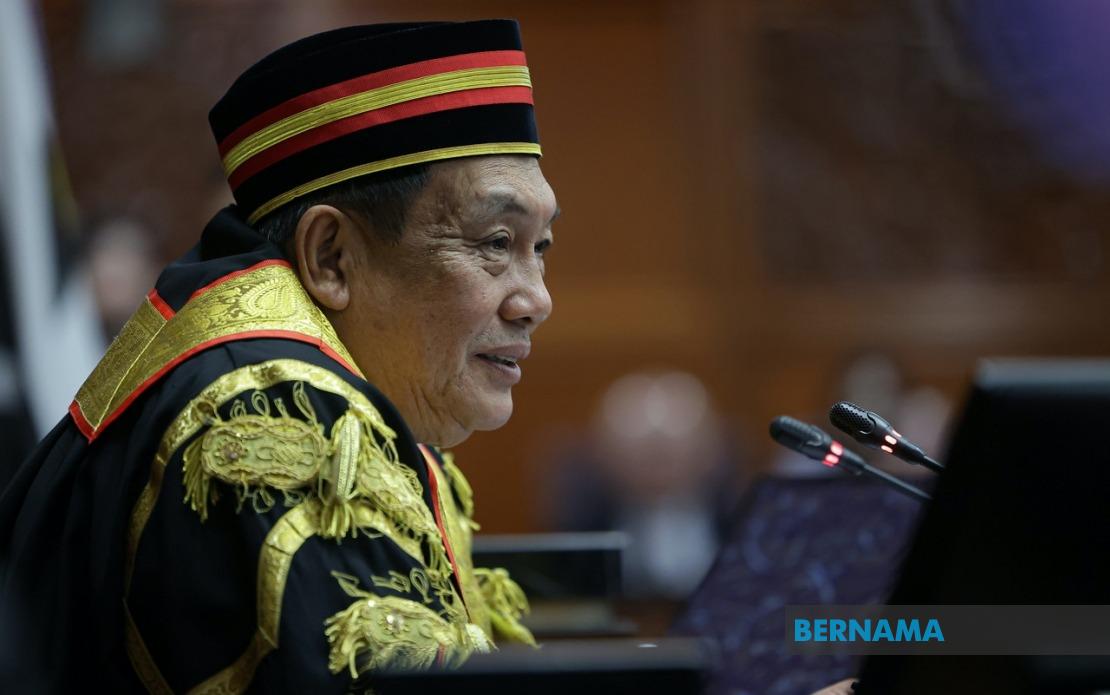
Malaysia's Youth Parliament stands as a crucial institutional framework for cultivating a generation of young people equipped with democratic understanding, critical faculties, and the confidence to express themselves responsibly, according to Dewan Negara President Datuk Awang Bemee Awang Ali Basah. Speaking at Universiti Malaysia Terengganu during a parliamentary roadshow programme, Awang Bemee characterised the Youth Parliament as a "school of democracy" capable of offering young Malaysians direct exposure to the mechanics of parliamentary governance and the values underpinning democratic practice.
The Senate president's framing of Youth Parliament as an educational platform reflects a broader institutional commitment to bridging the disconnect between Malaysia's younger population and formal political processes. By immersing students in debates, deliberation, and the art of persuasive argument, the scheme furnishes participants with tangible experience in articulating positions, receiving contrary viewpoints, and ultimately accepting democratic outcomes even when they diverge from personal preferences. This apprenticeship in democratic conduct, Awang Bemee emphasised, proves formative in shaping leadership character—a quality he distinguished from mere oratorical prowess or command authority.
The Senate president positioned Youth Parliament as a complementary mechanism to the functioning Parliament itself. Whilst the national legislature carries the weighty responsibility of legislative decision-making, the Youth Parliament serves as a repository and amplifier of younger voices, ensuring that policy deliberation benefits from intergenerational perspective and that emerging concerns receive parliamentary attention. This complementarity, Awang Bemee suggested, strengthens Malaysia's broader democratic architecture by embedding youth participation as a structural principle rather than treating it as peripheral or tokenistic engagement.
Awang Bemee articulated a three-pillar framework for empowering Malaysia's youth, beginning with the cultivation of inclusive and open democratic culture. He stressed that robust nations afford their populations—particularly younger cohorts—genuine opportunities to articulate grievances, be meaningfully heard, and witness their contributions valued through transparent governance and respect for ideological plurality. Malaysia's multifaceted racial, religious, and cultural composition, he contended, should be harnessed as a strategic asset through deepened mutual comprehension and reciprocal regard rather than managed as a liability through restrictive approaches.
The second pillar focuses on recalibrating educational priorities beyond examination performance and credential accumulation. Awang Bemee advocated for pedagogical approaches cultivating analytical rigour, technological dexterity, comprehension of artificial intelligence applications, innovative capacity, articulate communication, and informed civic consciousness. His emphasis on values accompanying technological advancement underscores concern that digital sophistication divorced from ethical grounding risks producing technically proficient but morally untethered citizens. Young Malaysians, he suggested, require systematic exposure to emergent economic sectors including the Blue Economy—encompassing marine fisheries, aquaculture, ocean-based tourism, renewable maritime energy infrastructure, and coastal development initiatives—alongside conservation imperatives.
The third pillar addresses the tension between expressive liberty and accountable conduct in democratic contexts. Awang Bemee emphasised that whilst democratic societies safeguard freedom of speech and intellectual enquiry, these liberties necessarily operate within boundaries of truthfulness and social responsibility. He cautioned against instrumentalising free speech as justification for disseminating calumnies or fabrications, particularly through digital platforms where misinformation propagates with algorithmic velocity. His prescriptive framework—verify before sharing, scrutinise before accepting, understand before condemning, and contemplate consequences before acting—offers practical guidance for young citizens navigating information landscapes frequently characterised by epistemological ambiguity.
The roadshow initiative, of which the UMT session formed a component, represents Parliament Malaysia's sustained effort to fortify youth participation in parliamentary democracy whilst narrowing institutional distance between higher education establishments and the legislature. This systematic engagement with tertiary institutions acknowledges that universities constitute critical sites where political consciousness crystallises and where young people formulate durable orientations toward civic participation or disengagement. By physically traversing campuses and facilitating direct dialogue between parliamentary leadership and student constituencies, the initiative combats perceptions of legislative remoteness and demonstrates institutional receptiveness to youth concerns.
Within the broader Southeast Asian context, Malaysia's Youth Parliament reflects regional patterns wherein democracies increasingly recognise demographic imperatives necessitating institutionalised youth voice mechanisms. Countries across the region grapple with youthful populations experiencing political alienation, declining voter participation among younger cohorts, and perceived disconnection between parliamentary deliberations and the lived experiences of emerging generations. Malaysia's approach—embedding youth engagement as a structural component rather than occasional consultation exercise—offers a model worthy of consideration for neighbouring democracies confronting analogous challenges.
The forum titled "Malaysian Youth: Drivers or Spectators?" formed the centrepiece of the UMT programme, featuring Parliament Malaysia chief administrator Datuk Dr Ahmad Husaini Abdul Rahman in dialogue with student participants. This framing of the fundamental question—whether youth constitute active agents shaping national trajectory or passive observers of elite-driven processes—acknowledges the existential stakes inherent in youth political engagement. The nomenclature itself implicitly challenges young Malaysians to conceive of themselves as consequential actors rather than peripheral witnesses to governance.
Awang Bemee's emphasis on cultivating leaders "with integrity" alongside civic knowledge and preparedness reflects recognition that technical governance competence unmoored from ethical commitment produces outcomes frequently corrosive to democratic institutions and social cohesion. This moral dimension proves particularly salient for Malaysian democracy, which has navigated periods of institutional strain and public confidence fluctuation. By systematically inculcating both democratic literacy and ethical consciousness during formative years, the Youth Parliament potentially contributes to restoring institutional legitimacy and fostering political cultures emphasising principled conduct over expedient manoeuvre.
The roadshow's explicit objective—developing "a generation that is informed, responsible and prepared to play a more active role in shaping Malaysia's future"—articulates an ambitious long-term vision extending beyond immediate parliamentary engagement. The initiative tacitly acknowledges that sustainable democratic practice requires constituencies sufficiently versed in governance mechanics and sufficiently committed to institutional integrity to resist populist disruption or authoritarian retrenchment. For Malaysian policymakers, the Youth Parliament thus functions not merely as a benevolent participation mechanism but as a strategic investment in democratic durability and generational continuity.

