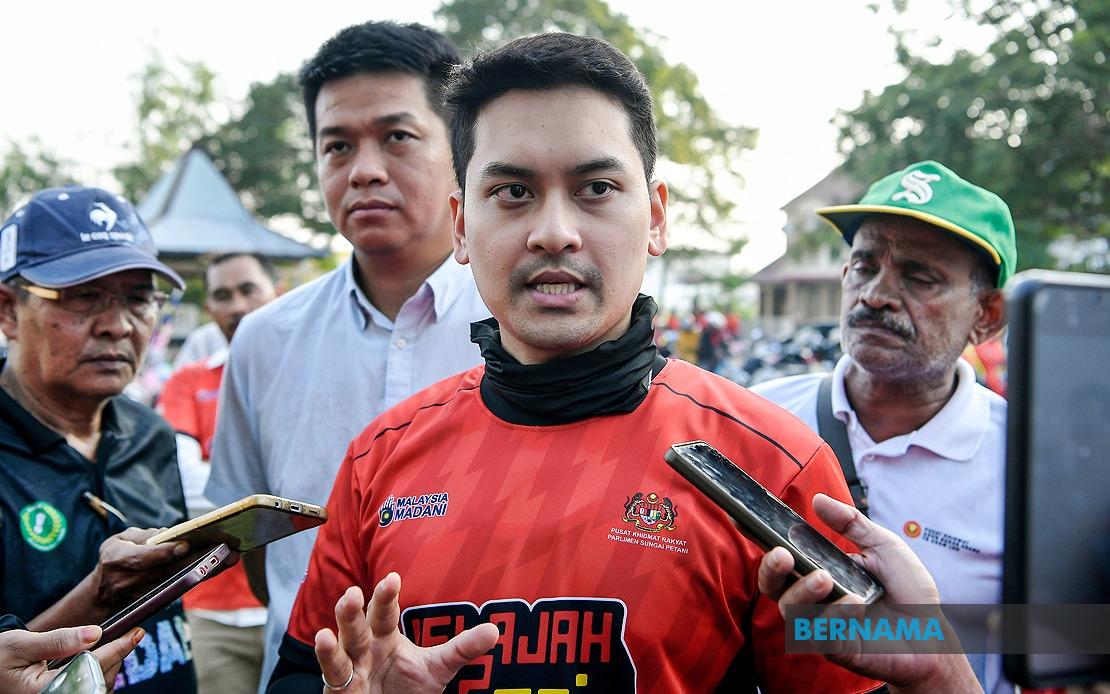
The Ministry of Youth and Sports has embarked on an ambitious nationwide consultation exercise aimed at channelling young voices directly into Malaysia's fiscal planning process. The MADANI Youth Budget Tour, which began in the northern region covering Kedah, Penang, and Perlis, represents an attempt to make budget formulation more participatory and responsive to the needs of citizens under 40. The initiative comes as the government prepares to table Budget 2027 in October, marking a structured effort to incorporate grassroots perspectives into top-level economic decision-making.
Youth and Sports Minister Dr Mohammed Taufiq Johari outlined the scope of the initiative during remarks at a Sahabat MADANI event in Penang, explaining that the tour would traverse all six geographical zones across Malaysia over the coming weeks. This phased approach allows the ministry to conduct meaningful town hall sessions and engagement forums in each region, rather than attempting a rushed centralised consultation. By spreading the exercise across time and geography, the ministry signals an intention to capture diverse regional perspectives, from urban youth in Kuala Lumpur to rural young people in Perlis and Sabah.
The strategic timing of this tour reflects broader shifts in how contemporary governments approach policy formulation. Rather than relying solely on traditional advisory bodies or bureaucratic assessments, the MADANI framework explicitly recognises that young people possess unique insights into emerging challenges, technological adoption, employment expectations, and social priorities. The town hall format democratises access to the budget consultation process, eliminating barriers that might otherwise prevent ordinary youths from participating in what is typically an elite, closed-door exercise conducted among economists, civil servants, and business representatives.
Dr Taufiq emphasised that the government views youth participation not merely as a public relations exercise but as essential to ensuring that policy initiatives genuinely reflect contemporary needs. He noted that today's young Malaysians do not passively receive government directives but actively seek platforms to articulate their aspirations and concerns. This observation carries implications for how the government structures its engagement; traditional top-down information dissemination is likely to prove ineffective with a generation accustomed to interactive, two-way dialogue through digital platforms and community forums.
The minister also positioned youth as custodians of national unity, arguing that their role extends beyond personal advancement to encompassing responsibility for maintaining social cohesion across religious and ethnic lines. This framing attempts to anchor fiscal policy discussions within a broader narrative of nation-building and social stability. It suggests that budget allocations directed toward youth are not merely expenditures but investments in the guardians of Malaysia's multicultural fabric, a particularly relevant argument given occasional communal tensions and the ongoing challenge of maintaining interfaith harmony.
Complementing the budget tour is the Sahabat MADANI volunteer initiative, which the Prime Minister Datuk Seri Anwar Ibrahim launched at the national level. With over 11,000 registered volunteers nationwide, this grassroots network aims to bridge the gap between government institutions and local communities by promoting mutual respect and facilitating civic engagement. The volunteers serve as intermediaries who can identify community concerns and relay them upward through formal channels, while simultaneously communicating government initiatives downward to constituencies that might otherwise remain disconnected from policy developments.
The presence of Prime Minister Anwar at the Penang event underscores the political priority attached to this consultation process. His direct participation signals that the outcomes will receive serious consideration at the highest levels of government, rather than being filed away in a bureaucratic archive. This public commitment creates accountability; if youth feedback is collected but subsequently ignored, the credibility of the government's commitment to participatory governance would suffer accordingly. The involvement of Penang Chief Minister Chow Kon Yeow also demonstrates alignment between federal and state governments in pursuing this agenda, suggesting that the feedback gathering process may inform both national and state-level budget decisions.
For Malaysian youth specifically, this initiative offers a concrete mechanism to influence public spending in areas directly affecting their lives, including education, employment support, technological infrastructure, mental health services, and affordable housing. Rather than waiting for elected representatives to champion their causes, young people can articulate their priorities directly to decision-makers. This potential for direct input may strengthen youth engagement with democratic institutions, particularly among those who feel historically excluded from policy conversations or who have grown cynical about government responsiveness.
From a regional perspective, Malaysia's structured approach to youth consultation in budget formulation may serve as a model for other Southeast Asian democracies grappling with youth disengagement from formal political processes. As economies across the region face demographic shifts toward younger population pyramids, governments increasingly recognise that ignoring youth perspectives poses risks both to policy effectiveness and to broader social stability. The MADANI tour demonstrates one practical methodology for capturing those perspectives at scale.
However, the tour's ultimate success will depend on whether feedback genuinely influences Budget 2027, or whether it functions primarily as a legitimacy-building exercise. Youth participants will evaluate the initiative's value by examining whether their stated priorities receive meaningful budget allocations, funding for proposed programmes, or policy reforms. If the consultation is followed by a budget that largely ignores youth input, the exercise risks deepening cynicism rather than enhancing democratic engagement. The government's response to the feedback collected across these six zones will therefore carry consequences extending far beyond the immediate budget cycle.
The ministry's commitment to conducting this tour over approximately one month before the October budget tabling demonstrates logistical ambition, though it raises questions about how qualitative feedback from diverse constituencies will be synthesised into concrete policy recommendations. The mechanics of converting thousands of individual aspirations into a coherent set of budget priorities remain unclear, suggesting that the government may need to articulate clearly how this consultation data will actually shape fiscal allocations. Transparency in that analytical process would strengthen public confidence that the MADANI Youth Budget Tour represents genuine democratic engagement rather than performative consultation.

