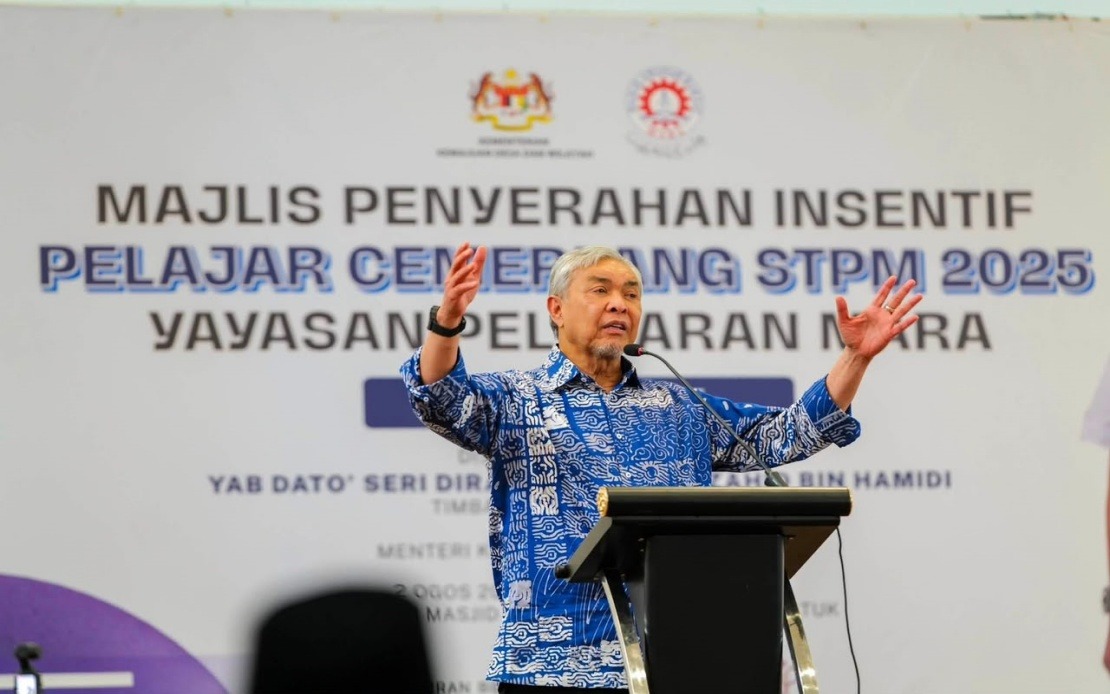
A significant recognition of academic excellence has come to students in the Bagan Datuk constituency, where 38 secondary school pupils have been honoured with the 2025 Sijil Tinggi Pelajaran Malaysia (STPM) Excellence Incentive from Yayasan Pelajaran MARA. The award underscores the calibre of education being delivered at two leading institutions in the district: Sekolah Menengah Kebangsaan Khir Johari and Sekolah Menengah Kebangsaan Tun Abdul Razak. Deputy Prime Minister Datuk Seri Dr Ahmad Zahid Hamidi, who represents the constituency as Member of Parliament, highlighted the achievement as evidence of the district's capacity to nurture high-performing scholars when provided with appropriate educational infrastructure and mentorship.
The recognition goes beyond those receiving the main excellence award. Dr Ahmad Zahid drew particular attention to three young people from Bagan Datuk who have secured admission to Al-Azhar University in Egypt, where they will pursue advanced studies in Islamic Syariah and Usuluddin—fields of significant importance to Malaysia's Islamic education landscape. This achievement reflects both the calibre of students emerging from local secondary schools and their readiness to engage with world-class Islamic institutions. The Deputy Prime Minister's emphasis on these overseas placements suggests a broader policy interest in encouraging Malaysian youth to seek educational opportunities internationally, particularly in religious and scholarly disciplines that strengthen national expertise.
Complementing these achievements, 23 students from the district have benefitted from the YPM Education Compassionate Fund, a programme designed to provide financial support to deserving pupils facing economic hardship. This dual recognition—celebrating both excellence and providing welfare support—demonstrates the multifaceted approach required to nurture educational talent in provincial Malaysia. The compassionate fund scheme particularly reflects the reality that academic potential often exists independent of family financial circumstances, and that targeted assistance can unlock opportunities for students who might otherwise face barriers to advancement.
In his remarks shared on social media, Dr Ahmad Zahid framed these educational successes as validation of a broader development philosophy centred on human capital investment. He emphasised that education represents the most effective mechanism for transforming individual circumstances and building the foundation for community prosperity. This perspective aligns with established development economics and reflects priorities increasingly central to Malaysian policy discourse, particularly as the nation seeks to compete within a knowledge-based regional economy. The Deputy Prime Minister's public celebration of these achievements also signals political attention to educational outcomes as a measure of constituency development and governance effectiveness.
The Deputy Prime Minister's message to parents carries particular significance in the Malaysian educational context, where family support and encouragement remain critical factors in student motivation and achievement. By appealing to parents to serve as sources of strength for their children's educational journeys, Dr Ahmad Zahid acknowledged the partnership between schools, families, and community that typically characterises successful educational ecosystems. This recognition reflects practical understanding of how educational outcomes depend not only on institutional capacity but equally on the social environment surrounding students.
Looking forward, the Deputy Prime Minister expressed an aspiration to see more Bagan Datuk youth pursuing higher education at recognised institutions, whether within Malaysia or internationally. This forward-looking stance suggests a development vision that positions the constituency as a source of talent capable of contributing to national advancement. The emphasis on students eventually returning to contribute to local development reflects a common concern in provincial Malaysia—the phenomenon of outmigration of talented youth to urban centres—and represents an implicit call for creating conditions that would encourage their eventual contribution to district-level development initiatives.
The recognition by Yayasan Pelajaran MARA carries broader significance within Malaysia's educational landscape. As an agency specifically tasked with supporting Bumiputera education and advancement, YPM's investment in recognising STPM excellence in provincial constituencies reflects ongoing efforts to ensure that educational opportunity and recognition extend beyond metropolitan areas. This regional focus helps counterbalance the concentration of elite educational institutions in urban centres and acknowledges that talent development requires nationwide attention.
The achievement of students in Bagan Datuk occurs within a national context of significant interest in upper secondary examination performance. The STPM remains a significant pathway to tertiary education for Malaysian students, particularly those pursuing university study within the country. Excellence incentives and recognition schemes serve dual purposes: they acknowledge genuine achievement while creating visible role models that can inspire younger students. The 38 recipients from two schools effectively represent demonstrable proof that educational excellence in secondary institutions can be cultivated and sustained outside the most privileged metropolitan environments.
For Malaysian readers in other constituencies and states, the Bagan Datuk example offers relevant perspective on how systematic support—combining academic excellence recognition, financial assistance programmes, and political leadership attention—can translate into measurable educational outcomes. The combination of excellence incentives with compassionate funding also models an inclusive approach to education that recognises both high achievement and economic vulnerability. As Malaysia continues deliberations about educational equity and regional development, the Bagan Datuk achievement provides concrete evidence that distributed investment in secondary education infrastructure and student support yields measurable results that benefit both individuals and communities.

