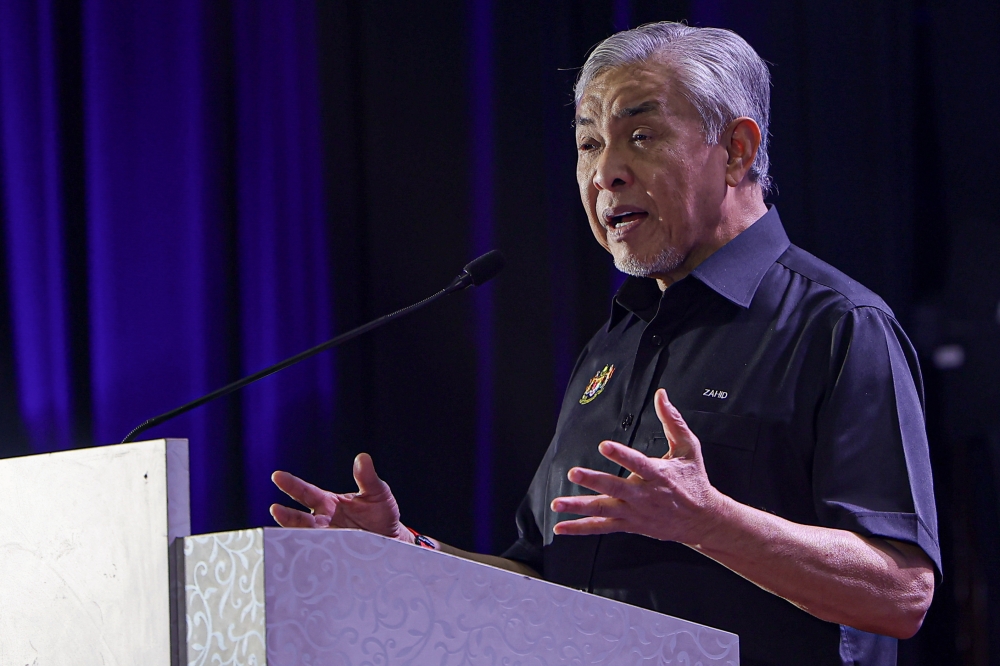
Deputy Prime Minister Datuk Seri Ahmad Zahid Hamidi has raised concerns that government ministry staff members encountered pressure to participate in events organised by or linked to Barisan Nasional during the recent state election campaigns. Speaking in Putrajaya on August 6, Zahid highlighted what he characterised as an interference with the impartiality expected of the civil service during electoral contests. The allegation touches on a sensitive issue in Malaysian governance: the distinction between political campaigning and the use of state machinery and personnel for partisan advantage.
The incident reflects broader tensions within Malaysia's political landscape as different coalitions compete for electoral dominance. Zahid's comments suggest that concerns about neutrality breaches extend beyond mere campaign tactics to include the mobilisation of government staff. Such allegations, if substantiated, would contravene established principles of civil service conduct that require officials to remain apolitical during election periods. The timing of these remarks during or immediately after state polls indicates the heightened sensitivities surrounding electoral conduct and institutional impartiality.
Understanding the context of these allegations requires examining how Malaysian state elections operate. During such campaigns, all political parties are expected to operate on a level playing field, with government resources and personnel theoretically remaining neutral. However, the reality often proves more complicated, particularly in states where the ruling coalition holds significant administrative advantages. Government officers, who occupy positions spanning education, health, local administration, and public works, can exert considerable influence over communities. When such officials attend or are seen to support specific political events, their presence carries implicit weight, potentially affecting public perception and citizen behaviour.
The pressure Zahid describes could manifest in various ways within a hierarchical bureaucracy. Superiors might suggest attendance at events as beneficial to career progression, or alternatively, non-attendance could be perceived as disloyal to the government of the day. Such subtle coercion becomes difficult to document officially but remains deeply problematic from a democratic governance perspective. Zahid's willingness to voice these concerns publicly suggests that such incidents were sufficiently widespread or egregious to warrant public comment from the nation's second-highest political office.
For Malaysian readers and observers, this allegation carries implications extending beyond electoral fairness. The integrity of state institutions depends fundamentally on the political neutrality of the civil service. When government officers become entangled in partisan activities, public trust in their ability to serve all citizens impartially erodes. This becomes particularly consequential in service delivery—citizens may question whether healthcare, education, or welfare services are allocated based on need or political affiliation. The Malaysian public service has long prided itself on professional standards and meritocratic advancement, values that appear threatened when officers face coercion regarding political participation.
The allegation also intersects with broader governance questions relevant to Southeast Asia's democratic development. As democracies mature, the relationship between ruling governments and state apparatus requires careful calibration. Countries throughout the region grapple with balancing effective governance with political competition. Malaysia's experience, as articulated through Zahid's concerns, demonstrates how even established democracies confront challenges in maintaining institutional independence during contentious electoral periods. The issue resonates across Southeast Asia, where similar tensions between ruling coalitions and civil service neutrality periodically surface.
Zahid's intervention also warrants consideration regarding internal Barisan Nasional dynamics. As Deputy Prime Minister and representative of a significant faction within the coalition, his public critique suggests either genuine concern about institutional health or a strategic positioning within coalition politics. The timing and nature of such allegations sometimes reflect not merely principled stands but also internal political manoeuvring. Nonetheless, the underlying issues he raises—concerning the appropriate use of government machinery during elections—remain substantive regardless of his motivations.
Investigating these allegations would require cooperation from multiple institutions. The Election Commission, which oversees electoral conduct, could examine patterns of government employee participation in campaign events. The Public Services Commission, responsible for civil service standards, might review complaints from officers who felt pressured. However, such investigations face inherent challenges: officers reluctant to jeopardise career prospects often avoid formal complaints, and determining whether attendance resulted from coercion or voluntary participation proves methodologically difficult. The lack of visible enforcement mechanisms may discourage legitimate oversight.
Moving forward, strengthening protections for civil service impartiality requires multifaceted approaches. Clear guidelines distinguishing permissible from prohibited political activities would provide necessary clarity. Whistleblower protections enabling officers to report pressure without fear would encourage accountability. Training programmes emphasising professional ethics and political neutrality could reinforce institutional culture. Additionally, transparent monitoring systems during election periods could help identify patterns of systematic pressure. Such measures would benefit Malaysian democracy by reinforcing the principle that government institutions serve all citizens, not merely the ruling coalition.
Zahid's allegations ultimately reflect a democracy encountering the common challenge of maintaining institutional integrity amid electoral competition. While Malaysia's political system has weathered numerous challenges and demonstrated resilience, continued vigilance regarding civil service neutrality remains essential. The allegations suggest that without proactive measures, the subtle pressures on government officers to support ruling coalition activities may persist, gradually eroding public confidence in state institutions. Addressing these concerns constructively would strengthen not merely electoral fairness but the broader legitimacy and effectiveness of Malaysian governance.

