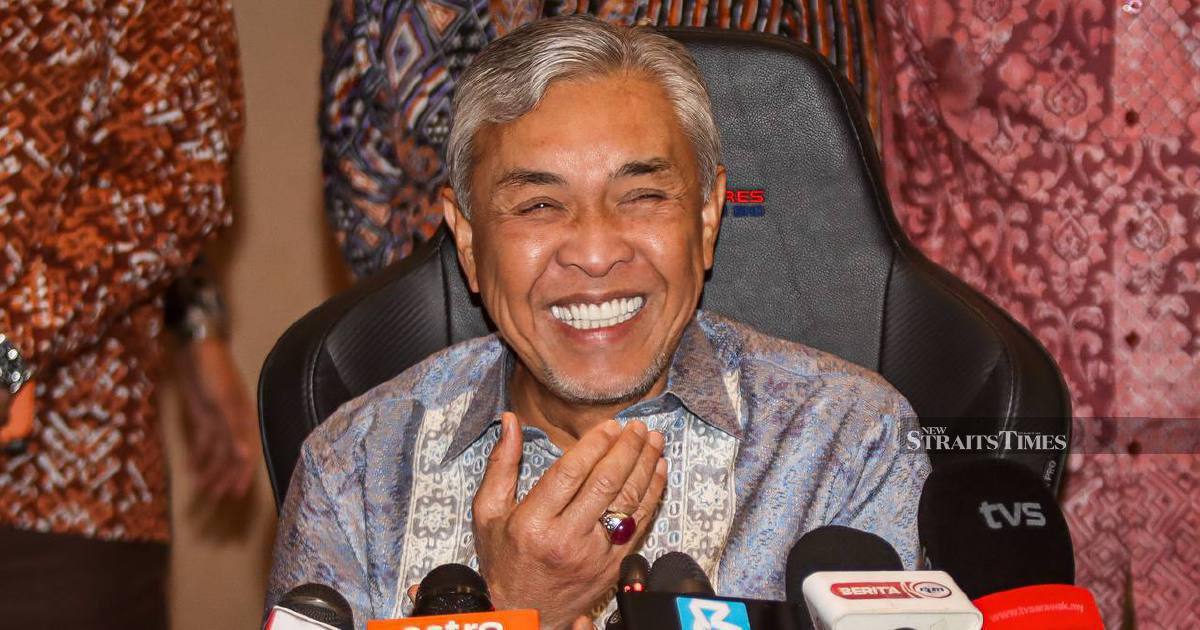
Deputy Prime Minister Datuk Seri Dr Ahmad Zahid Hamidi offered a lyrical reply to Prime Minister Datuk Seri Anwar Ibrahim's unity message on Tuesday, crafting his own four-line pantun—a traditional form of Malay verse that carries both literal and deeper metaphorical meanings. The exchange, which took place in George Town, represents a noteworthy moment in Malaysia's political landscape where two senior leaders engaged through the medium of classical Malay poetry rather than formal political rhetoric.
The pantun, a centuries-old poetic form deeply woven into Malaysian and broader Southeast Asian cultural identity, has long served as a vehicle for conveying complex ideas with wit and subtlety. By choosing to respond in kind to the Prime Minister's unity-themed verse, Zahid demonstrated an understanding of the cultural resonance such communication carries within Malaysian society. The form allows speakers to embed multiple layers of meaning—surface narratives alongside deeper interpretations—making it an effective tool for public figures addressing sensitive or nuanced political matters.
Anwar Ibrahim's initial pantun, which centered on themes of national unity and cohesion, set the tone for an exchange that transcends typical parliamentary discourse. The Prime Minister's emphasis on collective harmony reflects broader efforts within the government to project an image of political stability and inclusive governance. Such messaging becomes particularly significant in the Malaysian context, where unity narratives have historically played a crucial role in maintaining social cohesion across diverse ethnic and religious communities.
Zahid's crafted response, which incorporated the imagery of roofs and storms, carried symbolic weight beyond its poetic form. The natural metaphors employed—shelter from tempests and structural protection—can be interpreted as commentary on the government's protective role during challenging economic and political periods. The use of such universal imagery in pantun form makes the message accessible to a broader audience while maintaining the sophistication expected of high-level political communication.
The exchange underscores an important dimension of Malaysian political culture where traditional forms of expression continue to hold relevance at the highest levels of government. Rather than dismissing such practices as merely ceremonial, these leaders recognized that pantun carries genuine communicative power within the Malaysian context. For ordinary citizens, witnessing their leaders engage in this distinctly Malaysian art form reinforces a sense of cultural continuity and national identity.
From a political perspective, this poetic dialogue serves multiple functions simultaneously. It projects an image of intellectual engagement and cultural sophistication among the leadership. It also signals ongoing communication between key figures within the government structure, suggesting that despite any underlying tensions or policy differences, formal channels of dialogue remain open and functional. The public nature of the exchange ensures that messages about unity and stability reach the general population through a medium more memorable and emotionally resonant than conventional statements.
The pantun tradition itself carries historical significance in Malaysian political discourse. Major speeches and official communications have frequently incorporated poetic elements, reflecting the founding generation's commitment to preserving Malay-Muslim cultural heritage as a cornerstone of the nation's identity. By maintaining this tradition in contemporary politics, current leaders demonstrate continuity with Malaysia's post-independence political legacy while adapting it to modern circumstances.
For Southeast Asian observers, such exchanges demonstrate how Malaysia's political system, despite its complexities and occasional tensions, continues to value cultural diplomacy and traditional forms of expression. This stands in contrast to more adversarial political environments where leaders might resort to sharper or more confrontational language. The choice to communicate through pantun suggests a commitment to maintaining decorum and respectful engagement even amid substantive political disagreements.
The practical implications of such exchanges extend beyond symbolism. When high-ranking officials engage in carefully crafted pantun, they are also sending signals to their respective political constituencies about the tone and nature of intra-government relationships. For Zahid's supporters and Anwar's allies alike, such displays of mutual respect through traditional communication channels can help moderate internal party tensions and demonstrate that political competition occurs within a framework of shared national values.
Looking forward, these poetic exchanges may become more frequent as leaders recognize their utility in contemporary political communication. In an age of heated social media discourse and polarizing rhetoric, the deliberate choice to employ a traditional, indirect, and subtle form of expression carries particular power. The pantun allows leaders to address serious matters—whether governmental challenges, economic difficulties, or social concerns—while maintaining the cultural dignity and national pride that such occasions demand.
The George Town exchange also reflects Malaysia's ongoing efforts to position itself as a nation that honors its cultural heritage while engaging with modern governance challenges. By embracing forms of communication that connect to the nation's pre-colonial and post-colonial traditions, political leaders reinforce the idea that Malaysia's strength derives partly from its ability to maintain cultural continuity amid rapid change. For readers across Southeast Asia, this moment illustrates how traditional practices can retain genuine significance within contemporary political systems.

