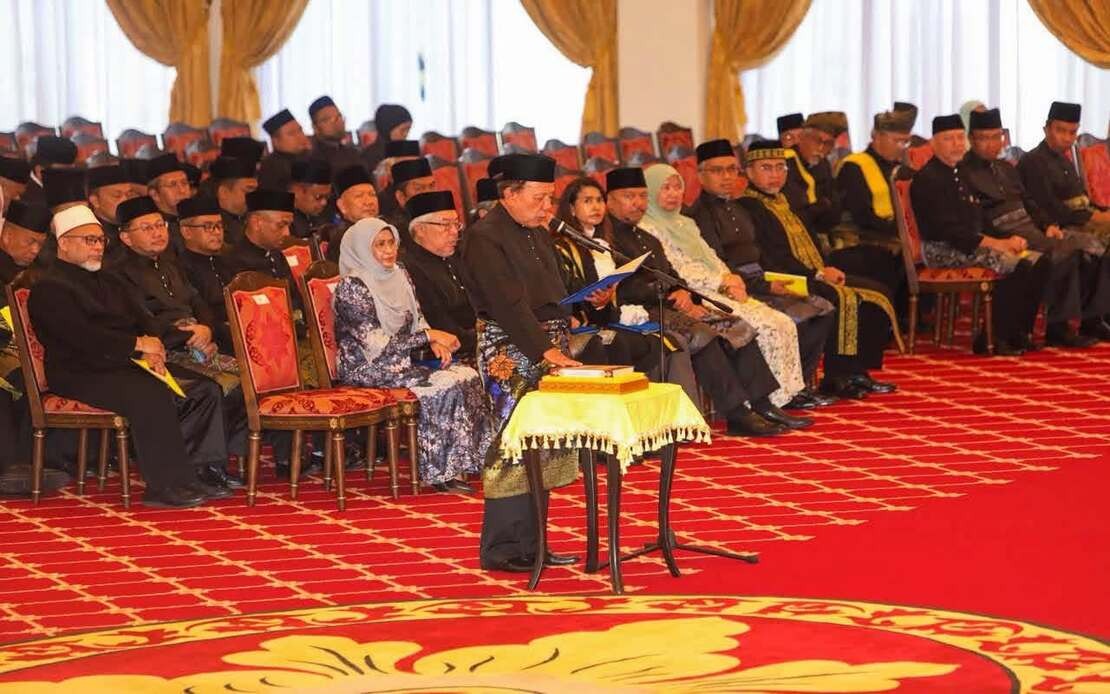
Datuk Ismail Lasim officially commenced his tenure as Menteri Besar of Negeri Sembilan after taking the oath of office before the Yang Dipertuan Besar, Tuanku Muhriz Tuanku Munawir, at Istana Besar Seri Menanti. The 67-year-old politician's appointment marks a significant transition in the state's political leadership and has attracted expressions of support from the federal Cabinet, signalling unity within the government coalition at both national and state levels.
Deputy Prime Minister Datuk Seri Dr Ahmad Zahid Hamidi, who also holds the Rural and Regional Development portfolio, was among the first to offer his felicitations through social media. In his statement, Zahid expressed confidence that Ismail would discharge his duties with dedication towards enhancing the welfare of Negeri Sembilan residents and advancing the state's broader development agenda. The Deputy PM framed the appointment as carrying substantial responsibility, reflecting the trust vested in the new leader and emphasising the collaborative approach expected from state and federal administrations.
Defence Minister Datuk Seri Mohamed Khaled Nordin similarly extended his congratulations, characterising the appointment as an opportunity to reinforce Negeri Sembilan's trajectory of stability and prosperity. Mohamed Khaled's remarks underscored the importance of continuity in governance, particularly in maintaining investor confidence and ensuring sustained economic growth throughout the state. His message emphasised the interconnectedness between stable political leadership and tangible development outcomes that benefit citizens.
Plantation and Commodities Minister Datuk Seri Dr Noraini Ahmad described Ismail's elevation to the chief ministerial position as a pivotal moment for Negeri Sembilan's future. In her social media post, Noraini Ahmad acknowledged the significance of transitional moments in state administration and expressed optimism that the new leadership would guide the state through its next developmental phase with clarity and purpose. The minister's statement reflected a broader Cabinet consensus regarding the capacity of the incoming Menteri Besar to steer the state's affairs effectively.
Ismail's political journey spans nearly three decades of public service, beginning when he first secured election as a state assemblyman representing Juasseh in 1999. This extensive tenure within Negeri Sembilan's political landscape has equipped him with substantial experience in managing state-level governance, which Cabinet ministers appear to view as an asset for the challenges ahead. His longevity in electoral politics suggests a deep understanding of local constituencies and their evolving needs.
Between 2004 and 2018, Ismail served consecutively on the state executive council, holding primary responsibility for the education portfolio throughout his tenure. During this period, he was instrumental in developing and implementing education-related policies designed to strengthen human capital development in the state. His focus on educational advancement reflected a strategic prioritisation of skills development and workforce preparation, areas that remain critical for regional competitiveness within Malaysia's broader economic context.
The appointment arrives at a moment when Negeri Sembilan, like other Malaysian states, faces evolving economic pressures and the imperative to diversify revenue streams beyond traditional sectors. Ismail's background in education policy may position him to emphasise human resource development as a cornerstone of the state's future prosperity, though his economic development strategy remains to be fully articulated. This dimension will likely become clearer as his administration establishes priorities for the coming term.
The Cabinet's unified expression of support carries implications for federal-state coordination on development projects and resource allocation. When senior ministers publicly endorse state leadership, it typically signals an expectation of smoother policy implementation at the state level and enhanced prospects for securing federal funding for state-prioritised initiatives. This political alignment may facilitate faster decision-making on matters requiring coordination between Kuala Lumpur and Negeri Sembilan's administration.
Ismail's appointment also reflects the consolidation of political structures within Malaysia's ruling coalition, demonstrating that key ministerial positions remain distributed among trusted figures whose loyalty and administrative competence are viewed as established. In the context of Malaysian politics, where state-level administrations wield considerable influence over local economic development and service delivery, the appointment of experienced practitioners to chief ministerial roles remains strategically important for maintaining coalition stability.
Looking ahead, attention will focus on how Ismail translates his policy experience into concrete development outcomes for Negeri Sembilan's residents. The education sector, where he accumulated significant expertise, may become a flagship area for innovation and investment under his leadership. Additionally, his administration's approach to attracting industrial investment and managing fiscal resources will be closely monitored by both federal authorities and observers within the state.

