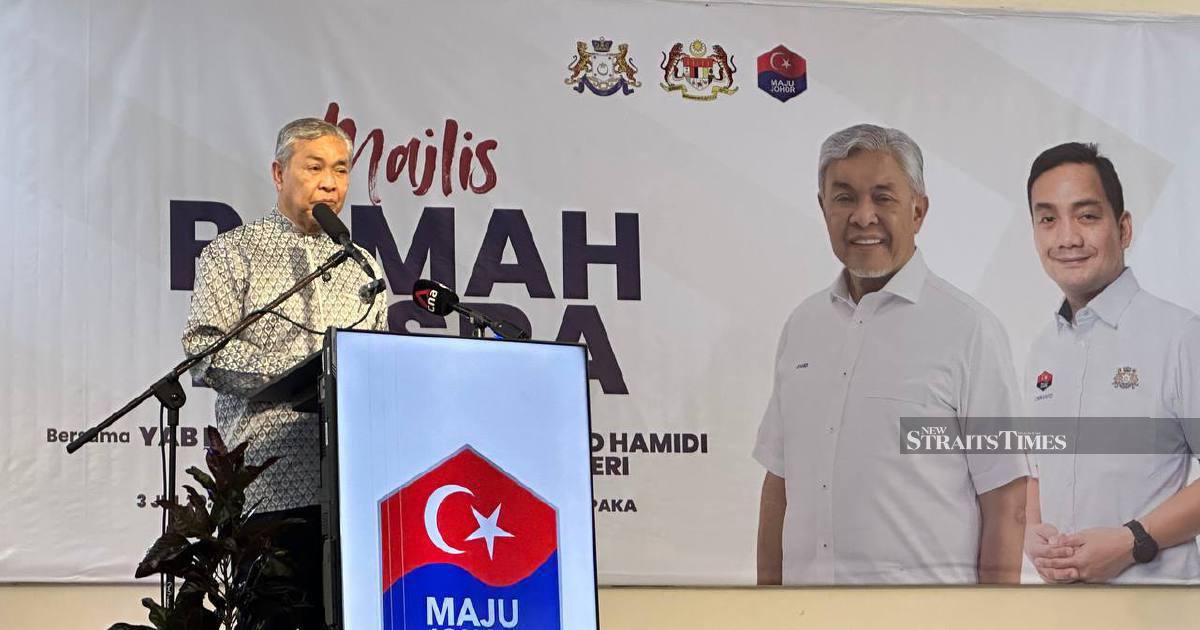
Barisan Nasional chairman Datuk Seri Dr Ahmad Zahid Hamidi has appealed to his coalition partners within the unity government to set aside historical grievances and avoid targeting Umno with old accusations during the forthcoming Johor state election campaign. The plea, made in Johor Baru, reflects mounting concerns within BN about the fragility of electoral alliances as campaigns intensify across Malaysia's southern heartland.
The appeal underscores deepening tensions within the unity government construct that has held since 2020, when Umno joined forces with Pakatan Harapan and other blocs to form a ruling administration. While the coalition has managed to maintain nominal cohesion on major legislative matters, electoral campaigns have consistently exposed fault lines between partners with fundamentally different political narratives and constituencies.
For Umno, which has traditionally dominated peninsular Malaysia's electoral landscape, the Johor election represents a crucial test of its ability to command voter support independent of federal structures. The party has faced sustained criticism over governance issues, internal corruption scandals, and questions about party discipline that have plagued its public standing over the past decade. These vulnerabilities remain potent campaign ammunition for opposition forces seeking to capitalize on electoral opportunities.
Zahid's request for restraint appears designed to protect Umno from a two-front attack—from opposition parties exploiting historical failings while simultaneously facing criticism from supposed coalition allies. This tactical concern reflects the precarious positioning of BN within a unity government structure where multiple partners possess competing political interests and voter bases. When partners feel pressure to differentiate themselves electorally, they often resort to distancing themselves from allies and highlighting past disputes.
The Johor election carries symbolic weight beyond state-level governance. As a BN stronghold where Umno maintains significant organizational strength and traditional support, any significant erosion of the party's vote share would signal broader vulnerability heading into future national elections. Conversely, strong performance in Johor could bolster Umno's confidence and reinforce its centrality to the federal coalition arrangement.
Historical issues referenced in Zahid's appeal likely encompass multiple contentious episodes. These range from governance controversies and administrative scandals affecting Umno's credibility, to procedural disputes within coalition structures themselves. Opposition parties have consistently weaponized such material to undermine public confidence in BN's stewardship, while coalition partners occasionally employ selective criticism to establish independence before their own constituents.
The unity government model, which has evolved organically rather than through formal written agreements, has proven remarkably resilient at the federal level despite lacking traditional institutional safeguards. However, state-level elections present different dynamics where regional considerations, local personalities, and specific grievances often override broader national coalitional logic. Partners may calculate that distancing from unpopular coalition members serves their electoral interests.
For Malaysian voters, particularly those in Johor, Zahid's intervention highlights the tension between campaign messaging emphasizing stability and the underlying competitive dynamics characterizing coalition politics. Parties must simultaneously present themselves as reliable partners in government while differentiation through criticism remains electorally necessary. This balancing act becomes increasingly difficult during intensive campaign periods when voters expect distinct policy positions and leadership visions.
Umno's broader challenge extends beyond managing coalition relations. The party confronts structural questions about its capacity to reform internal practices and address public concerns about institutional accountability. While Zahid occupies senior leadership positions, questions about party governance persist, and many Malaysian voters remain skeptical of Umno's commitment to transparency and ethical standards. Electoral campaigns inevitably revive these concerns, regardless of coalition partners' campaign discipline.
The Johor election also carries implications for federal coalition stability. A poor BN performance might embolden coalition partners to reassess their commitment to the unity arrangement, while strong results could reinforce Umno's bargaining position within government. These electoral outcomes directly influence negotiating dynamics around ministerial portfolios, budget allocations, and policy priorities.
Zahid's appeal essentially requests that coalition partners prioritize collective institutional interests over individual competitive advantage during the campaign period. This approach assumes shared interest in preventing opposition victories, but such assumptions prove frequently fragile when partners calculate their own electoral futures.
Moving forward, the Johor election will test whether unity government partners can maintain sufficient cohesion while conducting legitimate electoral competition. The outcome will likely shape coalition dynamics heading toward the next national elections, influencing both BN's confidence in the arrangements and opposition parties' assessment of opportunities for further electoral breakthroughs. For Malaysian politics, the result will indicate whether coalition governance has achieved sufficient stability to withstand electoral pressures.

