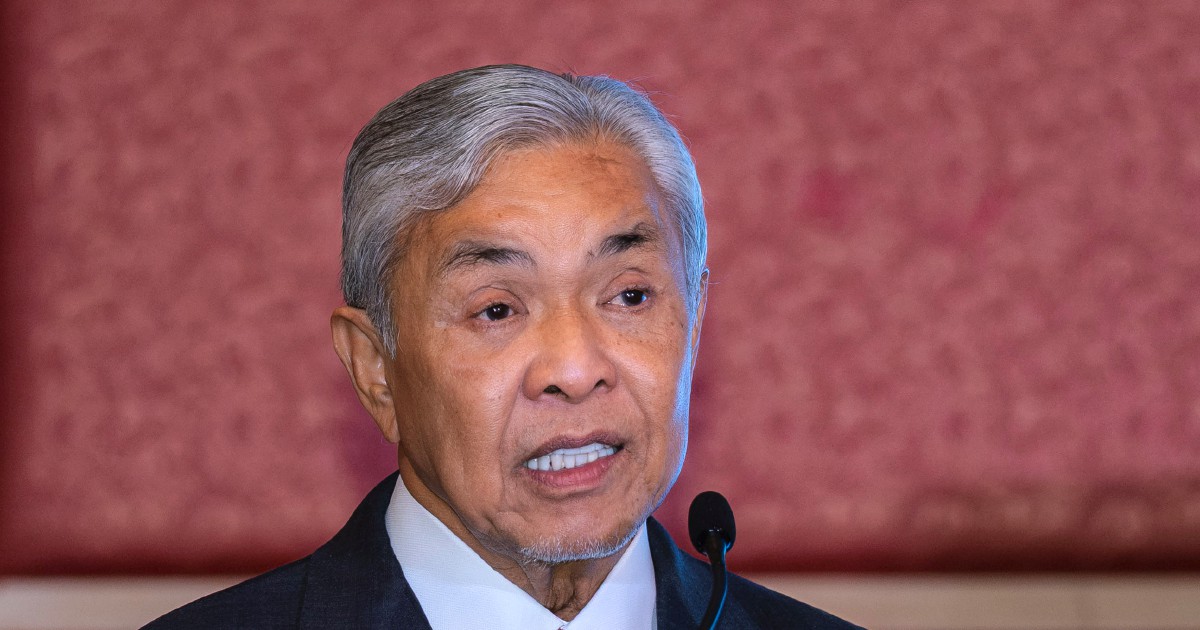
Deputy Prime Minister Datuk Seri Dr Ahmad Zahid Hamidi has unveiled an ambitious vision for transforming the Immigration Department, calling for the institution to transcend its historical identity as a frontline border enforcer and emerge as a multifaceted strategic entity. Speaking in Cyberjaya, Zahid articulated a four-mandate framework designed to reposition the department as a catalyst for economic development, a bulwark of national security, and a pioneer of digital modernisation across Malaysia's public sector.
The pronouncement represents a significant philosophical shift in how Malaysia's immigration apparatus should function within the broader governance architecture. Rather than operating in isolation as a regulatory checkpoint, Zahid envisions an Immigration Department that actively contributes to national economic objectives while simultaneously tightening security protocols. This repositioning acknowledges the reality that immigration management has become inseparable from Malaysia's competitiveness in attracting talent, investment, and tourism revenue in an increasingly borderless global economy.
Zahid's framework recognises that the department's future effectiveness depends on its ability to facilitate legitimate cross-border movement whilst maintaining robust screening mechanisms. The tension between these imperatives has long challenged immigration authorities worldwide, but the deputy premier's articulation suggests a deliberate attempt to harmonise facilitation with security rather than treating them as mutually exclusive objectives. This balancing act carries particular relevance for Malaysia, which hosts a significant transient population and serves as a regional hub for commerce and travel.
The emphasis on digital transformation marks an acknowledgment that conventional immigration processes have become outdated in an era of technological advancement and elevated public expectations for seamless service delivery. Malaysian residents and businesses have witnessed the government's broader push toward digitisation through initiatives like MySejahtera and various online licensing portals, creating demand for similar modernisation in immigration services. Zahid's inclusion of digital transformation as a core mandate signals recognition that competitive advantage increasingly depends on technological sophistication and data analytics capabilities.
For Malaysia's economic agenda, revitalised immigration procedures could prove instrumental in attracting high-skilled talent, facilitating executive mobility, and streamlining business traveller processing. Malaysia's ambitions to become a regional financial and technology hub depend substantially on its capacity to welcome international expertise and capital flows efficiently. An Immigration Department configured to support these economic objectives, rather than impede them through cumbersome procedures, could materially improve Malaysia's appeal to foreign investors and professionals evaluating relocation options across Southeast Asia.
The security dimension of Zahid's mandate reflects heightened international concern regarding transnational threats, organised criminal networks, and irregular migration patterns that demand sophisticated intelligence capabilities and inter-agency coordination. By positioning security enhancement as a core transformation objective rather than a byproduct of conventional border management, the deputy premier signals that the Immigration Department should evolve its investigative capacity and integrate more effectively with intelligence agencies and law enforcement partners. This represents a recognition that national security increasingly depends on data-driven risk assessment rather than static border protocols.
Zahid's articulation also addresses a chronic challenge facing the Immigration Department: institutional capacity constraints and staffing levels that have historically constrained the department's ability to manage Malaysia's complex migration flows effectively. Digital transformation initiatives, when properly resourced and implemented, can partially offset personnel limitations by automating routine processes, enabling staff to concentrate on high-risk cases and strategic intelligence gathering. The potential productivity gains from modernisation could materially improve the department's operational efficiency without requiring proportional increases in payroll expenditures.
The four-mandate framework carries implications for Malaysia's broader regional positioning within ASEAN, where immigration policy increasingly intersects with trade agreements, labour mobility arrangements, and security cooperation frameworks. A more strategically sophisticated Immigration Department could better support Malaysia's negotiating position in regional agreements affecting cross-border movement whilst maintaining necessary border integrity. This positions the department as a contributor to foreign policy objectives rather than merely a domestic regulatory agency.
Implementing Zahid's vision will require sustained investment in technology infrastructure, workforce training, and organisational restructuring to embed strategic thinking throughout the department's hierarchy. Success depends not merely on announcing mandates but on allocating budgetary resources, recruiting technical expertise, and establishing performance metrics aligned with the new vision. The transition from a compliance-focused organisation to a strategically aligned institution requires cultural change extending beyond procedural modification.
The deputy premier's initiative also reflects recognition that public sector institutions worldwide face pressure to demonstrate relevance and generate tangible value beyond core regulatory functions. Positioning the Immigration Department as a strategic asset contributing to multiple national priorities—economic growth, security, and technological advancement—enhances its claim on government resources and political attention. This framing proves particularly important in Malaysia's competitive budgetary environment where agencies must justify continued investment by demonstrating alignment with broader government objectives.
For Malaysian businesses and citizens, Zahid's transformation agenda potentially presages faster visa processing, smoother international travel experiences, and more streamlined procedures for employing foreign talent. The practical benefits of reimagined immigration processes could extend across tourism, construction, manufacturing, technology, and service sectors that depend substantially on cross-border labour mobility and international business interaction. Success would validate the investment thesis underlying the transformation initiative.

