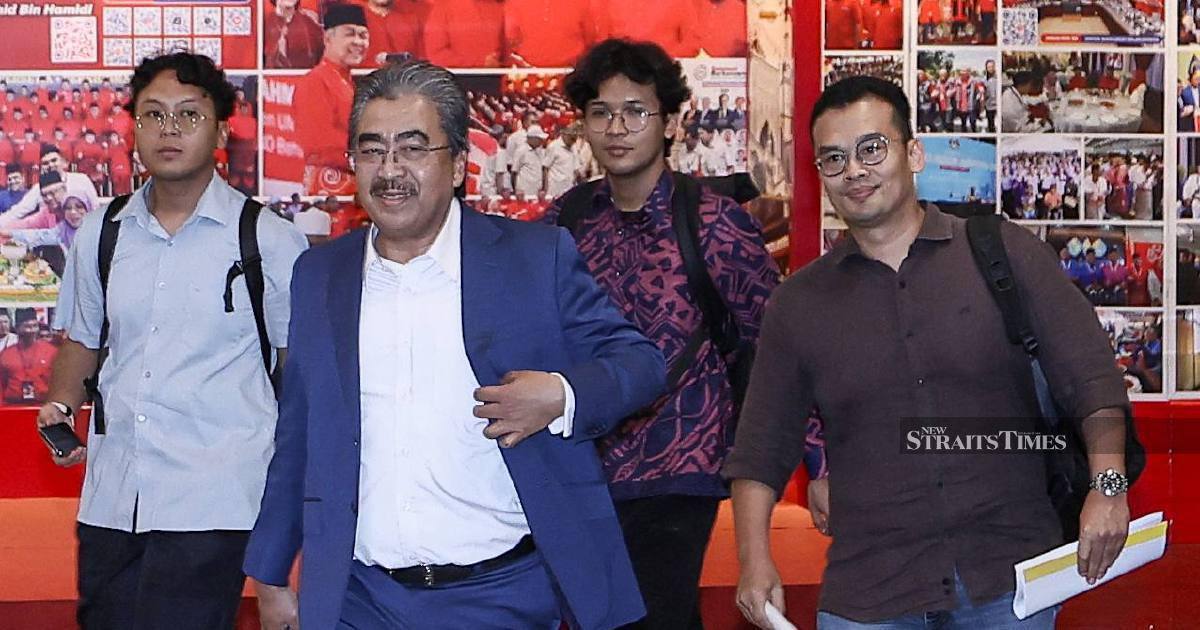
Malaysia's top Barisan Nasional leadership gathered behind closed doors at Umno headquarters in Kuala Lumpur for a special briefing on the long-awaited declassified Royal Commission of Inquiry findings concerning Lembaga Tabung Haji, the pilgrimage savings institution at the heart of previous financial controversies. The session, chaired by senior coalition figures, represented a significant moment for the ruling alliance to review the commission's conclusions about governance failures and management lapses at the organisation responsible for administering savings accounts for Malaysian hajj pilgrims.
The decision to convene this restricted gathering underscores the political sensitivity surrounding Tabung Haji's troubled track record and the need for coalition unity before any public disclosure or policy response. By bringing together key Barisan Nasional voices in a controlled environment, leadership sought to establish a coherent narrative and coordinate any subsequent action or communication regarding the inquiry's revelations. The classified nature of the initial briefing reflects concerns about reputational damage and the institutional implications of the report's findings for various stakeholders across government and the broader financial sector.
Lembaga Tabung Haji has faced mounting scrutiny over several years, with persistent questions about investment strategies, transparency in fund management, and the adequacy of safeguards protecting pilgrims' savings. The Royal Commission of Inquiry was established to investigate systemic weaknesses and governance deficiencies that eroded public confidence in the institution. For Malaysian Muslims planning to perform the hajj pilgrimage, reliable savings mechanisms represent a crucial financial tool, making the integrity of Tabung Haji operations a matter of genuine public concern beyond mere political considerations.
The participation of Perikatan Nasional leaders at the briefing, despite their opposition status, signals an attempt to build cross-coalition consensus on how to address the inquiry's recommendations. This unusual inclusion of opposition figures in a closed-door session suggests the gravity of the situation and perhaps recognition that some findings demand a unified national response rather than partisan point-scoring. Such collaboration on sensitive institutional matters demonstrates the pragmatic recognition that certain governance failures transcend normal political divisions.
The declassification of the RCI report itself marks a departure from the initial confidentiality surrounding such inquiries, reflecting evolving standards of government transparency and public accountability. Releasing previously restricted findings allows broader scrutiny and enables informed debate about institutional reforms needed to restore public confidence in Malaysia's pilgrimage savings framework. However, the staged approach—first briefing leadership in private before public release—allows space for policy formulation and damage control while maintaining orderly information management.
For Malaysian pilgrims and their families, the inquiry's conclusions carry practical implications regarding the security of accumulated savings, investment performance, and the timeline for recovery of any funds affected by mismanagement. The briefing likely covered recommendations for structural reforms, enhanced regulatory oversight, and remedial measures to prevent recurrence of identified problems. These details will prove essential for rebuilding trust among the institution's account holders, many of whom represent ordinary Malaysian families saving incrementally over years for their religious obligation.
The institutional reputation of Tabung Haji extends beyond individual savers to influence Malaysia's standing in the global Islamic finance sector. A significant pilgrimage institution plagued by governance failures and financial irregularities reflects poorly on the nation's commitment to Islamic financial principles and ethical stewardship. International Islamic finance centres and potential investors monitor how such institutions are managed and reformed, making the inquiry's findings and subsequent remedial action relevant to Malaysia's broader financial sector credibility.
The briefing format also served a strategic function in allowing Barisan Nasional leadership to absorb potentially damaging findings before they entered public discourse. By controlling the initial information flow and crafting responses in advance, political and institutional leaders could minimise the shock of revelations and frame any necessary admissions within a narrative of correction and improved governance. This preemptive approach reflects professional crisis communication strategy applied to institutional failures of significant public interest.
Regional parallels exist across Southeast Asia, where pilgrimage savings schemes and faith-based financial institutions have occasionally encountered similar governance challenges. Malaysia's approach to addressing Tabung Haji's deficiencies could influence how neighbouring countries strengthen oversight of comparable institutions serving Muslim populations. The inquiry and its aftermath therefore possess relevance extending beyond Malaysia's borders to the broader regional conversation about integrating Islamic financial principles with modern governance standards.
The presence of diverse political leadership at the briefing, including those typically positioned in opposition, suggests recognition that institutional integrity transcends partisan interest. Citizens across the political spectrum hold Tabung Haji accounts or plan to use the institution's services, creating shared interest in genuine reform. This consensus-building exercise, though conducted confidentially, represents an implicit acknowledgment that some governance failures demand solutions grounded in institutional effectiveness rather than political advantage-seeking.
Moving forward, the briefing participants face decisions about how extensively to act on the inquiry's recommendations, whether to implement systemic restructuring, and how transparently to communicate findings to affected account holders. The balance between accountability and maintaining institutional stability will shape Malaysia's response. Public disclosure of the declassified report will ultimately determine whether the briefing translates into meaningful reform or merely represents containment of politically inconvenient findings.

