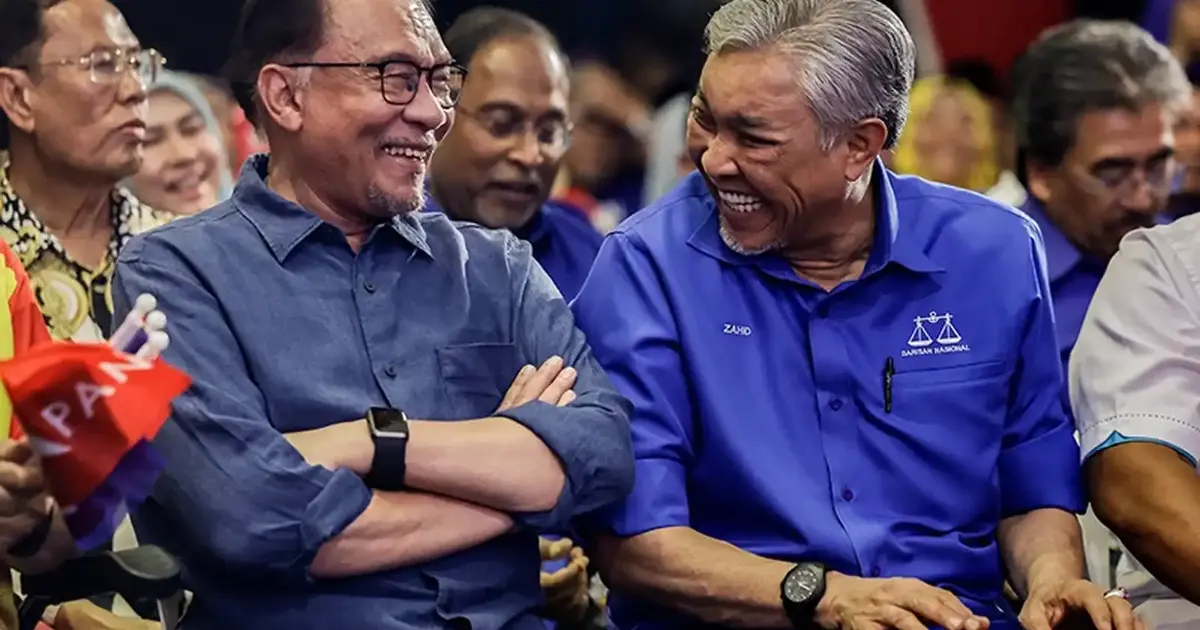
In a striking display of political communication through creative expression, Deputy Prime Minister Zahid Hamidi has composed his own verse in response to a poem shared by Prime Minister Anwar Ibrahim, underscoring a moment of lighter exchange between the two leaders at the helm of Malaysia's governing coalition. The incident highlights an unconventional mode of dialogue within the upper echelons of the administration, suggesting that despite the complex dynamics inherent in a multi-party unity arrangement, personal rapport and even a touch of humour remain present in their interactions.
The poetic exchange between the two leaders carries particular significance given the delicate balance required to maintain Malaysia's unity government structure. This coalition arrangement, formed following the 2022 general election, brought together former political rivals under a single administrative umbrella—a development that observers had initially viewed with considerable scepticism. The fact that Zahid and Anwar are engaging in such informal exchanges suggests that the working relationship between these historically antagonistic figures has evolved beyond mere political pragmatism into something approaching genuine collegial dynamics.
Beyond the surface-level novelty of the poetic exchange, Zahid's move carries substantive political messaging. As both Deputy Prime Minister and chairman of Barisan Nasional, the coalition that represents the traditional establishment in Malaysian politics, his words serve multiple audiences. To his party's grassroots members, the gesture demonstrates that BN leadership maintains influence and voice within the governing structure. To Anwar and his PKR-led bloc, it signals continued engagement and goodwill. To the broader electorate, it portrays an administration comfortable enough with its stability to indulge in lighter moments.
Crucially, Zahid's public statement reiterates Barisan Nasional's commitment to maintaining the unity government arrangement until the completion of its constitutional term. This declaration carries weight in a Malaysian political context historically prone to sudden shifts in coalition composition and surprise defections. The unity government itself remains a relatively recent and somewhat experimental framework in Malaysian democracy, requiring constant negotiation and compromise between parties with fundamentally different ideological orientations and voter bases.
The stability message implicit in Zahid's remarks becomes particularly important when considering the various pressures and fault lines that periodically threaten the unity arrangement. Since its inception, the coalition has navigated internal disagreements, policy disputes, and the ever-present temptation among coalition partners to calculate whether they might fare better in opposition or in a realigned majority. Regional developments, international economic conditions, and demographic shifts in voter preferences all create incentives for coalition partners to reassess their strategic positioning.
For Malaysian investors and the broader business community, assurances about governmental stability hold concrete implications. Policy continuity, consistent regulatory frameworks, and predictable fiscal management depend significantly on the longevity and cohesion of the ruling coalition. Extended periods of political uncertainty typically correspond with economic hesitation, as businesses defer major investment decisions pending clarity about the political trajectory. Zahid's reaffirmation thus serves practical economic functions beyond its immediate political messaging.
The unity government's sustainability also carries implications for regional Southeast Asian dynamics. Malaysia's role as a significant economic power and key player in regional organizations depends partly on the clarity and consistency of its governmental positions. Coalition volatility at the national level can translate into uncertainty in foreign policy positions, trade negotiations, and regional commitments. A stable administration capable of speaking with one voice on international matters enhances Malaysia's diplomatic credibility and bargaining power.
Within Barisan Nasional itself, Zahid's statement reinforces his leadership and his party's relevance within the broader coalition structure. The BN, having governed Malaysia continuously from independence until 2018, experienced a significant psychological and political shock from its first electoral defeat. The subsequent return to executive power through the unity government mechanism has provided some restoration of the coalition's political fortunes. However, BN members remain acutely conscious that their position depends on continued cooperation with other coalition partners, making periodic reaffirmations of commitment strategically essential.
The poetic exchange also reveals something about contemporary Malaysian political communication. Rather than conducting all important political messages through press statements or official documents, senior leaders occasionally employ more creative and personal mediums. This approach can humanize political figures, demonstrate wit and intellectual flexibility, and create moments of connection with various constituencies who appreciate the informality and personality involved. In an era of increasingly polarized social media discourse, such moments offer a counterbalance to more acerbic forms of political engagement.
Looking forward, maintaining the unity government through to the next scheduled general election constitutes a significant ongoing challenge. The coalition must navigate not only internal tensions but also an opposition camp that retains considerable organizational capacity and voter support. Whether the arrangement can survive potential shocks—economic downturns, scandal, or shifting voter preferences in by-elections—remains uncertain. Zahid's commitment statement, therefore, functions partly as a reassurance to coalition partners that Barisan Nasional intends to honour its institutional obligations and maintain its governing role.
The light-hearted poetic exchange between Malaysia's top two leaders ultimately signifies something deeper: the grudging recognition that despite profound historical differences, these individuals and their organizations have determined that collaborative governance serves their interests better than renewed confrontation. This pragmatic accommodation, expressed through verse no less, demonstrates the adaptability of Malaysian politics even as it continues to grapple with fundamental questions about representation, accountability, and the distribution of power among competing factions.

