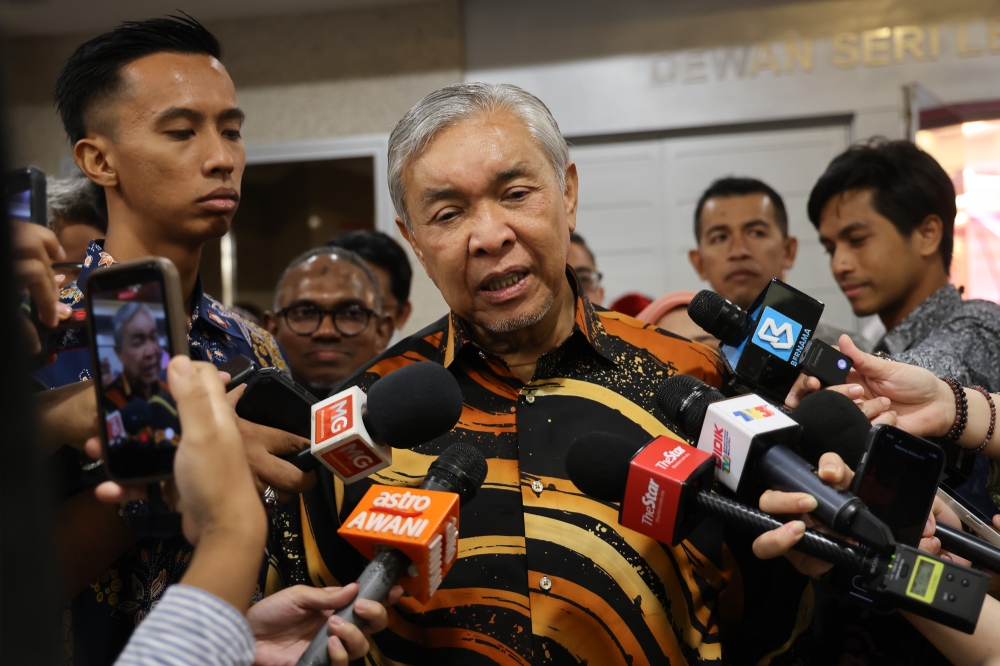
Deputy Prime Minister Zahid Hamidi has drawn a firm line on accountability within Tabung Haji, asserting that both Barisan Nasional and Umno will not countenance any breach of fiduciary duty or financial misconduct involving the pilgrim savings fund. Speaking in Putrajaya on August 6, Zahid stressed the gravity with which the coalition views any form of mismanagement that undermines public trust in one of Malaysia's most crucial institutional funds.
The pilgrim fund, which administers savings for hundreds of thousands of Malaysian Muslims preparing for the Hajj pilgrimage, occupies a uniquely sensitive position in the nation's financial architecture. Its management directly affects the life savings of ordinary Malaysians from all walks of life who have entrusted their money to the institution. Any malfeasance or negligence in overseeing these assets strikes at the heart of institutional integrity and public confidence.
Zahid's pronouncement comes amid sustained scrutiny of Tabung Haji's operational governance and financial decisions over several years. The fund has faced questions regarding investment strategies, administrative expenses, and asset management practices that have drawn attention from parliamentary oversight bodies and civil society watchdogs. These concerns have periodically surfaced in public discourse, prompting calls for enhanced transparency and stricter controls over fund management.
The Umno and BN leadership's public stance signals a departure from any perception of political protection for officials or board members implicated in administrative failures. By explicitly committing to consequences for those responsible, the coalition appears intent on demonstrating that no position or political affiliation shields individuals from accountability when public trust is breached. This messaging carries particular weight given the political salience of institutional governance in contemporary Malaysian discourse.
For Malaysian pilgrims and their families, the assurance of rigorous accountability mechanisms provides some reassurance that their financial interests remain protected at the institutional level. The fund's health and trustworthiness directly impact the spiritual and financial aspirations of contributors, many of whom have made significant personal sacrifices to accumulate their Hajj savings. Any erosion of confidence in the institution's management directly diminishes the confidence of these stakeholders.
The commitment to consequences also reflects broader expectations within the Malaysian public sphere for institutional accountability and financial rectitude. In recent years, various sectors have faced scrutiny over governance standards, and political leadership has increasingly come under pressure to demonstrate tangible responses to revelations of mismanagement or impropriety. Zahid's statement aligns with this trend of zero-tolerance positioning on institutional breaches.
From a Southeast Asian perspective, Malaysia's approach to pilgrim fund governance carries implications beyond its borders. The region hosts significant Muslim populations preparing for Hajj, and the Malaysian model of institutional administration is observed by neighboring countries managing similar concerns. Demonstrating robust accountability mechanisms enhances Malaysia's standing as a trustworthy administrator of public financial institutions and may strengthen the nation's soft power within regional Islamic circles.
The practical implementation of accountability measures will likely extend across multiple institutional layers, including investigation of administrative decisions, review of investment portfolios, assessment of board-level oversight capacity, and examination of internal control mechanisms. Determining responsibility often involves complex inquiries into decision-making processes, authorization hierarchies, and the degree to which individuals acted with knowledge of risks or compliance requirements.
Zahid's explicit framing of accountability as non-negotiable also serves a political function within the coalition context. By articulating clear principles regarding institutional governance, BN leadership can position the government as committed to financial probity and public interest protection. This becomes increasingly important as Malaysians assess government performance across multiple institutional domains and evaluate whether political promises regarding governance reform translate into concrete action.
The Tabung Haji issue intersects with broader questions about Malaysian institutional resilience and administrative reform. As the nation navigates evolving economic challenges and rising public expectations for transparency, the manner in which authorities handle high-profile cases of institutional governance becomes instructive for public perception of governmental capacity and political commitment to reform. The fund's restoration to full public confidence requires not merely rhetorical positioning but demonstrable follow-through on investigation, accountability, and systemic improvements.
Moving forward, stakeholders will observe whether the stated principles translate into visible investigative action, disciplinary measures where warranted, and institutional reforms strengthening governance safeguards. The credibility of the BN-Umno leadership's accountability commitment will ultimately depend on the tangible consequences applied and the structural changes implemented to prevent recurrence of similar issues.

