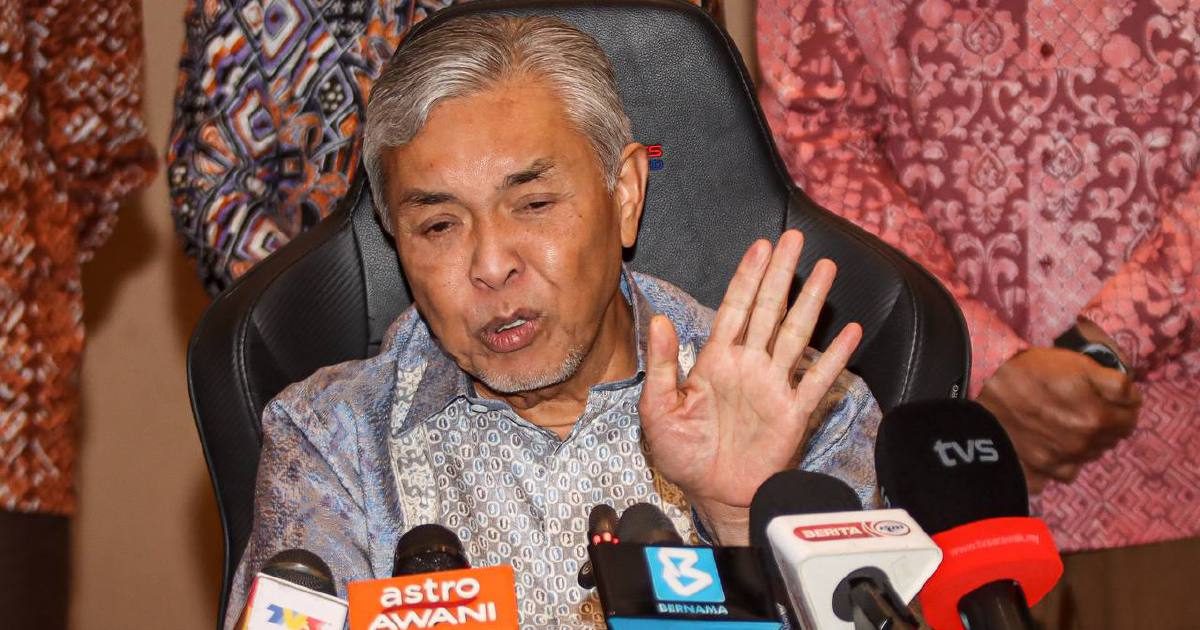
Deputy Prime Minister Datuk Seri Dr Ahmad Zahid Hamidi moved swiftly to quash mounting speculation about potential moves to dislodge Prime Minister Datuk Seri Anwar Ibrahim, making clear that Barisan Nasional remains fully committed to sustaining the unity government coalition for the remainder of the 15th Parliament's tenure.
Spoken during remarks made in George Town, Zahid's emphatic rejection of toppling rumours signals the coalition's intention to project unity and political stability at a time when Malaysia's governance architecture continues to face scrutiny. The statement carries significance beyond mere political theatre, as it addresses concerns that have periodically surfaced regarding the durability of the three-bloc alliance between Barisan Nasional, Pakatan Harapan, and Sabah and Sarawak-based parties.
The unity government framework, established following the 2022 general election, represented an unconventional political arrangement designed to prevent political chaos and provide Malaysia with a stable administration. Since its inception, the coalition has navigated numerous internal tensions, policy disagreements, and factional pressures—dynamics that regularly generate speculation about its longevity. Zahid's intervention directly addresses these persistent doubts by providing a categorical assurance from one of the coalition's most powerful figures.
For Malaysian observers watching coalition politics, Zahid's position holds particular weight given his role as Deputy Prime Minister and his stature as Barisan Nasional's most senior representative in government. His predecessor in the deputy premiership, Ismail Sabri Yaakob, had previously served in a similar capacity under the previous administration, lending historical context to how such positions typically engage with questions of parliamentary support. Zahid's personal authority within Umno, the largest party in Barisan Nasional, makes his assurances substantially more credible than those that might come from lower-ranking figures.
The timing of this declaration warrants examination. Speculation about government stability in Malaysia tends to intensify during specific windows—when Budget allocations are scrutinised, when by-elections generate momentum shifts, or when state-level political movements signal broader factional realignments. By preempting such narratives through direct denials, Zahid attempts to establish the coalition's narrative control and discourage media speculation that might otherwise gain traction among investors, international observers, or domestic political actors.
Barisan Nasional's commitment to the unity framework represents a calculated strategic choice. The coalition, which dominated Malaysian politics for nearly seven decades before losing the 2018 general election, faced potential irrelevance had it remained in opposition. The unity government offered Umno and its Barisan partners a pathway back into executive authority without the humiliation of a complete electoral defeat. This arrangement, while containing internal contradictions and requiring careful management, functionally serves multiple purposes for Barisan—it provides ministerial positions, maintains organisational relevance, and preserves the party's influence over key policy areas.
From the perspective of investors and international commentators, political stability remains a paramount consideration in Malaysia's macroeconomic environment. Frequent changes in government, or sustained speculation about government collapse, create uncertainty that can affect foreign direct investment, currency stability, and credit ratings. Zahid's reassurance on this front addresses concerns that any political instability could undermine Malaysia's economic positioning at a critical juncture when the nation is navigating post-pandemic recovery and competing with regional peers for investment.
The statement also reflects practical arithmetic in Parliament. The unity government commands a working majority, though not a overwhelming supermajority, making it technically vulnerable to defections. However, the costs of destabilisation—fresh elections, potential constitutional crises, or unpredictable outcomes—typically deter serious attempts at government overturn. Zahid's affirmation essentially reminds all coalition partners that the mathematics favour continuation and that the reputational and practical costs of collapse exceed any near-term political benefits.
For regional observers, Malaysia's governance stability holds broader implications. Southeast Asia's largest economies depend on predictable policy environments and institutional coherence. A Malaysian government that appears perpetually unstable could ripple across the region's investment landscape and affect the country's standing within Asean and international forums. Zahid's statement, therefore, addresses not merely domestic political audiences but also sends signals to foreign governments and multinational corporations that Malaysia remains a reliable partner with functioning democratic institutions.
The unity government's continuation until the end of the 15th Parliament would extend through to 2027 or potentially 2028, depending on whether Parliament is dissolved early or permitted to run its full five-year term. Zahid's endorsement of this trajectory implies that Barisan Nasional envisions the coalition as a permanent rather than temporary arrangement, fundamentally reshaping expectations about Malaysia's political future. This represents a significant departure from historical patterns where coalitions typically fractured rapidly once their immediate utility diminished.
Moving forward, such reassurances will likely require periodic reinforcement as political circumstances evolve, by-elections occur, and state governments shift. However, Zahid's intervention establishes a baseline position: Barisan Nasional has calculated that coalition stability serves its interests better than destabilisation, and the party's senior leadership backs this position unequivocally.

