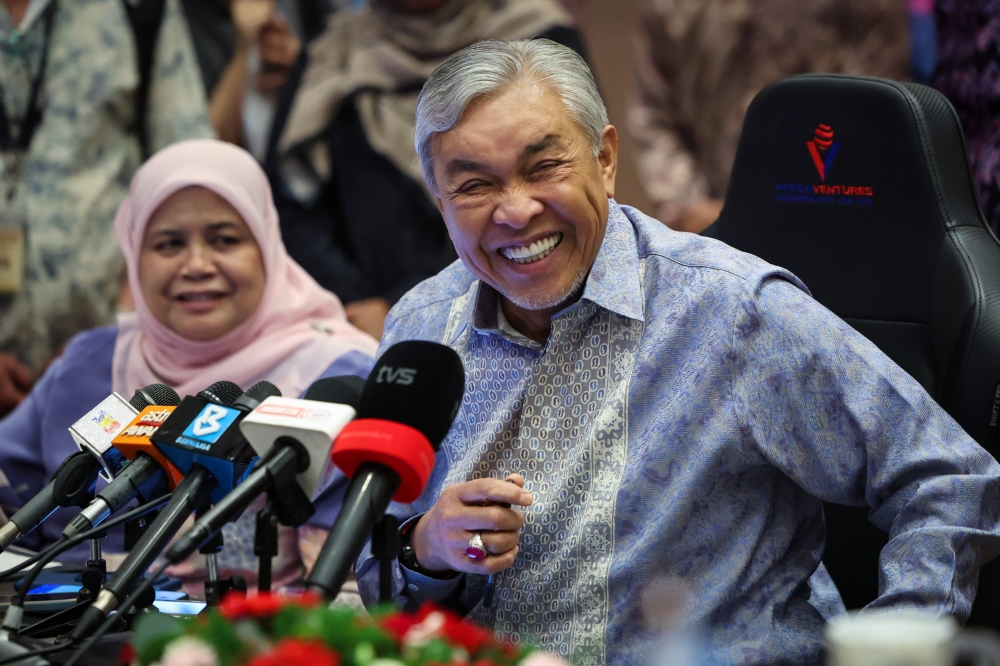
Datuk Seri Zahid Hamidi has moved to quash persistent rumours about Barisan Nasional's commitment to Malaysia's current governing coalition, emphatically rejecting any suggestion that the major party bloc might abandon its partners in the Unity Government before the 15th Parliament reaches its natural conclusion. Speaking in George Town on July 23, the BN deputy president deployed colourful language to underline the coalition's stability, declaring there would be no "Bangkok move" or "Dubai move"—a reference to the kind of dramatic, secretive political manoeuvres that have periodically disrupted Malaysian politics and captured the public imagination during times of uncertainty.
The remarks come at a moment when Malaysia's political landscape remains fragile despite the establishment of the Unity Government following the 2022 general election. The coalition, which brings together the longtime ruling BN, the Pakatan Harapan bloc, and smaller parties under Prime Minister Datuk Seri Anwar Ibrahim's leadership, has been tested repeatedly by shifting alliances and occasional public tensions between partner organisations. For observers tracking the stability of the current administration, Zahid's statement represents an important signal about BN's internal calculations and its assessment of its political interests in the months ahead.
Barisan Nasional, which comprises the United Malays National Organisation (UMNO), the Malaysian Chinese Association (MCA), and the Malaysian Indian Congress (MIC), has maintained its position as the largest parliamentary bloc within the Unity Government structure. This weight gives BN significant leverage in coalition politics, yet also burdens it with responsibility for the government's perceived successes and failures. Zahid's explicit commitment to the current arrangement suggests that BN leadership has concluded that remaining within the coalition serves its long-term interests better than pursuing alternative configurations, despite occasional frustrations that have surfaced in public.
The invocation of "no Bangkok move, no Dubai move" carries particular resonance in the Malaysian context, where both cities have featured in political lore as locations where sensitive negotiations have taken place away from public scrutiny. Such references function as reassurance to coalition partners and to a watching public concerned about political instability. By explicitly naming and rejecting such possibilities, Zahid aims to drain the currency from speculation and rumour, presenting BN as a reliable, predictable force committed to orderly democratic processes rather than behind-the-scenes manipulation.
For the Pakatan Harapan component of the government, Zahid's statement offers some comfort during a period when their grip on certain state governments and parliamentary seats has faced challenges. The broader implication is that BN views the continuation of the current arrangement as preferable to the uncertain outcomes that might follow from breaking ranks. This calculation likely reflects several factors: the reputational costs of triggering a government collapse, the risk of fragmenting in opposition facing a resurgent Pakatan Harapan, and the preference for advancing BN's agenda from within power rather than from the sidelines.
The timing of such explicit reaffirmations is not coincidental. Malaysian political culture has developed an almost seasonal rhythm of coalition stress and renewal, with periodic moments when doubts surface about whether partners will truly remain committed. By speaking clearly during a relatively calm period, Zahid seeks to establish expectations and reduce the likelihood that routine negotiations or tactical disagreements become interpreted as signs of imminent collapse. The calculus differs significantly from moments of acute crisis, when such declarations might ring hollow.
However, the very need for Zahid to make such a statement suggests that questions about coalition stability persist among party members, political observers, and the general public. The Unity Government has not yet achieved the kind of settled, taken-for-granted status that characterised BN's long periods of majority rule before 2018. Every partnership within it remains somewhat contingent, subject to renegotiation as circumstances evolve. The commitment Zahid articulates is thus more accurately understood as a restatement of current preferences rather than an immutable historical fact.
From a Malaysian regional perspective, the continued functioning of the Unity Government carries implications beyond domestic politics. Economic actors, both domestic and foreign, prefer political stability and predictability when making investment and business decisions. A government known for coherent, coordinated policy-making attracts capital and confidence more readily than one perceived as faction-ridden or perpetually on the brink of collapse. Zahid's assurances therefore serve economic interests as well as political ones, signalling to markets that the current configuration will persist.
The sustainability of the Unity Government ultimately depends on whether all major components continue to perceive it as advancing their interests more effectively than available alternatives. For BN, this calculation includes whether the party can recover ground lost in recent years and whether its senior figures achieve recognition as effective administrators and policymakers. The coalition provides a platform for such efforts, but it also constrains BN's ability to pursue purely partisan advantage. Zahid's commitment reflects a judgment that this trade-off currently favours remaining within the alliance.
As Malaysia approaches the midpoint of the parliamentary term, such stability declarations take on practical significance. The government has legislation to pass, budgets to manage, and delivery commitments to fulfil. Coalition disruption would derail such efforts and impose reputational costs across all parties. Looking forward, the real test of Zahid's pledge will come not from dramatic "moves" by hidden hands, but from the everyday negotiations through which coalition partners manage disagreements, allocate resources, and sustain the ordinary business of governing a complex, diverse nation.

