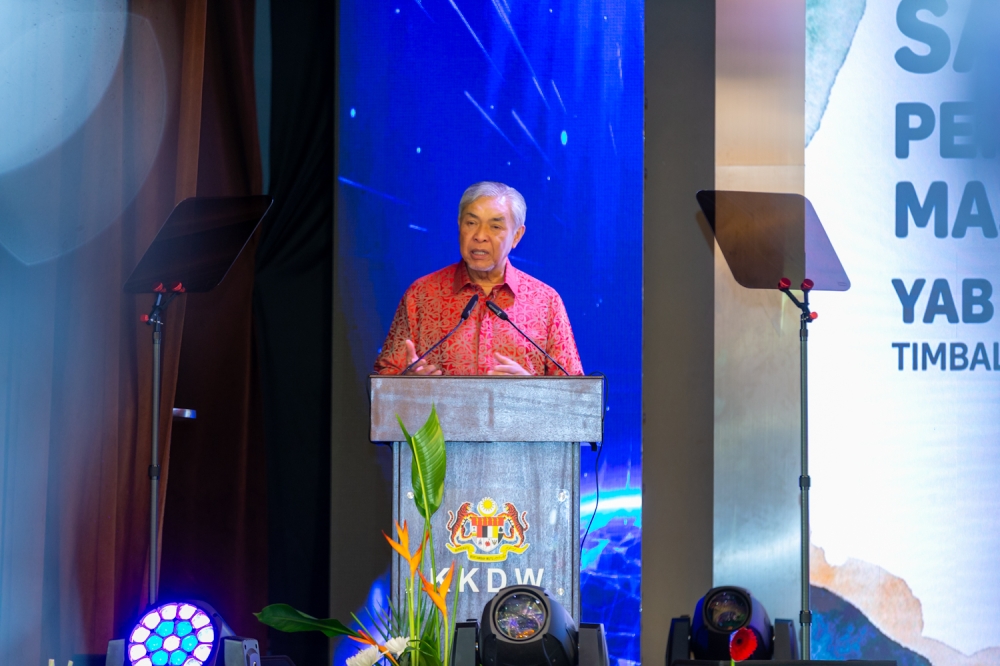
Deputy Prime Minister Datuk Seri Ahmad Zahid Hamidi has firmly rejected circulating reports suggesting high-level discussions were taking place between Barisan Nasional, Perikatan Nasional, GPS, and GRS, emphasising instead his steadfast commitment to Malaysia's current unity government arrangement. The denial came as speculation swirled on social media and political circles about potential realignment among major political blocs, a scenario that could fundamentally reshape the nation's governing coalition if substantiated.
Zahid's categorical dismissal of the claims underscores the precarious nature of Malaysia's political equilibrium, where the unity government—comprising Pakatan Harapan, Barisan Nasional, Gabung Rakyat Sabah Sarawak, and other partners—has remained intact despite persistent pressure from opposition elements seeking to destabilise the arrangement. The Deputy Prime Minister's reaffirmation serves as a public reassurance to allies and the broader electorate that the coalition leadership remains unified in its strategic direction, even as speculation about potential alternatives continues to circulate throughout political commentaries.
The denial takes on particular significance given Malaysia's recent political history, marked by frequent realignments and shifting alliances that have often surprised observers and unsettled investor confidence. Since the 2022 general election, various combinations of political forces have been theorised and tested, with each potential regrouping carrying substantial implications for policy direction, ministerial portfolios, and governance priorities. Zahid's explicit rejection of cross-coalition talks, therefore, appears designed to project stability and predictability during a period when political uncertainty could undermine economic performance and public confidence in institutional continuity.
Perikatan Nasional, led by figures from PAS and other component parties, has maintained significant parliamentary representation and continues to hold several state governments, including in Kedah, Terengganu, and Kelantan. Any substantive engagement between PN and the unity government coalition would represent a dramatic shift in Malaysia's political landscape, potentially creating a different majority configuration or altering the balance of power within ministerial structures. The fact that such reports gained sufficient traction to prompt a direct ministerial response indicates the currency of coalition-building narratives within Malaysian politics, where parliamentary mathematics remain perpetually contested terrain.
GPS, the Gabungan Parti Sarawak, commands substantial parliamentary weight through its Sarawak stronghold and has historically positioned itself as a crucial swing bloc within federal coalitions. Similarly, GRS, representing Sabah interests, holds considerable sway over government formation calculations given East Malaysian demographics and electoral mathematics. The grouping of these two East Malaysian-based parties with either PN or BN-led configurations would materially shift numerical advantage and resource allocation patterns, explaining why rumours of such realignments provoke immediate responses from senior government figures concerned about stability.
Zahid's public stance reflects the United Malays National Organisation's core strategic interest in maintaining the unity government framework, which has allowed Barisan Nasional to retain significant ministerial positions and influence policy direction despite the 2022 election failing to deliver a clear mandate to any single bloc. The Deputy Prime Minister's role as UMNO Deputy President and senior government figure obligates him to defend coalition cohesion, particularly when opposition narratives seek to exploit any perceived fractures or dissatisfaction among governing partners.
The timing of these denials carries additional weight given Malaysia's ongoing economic challenges, including inflation pressures, employment concerns, and the need for sustained investor confidence. Political uncertainty, particularly surrounding government formation and ministerial stability, has historically corresponded with reduced foreign direct investment and capital market volatility. By publicly reaffirming unity government commitment, Zahid attempts to signal to domestic and international stakeholders that governing structures remain solid and policy implementation can proceed without disruption.
Malaysian political observers have noted recurring patterns of coalition speculation that typically emerge during periods of perceived government weakness or when component parties face internal pressures requiring external narrative management. The prominence achieved by these particular rumours suggests they resonated with existing anxieties about unity government sustainability, prompting rapid ministerial response to contain potential damage to coalition morale and public perception of governmental stability.
The denial also addresses underlying tensions within the unity government itself, where component parties maintain distinct ideological platforms and policy priorities that occasionally conflict. Pakatan Harapan partners, Barisan Nasional components, and East Malaysian representatives sometimes pursue divergent agenda items, creating space for speculation about alternative coalition configurations that might better align with specific party interests. Zahid's reaffirmation attempts to reinforce commitment to current arrangements despite these persistent friction points.
Looking forward, Malaysia's political trajectory will likely continue revolving around coalition maintenance, with senior figures like Zahid tasked with publicly defending unity government arrangements while navigating internal party dynamics and parliamentary mathematics. The frequency and prominence of such denials serve as useful indicators of coalition health, with repeated need for public reaffirmation potentially suggesting underlying strain requiring management through explicit leadership statements and reassurances to both supporters and governing partners.

