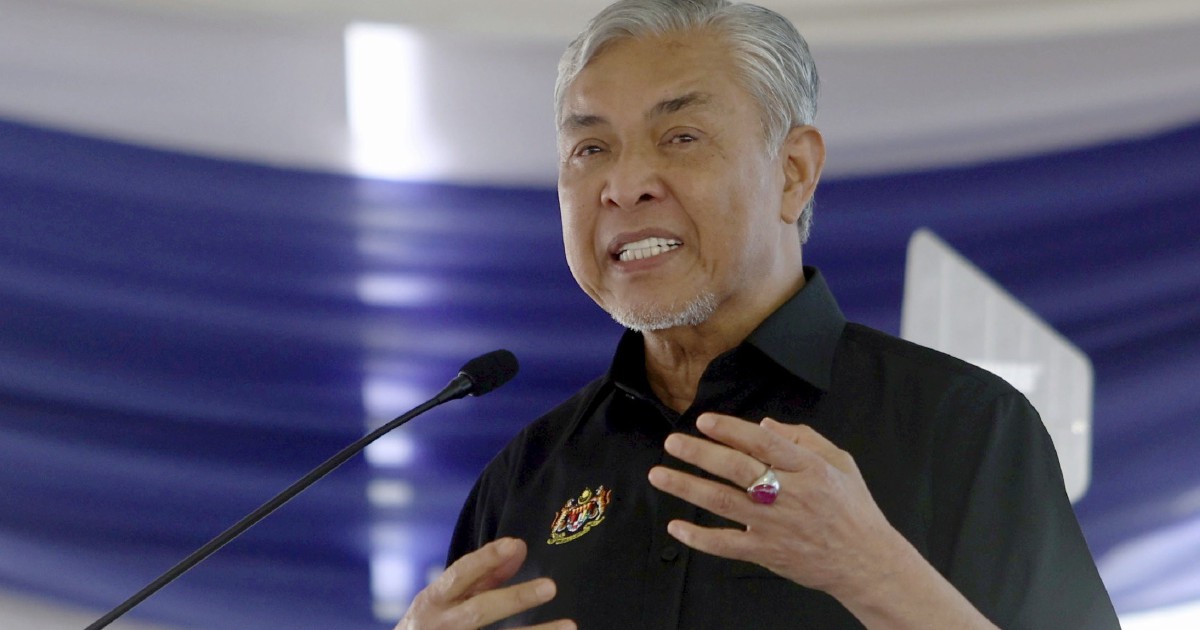
Deputy Prime Minister Datuk Seri Dr Ahmad Zahid Hamidi has moved to quell persistent rumours about an imminent snap election, declaring that the federal government has held no formal deliberations regarding an early dissolution of Parliament. Speaking in Tampin, Zahid's statement represents an attempt to settle growing uncertainty surrounding Malaysia's political timeline, particularly as various stakeholders have begun publicly questioning whether the incumbent administration might seek to capitalize on perceived electoral advantages.
The emergence of such speculation typically reflects deeper currents within Malaysian politics—including calculations about shifting voter sentiment, coalition stability, and the strategic positioning of key political players. Zahid's dismissal of these reports suggests that the government remains committed to completing its existing parliamentary term, which is not constitutionally due for fresh elections until 2025 or later, depending on the timing of the next dissolution.
Early election talk in Malaysia often surfaces during periods when governing coalitions enjoy parliamentary momentum or when opposition parties appear fractured. The timing of these rumours becomes particularly significant when major economic developments, policy successes, or international events create perceived windows of opportunity for political advantage. By categorically denying any internal discussions, Zahid is attempting to restore policy focus and investor confidence while signalling that the government remains anchored in its legislative agenda.
For Malaysian readers and the broader Southeast Asian business community, clarity on electoral timelines carries substantial weight. Early elections introduce uncertainty that can affect investment decisions, currency valuations, and business planning cycles. Multinational corporations and local enterprises alike benefit from predictable governance transitions, making Zahid's statement a reassurance that Malaysia's political calendar remains stable and transparent.
The Deputy Prime Minister's comments also carry implications for coalition management within the ruling Perikatan Nasional government. Different component parties often harbour divergent views on the optimal timing for elections, particularly if internal polling suggests varying fortunes for individual factions. By shutting down speculation at the leadership level, Zahid may be preventing damaging internal conversations that could undermine coalition cohesion or trigger defections driven by political self-preservation.
Historically, Malaysian governments have occasionally called snap elections when conditions appeared favourable, most notably in 2018 and more recently through various state-level contests. However, constitutional conventions generally favour completing parliamentary terms unless extraordinary circumstances—such as loss of majority support or major governance crises—warrant dissolution. Zahid's statement reinforces adherence to these institutional norms, though the very fact that speculation existed underscores how fluid Malaysian electoral politics remains.
The statement also deserves examination through the lens of international relations and Malaysia's regional standing. A stabilized domestic political calendar allows policymakers to concentrate on bilateral relationships, ASEAN engagement, and cross-border economic initiatives. Conversely, frequent election cycles or persistent uncertainty about polling dates can distract leadership and complicate long-term diplomatic planning with neighbouring countries and trading partners.
Within Malaysia's parliament, Zahid's declaration serves as a signal to both allied and opposition lawmakers. Government backbenchers receive assurance that they need not activate survival strategies or scramble to secure advantageous positions ahead of unexpected dissolution. Opposition members gain confirmation that they should focus on parliamentary scrutiny and policy advocacy rather than emergency electoral preparation. This stability benefits legislative work on pressing national concerns, from economic recovery to infrastructure development and public service reform.
Energy spent pursuing speculation about election timing in Malaysian media and political commentary has occasionally crowded out substantive discussion of governance issues and policy performance. By firmly dismissing such talk, Zahid implicitly invites stakeholders to redirect attention toward evaluating the government's track record on inflation control, employment generation, security challenges, and fiscal management—areas where public perception ultimately determines electoral outcomes far more decisively than speculation about polling dates.
The Deputy Prime Minister's statement also arrives at a moment when Malaysia continues navigating post-pandemic economic adjustments alongside inflation pressures affecting the broader region. Investors closely monitor political stability as a component of their risk assessments for Malaysia. Electoral uncertainty, even when ultimately not translated into actual snap polls, can marginally raise borrowing costs or slow inbound foreign direct investment. Zahid's reassurance addresses these structural concerns while positioning the government as committed to continuity in economic policy execution.
Moving forward, political observers should examine whether Zahid's denial effectively silences speculation or simply represents the predictable rhetorical response of leadership whenever early election talk surfaces. Malaysian political culture has demonstrated considerable capacity for generating such rumours repeatedly across electoral cycles, suggesting that periodic denials may become part of the normal governance rhythm. Nevertheless, the Deputy Prime Minister's intervention establishes an official position that carries weight for business planning, diplomatic scheduling, and opposition strategy.

