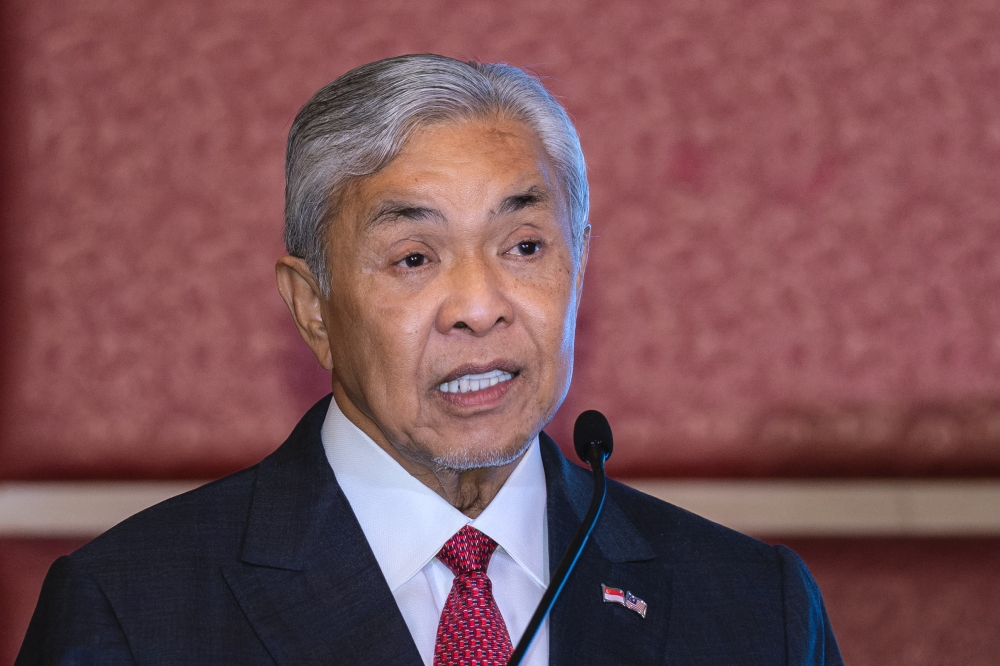
Umno president Datuk Seri Dr Ahmad Zahid Hamidi has firmly rejected suggestions of a predetermined alliance between his party and PAS for the Negeri Sembilan state government, underscoring instead that Umno maintains strategic flexibility in its coalition calculations. Speaking in Kuala Lumpur, Zahid characterised any potential partnership arrangement as fundamentally subject to revision, cautioning that political alignments in Malaysia's federal structure can shift rapidly depending on ground realities and electoral outcomes.
The denial carries significant weight given the intense speculation surrounding Umno's positioning ahead of potential state-level elections across Malaysia. Zahid's insistence on the absence of formal mechanisms with PAS suggests Umno is resisting pressure from multiple quarters to lock in predetermined electoral alliances. This strategic ambiguity allows the party to maintain negotiating leverage with various potential partners while preserving options that could emerge post-election, particularly if electoral mathematics produce unexpected results in Negeri Sembilan or elsewhere.
Negeri Sembilan has emerged as a critical test ground for coalition strategies in Malaysia's post-2022 political environment. The state, traditionally a Umno stronghold with significant BN presence, has attracted competing visions of governance and partnership architecture. Zahid's intervention suggests Umno leadership wants to control the narrative around its direction in the state, rather than allowing PAS or other parties to dictate terms through public announcements or media speculation about predetermined arrangements.
The timing of Zahid's clarification reflects broader uncertainty within Malaysian politics about how Barisan Nasional, particularly Umno's role within it, will position itself against PAS-led alternatives and other emerging coalitions. Since the 2022 general election, the political landscape has fractured into multiple competing blocs, with state governments serving as crucial proving grounds for different coalition models. Negeri Sembilan's relatively balanced political composition makes it an important indicator of voter sentiment and coalition viability.
Zahid's warning that "goalposts can change anytime" reveals an underlying tactical calculation. By publicly stating that no arrangement is sacrosanct, Umno leadership preserves its ability to pivot based on electoral performance, demographic shifts, or unexpected defections among elected representatives. This flexibility has become increasingly valuable in Malaysian politics, where state governments frequently experience mid-term shifts in composition as individual politicians negotiate between coalitions.
For PAS, Zahid's statement presents a challenge. The Islamist party has been aggressively pursuing coalition arrangements with Umno across multiple states, seeking to consolidate what it perceives as a natural ideological alignment within the Malay-Muslim political community. However, Umno's traditional power base and institutional strength mean that PAS cannot simply assume partnership on favourable terms. The two parties have experienced tense relations despite their nominal compatibility, particularly regarding issues of governance approach and resource allocation.
Regional observers have noted that Umno's hedging on state-level arrangements serves the party's interests in maintaining leadership of the broader Malay-Muslim political movement. By refusing to subordinate itself to PAS through formal pre-election pacts, Umno signals to its grassroots that the party retains independent agency and can negotiate from positions of strength rather than predetermined weakness. This distinction matters considerably for Umno's internal politics and member satisfaction.
The Negeri Sembilan question also intersects with broader questions about BN's future direction and Umno's role within it. Some within BN have advocated for closer cooperation with PAS as a means of consolidating Malay-Muslim support and competing more effectively against Pakatan Harapan and other opposition coalitions. However, others within BN circles worry that such arrangements could marginalize non-Malay and non-Muslim components of the coalition, potentially weakening BN's traditional multiracial base.
Zahid's statement should be read within this complex context. By denying formal arrangements while leaving the door open to flexible responses, he positions Umno as a party making calculated decisions based on electoral realities rather than ideological or organizational imperatives. This approach has served Umno well in previous political transitions, allowing the party to adjust course without appearing to have abandoned core principles or made embarrassing reversals of publicly stated positions.
Looking ahead, Negeri Sembilan will likely remain a fluid political landscape where Umno, PAS, and other parties continue jockeying for advantageous positions. Zahid's insistence on the absence of formal pacts, combined with his warning about shifting goalposts, effectively signals that the terms of any eventual coalition arrangement will be determined closer to actual elections and will reflect ground conditions at that moment rather than predetermined agreements made in relative political quiet.
For Malaysian voters, particularly those in Negeri Sembilan, this uncertainty underscores the ongoing instability in state-level politics and the degree to which electoral outcomes remain unpredictable. Parties are maintaining maximum flexibility, suggesting that campaign dynamics and late-breaking developments could significantly influence final coalition configurations. This environment makes voter mobilization and campaign messaging increasingly important, as parties cannot rely on settled coalition arrangements to anchor their electoral appeal.

