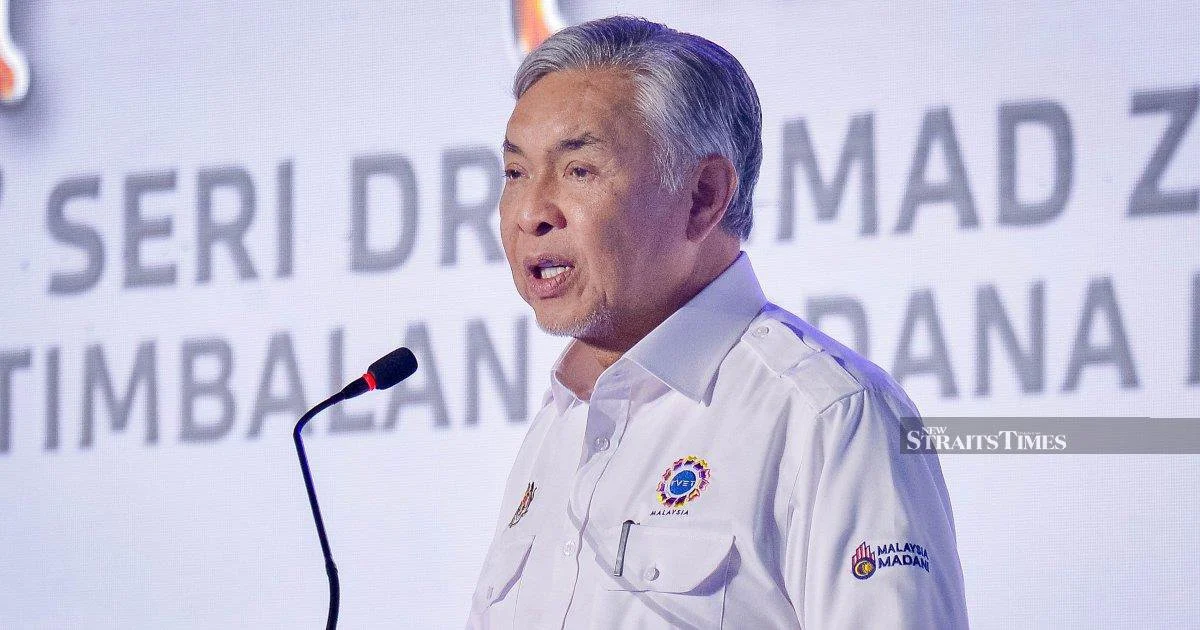
Deputy Prime Minister Datuk Seri Dr Ahmad Zahid Hamidi is set to chair a high-level Cabinet committee that will convene as early as next week to examine the complex landscape of foreign worker management across Malaysia's economy. The formation of this dedicated committee represents a structured governmental approach to addressing mounting labour challenges that have increasingly become a focal point for policymakers and industry stakeholders alike.
The agenda will centre on foreign worker issues with particular attention to the food and beverage sector, which has become one of Malaysia's most labour-intensive industries. The F&B sector's reliance on foreign workers has grown substantially over recent years as domestic labour shortages persist, and the committee's deliberations will likely focus on balancing the operational needs of businesses with broader national labour policies and compliance frameworks.
The timing of this committee meeting comes amid ongoing discussions about Malaysia's approach to migrant labour. The country hosts one of Southeast Asia's largest foreign worker populations, estimated at several million individuals working across construction, manufacturing, agriculture, hospitality, and services. These workers play a crucial economic role, yet their presence continually generates policy debates around wages, working conditions, skills transfer, and social integration.
For the F&B industry specifically, the foreign worker situation reflects deeper structural challenges. Many Malaysian restaurants, hawker stalls, and food manufacturing operations depend on foreign labour to maintain staffing levels and manage labour costs. Yet visa regulations, quota systems, and enforcement mechanisms have created operational uncertainties for business operators. The committee's examination may yield clarifications on visa processing timelines, quota allocations, and the conditions under which foreign workers can be deployed within the sector.
The committee's work also occurs within Malaysia's broader economic context. As the country navigates post-pandemic recovery and inflation pressures, the foreign worker question intersects with wage levels, employment conditions for Malaysian citizens, and sectoral competitiveness. Policymakers must weigh competing interests: employers seeking sufficient labour supply, workers seeking fair compensation, and society broadly seeking manageable migration flows and social cohesion.
Datuk Seri Dr Ahmad Zahid Hamidi's role in chairing the committee underscores the seniority and importance the government assigns to this issue. As Deputy Prime Minister, his leadership signals that foreign worker policy warrants attention at the highest administrative level. Previous committees on similar matters have often included representatives from the Human Resources Ministry, Immigration Department, and industry associations, though the specific composition of this committee remains to be detailed.
The committee's expected outputs could include policy recommendations, revised guidelines for employers, updated quota frameworks, or coordination mechanisms between government agencies. Such measures might address persistent complaints from business operators about bureaucratic delays, inconsistent enforcement, or unclear pathways for obtaining approved foreign workers. Equally, the committee may examine safeguards for worker welfare, ensuring that Malaysia's foreign worker regulations meet international labour standards and domestic legal requirements.
For Malaysian business owners in the F&B sector, this committee work carries practical significance. Many have expressed frustration with the gap between labour demand and available local workers, compounded by regulatory hurdles around foreign worker recruitment. A streamlined policy environment could ease operational pressures, though any measures must also satisfy government concerns about local employment protection and social stability. The food and beverage industry's vulnerability to labour shortages was particularly evident during pandemic-related movement restrictions, highlighting the systemic importance of clarity in labour policy.
The committee's deliberations will also reflect Malaysia's position within the ASEAN region's labour mobility landscape. Several Southeast Asian countries have reformed or are reforming their foreign worker frameworks in response to demographic shifts, economic changes, and international labour standards pressure. Malaysia's decisions may influence or be influenced by neighbouring countries' approaches to migrant labour management.
Stakeholders across the spectrum will be observing the committee's recommendations closely. Employer associations representing hospitality and food services have advocated for more flexible labour policies, while worker advocacy groups and trade unions have called for stronger protections against exploitation. Labour-intensive manufacturers and construction firms similarly have vested interests in the committee's conclusions. The challenge for policymakers lies in crafting solutions that address genuine labour market needs without compromising worker protections or undercutting employment opportunities for Malaysian citizens.
The next week's meeting represents the starting point for what could be an extended policy review process. Depending on the scope of the committee's mandate, subsequent meetings may be required to formulate comprehensive recommendations. Any resulting policy changes would likely require coordination across multiple government agencies and possibly parliamentary processes, meaning that immediate practical outcomes may not materialise immediately despite the committee's swift convening.
Malaysian observers should view this committee's work as part of the government's broader effort to recalibrate foreign worker policy for contemporary economic conditions. As Malaysia continues competing for investments and talent while managing its labour market, the decisions emerging from Zahid's committee will help shape the regulatory environment that both local and foreign workers navigate.

