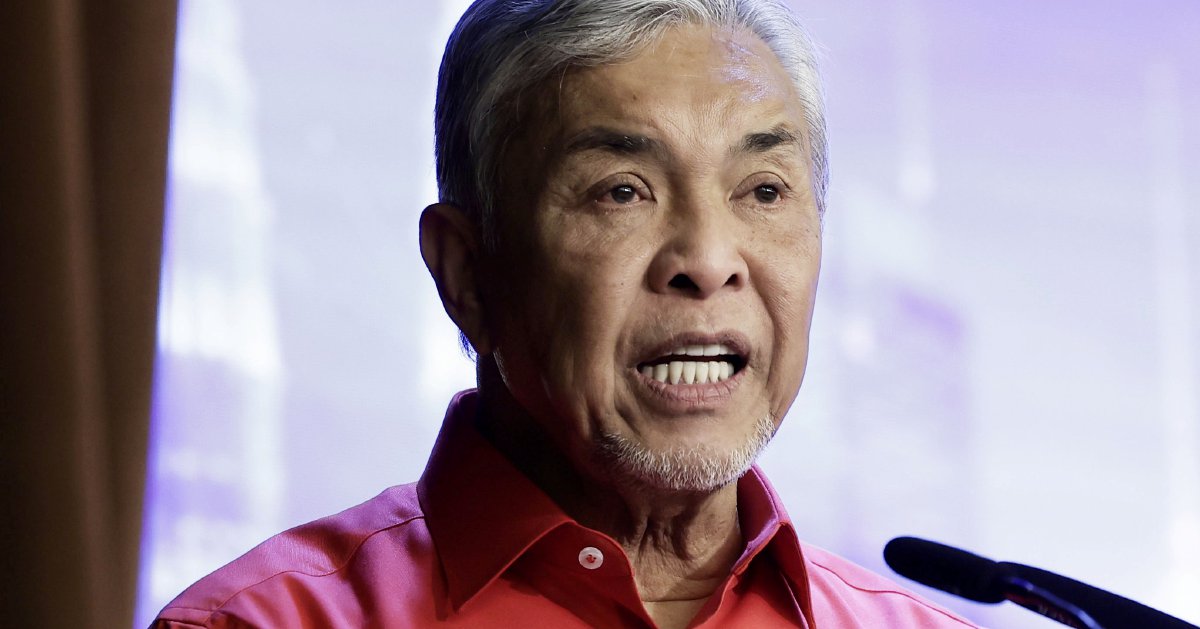
Malaysia's Deputy Prime Minister Datuk Seri Dr Ahmad Zahid Hamidi has publicly appealed for an end to what he characterises as baseless allegations and distorted public perceptions concerning the operations of Lembaga Tabung Haji, the country's Islamic pilgrimage savings institution. The call represents a notable intervention into ongoing public discourse surrounding the pilgrim fund, which has faced considerable scrutiny in recent years over governance, financial management, and reputational concerns.
The Tabung Haji institution, which administers savings and investment schemes for Malaysian Muslims preparing for the Hajj pilgrimage, occupies a uniquely sensitive position in the national narrative. With millions of ordinary Malaysians entrusting their savings to the organisation, any perception of mismanagement carries profound implications not only for individual families but also for public confidence in Islamic financial institutions more broadly. The fund's standing has been complicated by past controversies, making statements from senior government figures particularly consequential in shaping both policy direction and public sentiment.
Zahid's intervention suggests mounting concern within the cabinet about the persistence of claims that lack substantive grounding. Whether focused on investment practices, administrative efficiency, or governance structures, unverified allegations can undermine institutional credibility and create unnecessary public anxiety among millions of account holders whose savings represent years of financial commitment. By specifically invoking the requirement for claims to be "grounded in truth," the Deputy Prime Minister appears to be signalling frustration with what he views as unfounded speculation rather than informed criticism based on documented evidence.
The timing of this statement carries significance given the broader Malaysian context of institutional reform and recovery measures. Over the past several years, Tabung Haji has undertaken substantial restructuring initiatives aimed at strengthening governance frameworks and restoring stakeholder confidence. These efforts have involved regulatory enhancements, operational adjustments, and enhanced transparency measures designed to address identified weaknesses. Against this backdrop, allegations perceived as baseless risk distracting public attention from genuine progress or creating false equivalencies between concrete problems that have been acknowledged and unsubstantiated claims.
For Malaysian investors and pilgrims who depend on Tabung Haji, distinguishing between legitimate criticism warranting attention and unfounded allegations becomes increasingly important. The institution manages not merely financial instruments but religious aspirations, making the stakes emotionally and spiritually significant for participants. When public discourse becomes clouded with unverified claims, genuine accountability mechanisms can paradoxically become more difficult to maintain, as legitimate oversight becomes harder to separate from rumour-mongering.
Zahid's remarks also reflect a broader governance challenge facing Malaysian public institutions in the digital age, where unsubstantiated claims can circulate widely before verification mechanisms engage. The proliferation of online platforms has democratised information distribution but created new difficulties in maintaining factual accuracy and distinguishing signal from noise in public discourse. For bodies like Tabung Haji that operate at the intersection of religious practice and financial services, this challenge is particularly acute given the emotional investment stakeholders maintain.
The Deputy Prime Minister's call implicitly invites stakeholders—whether media, civil society observers, politicians, or ordinary Malaysians—to subject their criticisms to a higher evidential standard. This approach, if genuinely embraced, could potentially create space for more productive dialogue focused on demonstrable issues requiring correction rather than circular debates about unproven allegations. However, it also raises questions about whether institutional transparency has been sufficiently enhanced to allow external parties to access the information necessary for informed assessment.
Southeast Asian readers should note that Tabung Haji's challenges reflect broader regional dynamics affecting Islamic financial institutions. Singapore, Brunei, Indonesia, and Thailand all oversee similar pilgrim savings mechanisms serving substantial Muslim populations. The institutional pressures affecting Malaysia's version—balancing investment returns with conservative risk management, maintaining public trust amid economic volatility, and meeting heightened governance expectations—resonate across the region.
Moving forward, the effectiveness of Zahid's appeal likely depends on parallel commitments from Tabung Haji itself to enhance disclosure and provide clearer communication about its operations, performance metrics, and governance reforms. Public confidence ultimately rests not on requests for silence regarding concerns but on institutions providing sufficient transparent information that baseless allegations become readily identifiable as such. The Deputy Prime Minister's call for truthfulness therefore carries an implicit challenge to the institution itself: demonstrate your integrity through accessibility and clarity, not through suppression of outside commentary.
The path forward for Tabung Haji involves maintaining momentum on institutional reforms while creating environments where evidence-based scrutiny can proceed productively. This requires both disciplined commitment to fact-based public discourse, as Zahid advocates, and genuine institutional responsiveness to legitimate questions about how the fund manages its sacred trust. Only through this combination can the organisation rebuild and sustain the confidence of millions of Malaysians whose pilgrimage dreams depend on its prudent stewardship.

