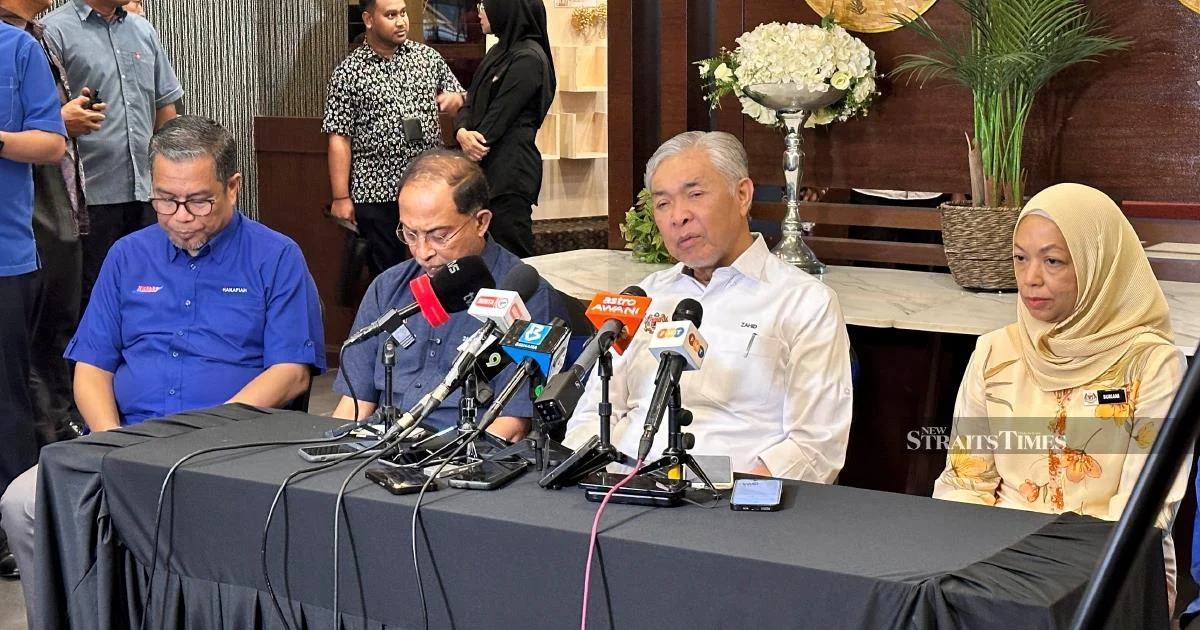
Barisan Nasional chairman Datuk Seri Dr Ahmad Zahid Hamidi has signalled that members of the broader unity coalition must avoid resurrecting politically sensitive figures in their Johor election efforts, marking an apparent friction point between allied parties as campaigning intensifies across the southern state.
The remarks, delivered during a campaign stop in Kluang, appeared directed at one or more coalition components who had incorporated imagery associated with Datin Seri Rosmah Mansor into their campaign materials. While Zahid did not explicitly name the individuals or parties involved, the intervention underscores growing tensions over how far backward-looking narratives should feature in current political messaging.
The involvement of figures linked to the Najib Razak administration—which collapsed in 2018 amid numerous corruption scandals—remains contentious terrain in Malaysian politics. Rosmah Mansor herself has faced multiple legal proceedings and remains a divisive public figure. Her presence in campaign materials risks alienating voters who view the former administration's tenure with disapproval, potentially undermining the broader BN-led coalition's electoral momentum.
Zahid's intervention reflects the delicate balancing act required within the unity government framework, which binds together political rivals and parties with divergent electoral interests. The coalition encompasses BN, Pakatan Harapan, and other stakeholders, each bringing distinct voter bases and historical baggage. In this environment, unilateral campaign decisions by individual component parties can create complications for the broader alliance's strategic positioning.
The Johor election represents a significant battleground for the ruling coalition. As the nation's second-largest state by population and a traditional BN stronghold, Johor's electoral outcome carries symbolic weight beyond its parliamentary seats. A strong performance could reinforce the coalition's narrative of popular endorsement, while setbacks might embolden opposition forces ahead of the next general election. This heightens sensitivities around campaign tone and messaging strategy.
For Malaysian voters, particularly those in Johor, the broader significance lies in how competing political actors resolve such disagreements. The use of controversial figures in campaign materials suggests some coalition members believe invoking the previous administration's achievements or personalities might mobilise certain voter segments. Conversely, Zahid's position indicates concern that such tactics alienate swing voters who may be critical of the Najib era's legacy.
The tension also illuminates deeper questions about Malaysia's political reconciliation. Nearly seven years after the 2018 general election upended the political landscape, the country has not fully grappled with how to handle figures from the previous administration within ongoing democratic competition. Should they be completely shelved from public campaigning, treated as normal political actors, or kept at arm's length by strategic parties?
Regional observers monitoring Malaysian political stability may view such internal coalition friction with concern. Public disputes over campaign strategy, even when relatively muted, signal underlying disagreements that could intensify if electoral pressures mount. The unity government's effectiveness depends substantially on maintaining sufficient cohesion for major decisions, making visible internal tensions noteworthy for assessing institutional durability.
For the coalition's longer-term viability, Zahid's statement suggests the BN leadership prefers focusing Johor voters on contemporary governance achievements and future-oriented policy platforms rather than rekindling associations with previous administrations. This approach aligns with efforts to broaden electoral appeal beyond traditional BN constituencies and appeal to younger voters less connected to pre-2018 political narratives.
The practical implications for Johor's campaign involve recalibrating messaging across allied parties to ensure consistency with coalition leadership direction. Individual parties may resist perceived constraints on their autonomy, potentially leading to further subtle disagreements played out through media statements rather than direct confrontation. Managing such dynamics while maintaining public unity represents a continuing challenge for Malaysian political coalitions.
Moving forward, how component parties interpret and implement Zahid's guidance will reveal whether the unity government possesses sufficient internal discipline to enforce strategic decisions. The Johor campaign will serve as a test case for whether the coalition can maintain messaging discipline on sensitive historical matters while competing effectively against opposition forces seeking to exploit any perceived disarray.
Ultimately, Zahid's intervention reflects political pragmatism: invoking controversial pre-2018 figures risks electoral costs that outweigh any mobilisation benefits in contemporary Malaysia. Whether all coalition partners accept this calculation will become evident as the Johor election campaign unfolds.

